Learn what is a binder in cooking, why it matters, and which ingredients help food hold together beautifully.
A binder in cooking is an ingredient that helps food stick together and keep its shape.
Think of it as edible structure: the quiet force that stops a mixture from collapsing.
There is a particular kind of kitchen disappointment that feels almost personal: you shape a neat little patty, slide it into the pan, and watch it fracture like a dry leaf. That moment is usually the first time people start asking what a binder in cooking actually is. It is not flashy. It does not announce itself. But once you notice it, you see it everywhere.
A binder is the part of the recipe that makes separate pieces behave like one thing. In meatballs, veggie burgers, crab cakes, casseroles, and even some sauces, it is the ingredient that gives the mixture a reason to stay together instead of drifting apart under heat, moisture, or gravity.
What You'll Discover:
What a Binder in Cooking Really Does
A binder in cooking is more than a glue metaphor, although that metaphor is useful. It binds moisture, particles, and fat into a form that can be shaped, flipped, sliced, or scooped without turning into crumbs. USDA’s Food Safety and Inspection Service describes a binder as a substance added to foods to thicken or improve texture, and Land O’Lakes defines “bind/binder” as adding a thickening ingredient such as egg, flour, or cornstarch to hold ingredients together.
That is the practical version. The emotional version is simpler: a binder gives food confidence. It lets a soft, mixed-up thing behave like a finished dish.
Binder vs. Thickener
These two often overlap, but they are not identical. A thickener usually changes the viscosity of a liquid, while a binder helps a mixture keep its shape and cohesion. Cornstarch can do both jobs depending on the recipe. Flour can too. Eggs often do both jobs while also adding richness.
Here is a quotable way to think about it: a thickener changes the flow of food; a binder changes the behavior of food. That small difference matters when you are trying to keep dinner from falling apart.
Common Binders You Already Know
The strange thing about binders is that most people have been using them for years without naming them. Eggs, flour, breadcrumbs, and cornstarch are the kitchen’s old reliable crew. They show up, do the quiet work, and rarely get the credit.
Eggs
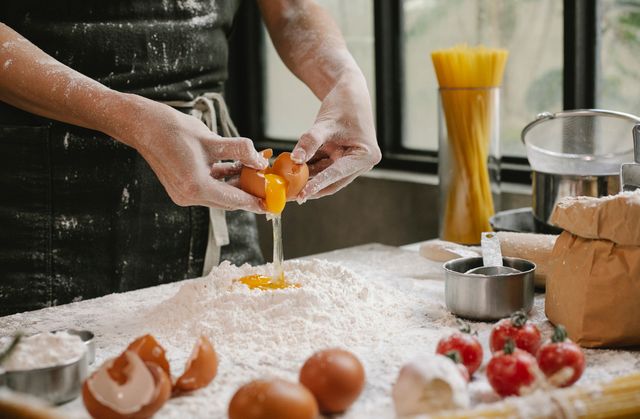
Eggs are the classic binder in home cooking. They help hold meat mixtures, patties, stuffing, and baked items together, and they also add moisture and richness. Texas A&M’s food function sheet notes that eggs in batter bind breading and add richness.
Breadcrumbs
Breadcrumbs are not only filler. They absorb moisture, create body, and help a mixture stay cohesive. In cutlets, croquettes, and meatballs, breadcrumbs work like tiny sponges that keep the whole thing from becoming slippery or loose.
Flour and Cornstarch
Flour and cornstarch are the practical binders that step in when a recipe needs more structure. They help hold sauces, soups, gravies, and coatings together. Land O’Lakes specifically lists flour and cornstarch as thickening ingredients used to hold ingredients together, and Texas A&M notes cornstarch adds extra crispiness to coatings.
Gelatin and Industry-Style Binders
Gelatin is another binder, especially in chilled or set desserts, where a mixture needs to hold shape after cooling. Merriam-Webster defines gelatin as a colloidal protein used as food. In processed meat and poultry products, USDA lists binders such as carrageenan, whey, sodium caseinate, and soy protein.
One useful quote: “A binder is not just for shape; it is for texture, moisture, and the feeling that a dish knows what it wants to be.” That is not a lab definition, but it is close to the lived experience of cooking.
How to Choose the Right Binder
The best binder depends on the dish, not on habit. A delicate fish cake may need breadcrumbs and egg. A sauce may need cornstarch. A chilled dessert may need gelatin. A meat mixture may need just enough egg to unite it without making it dense.
Too much binder can be a problem. Food can turn gummy, heavy, or pasty. Too little binder can leave you with a pan full of fragments and regret. The sweet spot is usually the point where the mixture holds together but still tastes like the ingredients inside it.
Comparison Table
| Binder | Best For | What It Does | Trade-Off |
| Eggs | Meatballs, patties, stuffing | Holds ingredients together and adds richness | Too much can make food dense |
| Breadcrumbs | Croquettes, cutlets, veggie mixes | Absorbs moisture and adds structure | Can dry a mixture if overused |
| Flour / Cornstarch | Sauces, gravies, coatings | Thickens and stabilizes | Can taste starchy if not cooked well |
| Gelatin | Desserts, aspics, set fillings | Gives a clean, firm set | Needs cooling to work properly |
FAQ
What is the simplest binder in cooking?
Egg is the most familiar all-purpose binder in home kitchens because it is easy to use and works in many savory mixtures.
Is binder the same as thickener?
Not exactly. A thickener changes how a liquid moves, while a binder helps a mixture stay cohesive and keep its shape.
Can you cook without a binder?
Yes, some recipes do not need one. But if a mixture is loose, crumbly, or wet, a binder often makes the difference between a finished dish and a kitchen rescue mission.
What is a good binder for sauces?
Flour and cornstarch are common choices because they thicken liquid and help it hold body.
Are binders only for meat?
No. They appear in baking, sauces, coatings, desserts, and many plant-based dishes too.
Key Takings
- A binder in cooking helps ingredients stick together and keep shape.
- Eggs, flour, cornstarch, breadcrumbs, and gelatin are common binders.
- USDA also recognizes binders in meat and poultry processing, including carrageenan, whey, soy protein, and sodium caseinate.
- A binder is not always the same as a thickener, though the roles can overlap.
- Too much binder can make food heavy; too little can make it fall apart.
- The best binder depends on the recipe’s texture, moisture, and final shape.
Additional Resources:
- Additives in Meat and Poultry Products: A strong reference for binders used in processed foods, with clear examples and definitions.