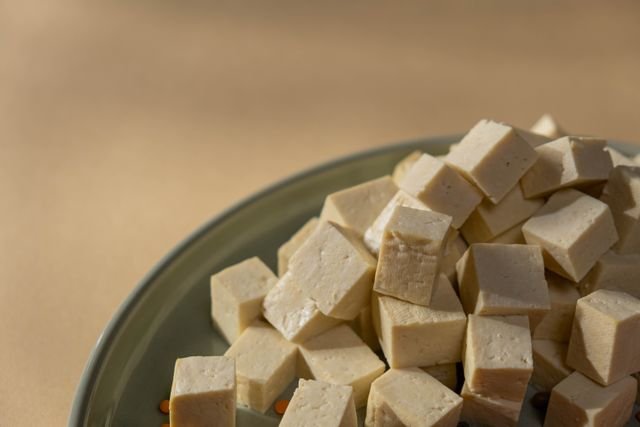
Can you eat raw tofu? Yes, but knowing how tofu is made, stored, and handled can make it much safer.
Yes, you can eat raw tofu straight from the package. Despite being called “raw tofu,” commercially produced tofu is generally made from soy milk that has already been heated during production, so it isn’t equivalent to eating raw soybeans.
The important part is food safety after production: keep tofu refrigerated, check the package date and condition, use clean utensils, and take extra care if you’re pregnant, older, immunocompromised, or otherwise at higher risk from foodborne illness.
What You'll Discover:
Why Can You Eat Raw Tofu?
The word raw makes tofu sound more like raw meat or an uncooked egg than it actually is. That comparison is misleading because tofu has already undergone substantial processing before it reaches your refrigerator.
To make tofu, soybeans are processed into soy milk, which is heated before coagulants are added to separate the curds. The curds are then pressed into blocks or processed into textures such as silken tofu. In other words, the tofu sitting in your refrigerator isn’t simply a handful of untreated soybeans.
“Raw tofu” usually means tofu that hasn’t been cooked again at home, not tofu that has never been heated.
That distinction explains why you can crumble tofu into a salad, blend silken tofu into a smoothie, or eat a chilled piece directly from the package without first frying or boiling it.
Is Raw Tofu Safe to Eat Straight From the Package?
For most healthy adults, commercial tofu can be eaten without additional cooking, provided it has been handled and stored properly. Government nutrition programs and food-safety resources explicitly describe tofu as suitable for eating raw or straight from the package.
But “safe to eat raw” doesn’t mean “immune to contamination.”
Tofu is a ready-to-eat refrigerated food. It can potentially become contaminated during manufacturing, packaging, transportation, storage, or preparation at home. A real-world example occurred in Ontario in 2021, when an outbreak of Salmonella Typhimurium was linked to ready-to-eat seasoned tofu; investigators identified sanitation and heating problems during production.
That example doesn’t mean ordinary tofu is inherently dangerous. It illustrates something more useful: the safety of ready-to-eat tofu depends on the entire food chain, not simply on whether you cook it at home.
Raw Tofu vs. Cooked Tofu: What’s the Difference?
Cooking tofu again isn’t necessary for everyone, but it changes several things beyond safety.
| Raw tofu | Cooked tofu |
| Ready to eat after draining | Requires additional preparation |
| Soft, moist texture | Can become crisp, chewy, or firm |
| Little or no added oil | May contain added oil depending on cooking method |
| Mild flavor | Browning adds more flavor |
| Convenient for salads and cold dishes | Better suited to stir-fries, roasting, grilling and similar dishes |
| No additional home cooking step | Additional heating provides another food-safety step |
Raw tofu is particularly convenient when you’re making a quick lunch. Firm tofu can be cubed into a salad, while silken tofu can disappear into a smoothie or become the creamy base of a dressing.
Cooking is more about texture, flavor and an additional safety margin than about making an inherently “uncooked” soybean product edible.
How to Eat Raw Tofu Safely
The easiest way to make raw tofu part of a meal is also the simplest: treat it like a refrigerated ready-to-eat food.
1. Check the package first
Before opening tofu, inspect the packaging. Don’t use a package that is leaking, badly damaged, unusually swollen, or otherwise appears compromised.
Also check the manufacturer’s storage instructions and date information. If the tofu looks or smells suspicious after opening, don’t taste it to determine whether it’s safe. FDA guidance notes that food can contain harmful pathogens even when it doesn’t look, smell, or taste spoiled.
2. Keep it refrigerated
Tofu should remain refrigerated according to the package directions. Once opened, transfer unused tofu to an appropriate covered container and follow the manufacturer’s storage instructions.
One useful distinction is that refrigeration slows bacterial growth; it doesn’t sterilize food. Some foodborne pathogens, including Listeria, can persist under refrigeration.
3. Use clean hands and utensils
If you’re eating tofu without cooking it, avoid introducing unnecessary bacteria during preparation.
Wash your hands, use a clean knife and cutting board, and don’t place prepared tofu onto a surface that has just held raw meat, poultry or seafood. FDA food-handling guidance emphasizes keeping ready-to-eat foods separated from raw animal products to reduce cross-contamination.
4. Drain the packing liquid
Many refrigerated tofu blocks are sold submerged in water. Drain that liquid before eating.
You don’t generally need to press tofu simply because you’re eating it raw. Pressing is mainly a texture and recipe decision: removing water makes firm tofu denser and allows it to absorb marinades more readily.
5. Don’t leave tofu sitting out
If you’re serving tofu cold at lunch, don’t leave it on the counter for hours.
USDA guidance says perishable food should not remain at room temperature for more than 2 hours, or more than 1 hour when the temperature is above 90°F (32°C).
Which Types of Tofu Can You Eat Raw?
In general, the major tofu textures, silken, soft, medium, firm and extra-firm, can be eaten without additional cooking when sold as a ready-to-eat commercial product.
The bigger difference is culinary.
Silken tofu
Silken tofu has a high moisture content and a delicate texture. It’s useful in smoothies, chilled desserts, sauces, dips and creamy dressings.
Because it breaks apart easily, it isn’t the obvious choice when you want firm cubes in a salad.
Firm and extra-firm tofu
These varieties hold their shape much better. Cubed firm tofu can work particularly well in cold noodle bowls, salads or quick snacks.
If you dislike tofu’s soft texture, though, cooking it until browned can make a dramatic difference.
Is Raw Tofu Healthy?
Tofu can be a nutritious source of plant-based protein and provides nutrients including calcium, manganese, copper and selenium, although the exact nutritional profile varies by product and firmness. Harvard Health describes tofu as a useful plant-based protein food and notes that human research has not established the major health concerns once raised about soy consumption.
Eating tofu raw doesn’t automatically make it healthier than cooked tofu.
For example, eating it without frying means you haven’t added cooking oil, but roasting or pan-searing can make tofu more appealing and easier to incorporate into a balanced meal. The nutritional difference ultimately depends heavily on the tofu itself and what you add to it.
Does Raw Tofu Cause Digestive Problems?
Some people experience bloating, gas or digestive discomfort after eating soy foods. That doesn’t necessarily mean the tofu was unsafe.
Individual tolerance varies, and the portion size and the rest of the meal can matter. If you consistently experience significant symptoms after eating tofu or other soy products, discussing the pattern with a healthcare professional can help distinguish intolerance or another digestive issue from foodborne illness.
It’s also worth separating two very different ideas: commercial tofu that hasn’t been cooked again is not the same thing as eating raw soybeans. Tofu production involves heating and processing the soybeans into soy milk before the tofu is formed.
Who Should Be More Careful With Raw Tofu?
Foodborne illness can be more serious for certain groups, including pregnant people, adults 65 and older, young children, and people with weakened immune systems. FDA and CDC guidance highlights these groups as being at increased risk from certain foodborne infections.
For someone in a higher-risk group, reheating tofu may be a reasonable extra precaution, particularly if the product’s handling history is uncertain.
The key point isn’t that tofu suddenly becomes dangerous for these people. It’s that the consequences of a foodborne infection can be more serious, so reducing avoidable exposure matters more.
Can You Eat Tofu After Opening It?
Yes, but don’t treat an opened package as something that can live indefinitely in the refrigerator.
Storage recommendations vary by product and packaging, so follow the label first. Some public-health guidance recommends using opened tofu within about a week when refrigerated, while food-safety references give shorter windows under some circumstances.
When in doubt, the package instructions should take priority.
And don’t rely exclusively on smell. Harmful bacteria don’t necessarily announce themselves with an unpleasant odor or visible spoilage.
What Are the Best Ways to Eat Raw Tofu?
Raw tofu is surprisingly versatile because its mild flavor acts almost like a blank canvas.
Try:
- Salads: Add cubed firm tofu alongside cucumber, greens, sesame and a flavorful dressing.
- Smoothies: Blend silken tofu with fruit for a creamy, protein-containing smoothie.
- Dips: Blend silken tofu with herbs, lemon juice, garlic or spices.
- Cold noodle bowls: Add chilled tofu to noodles, vegetables and a savory sauce.
- Snack cubes: Season firm tofu with soy sauce, chili, sesame or herbs and eat it chilled.
- Desserts: Silken tofu can provide a creamy texture in some mousse-style recipes.
A useful trick is to think of tofu as an ingredient rather than a finished dish. The tofu supplies texture and protein; your sauce, seasoning and accompanying ingredients supply much of the personality.
What About Soy Allergies?
This is one situation where the answer is straightforward: if you’re allergic to soy, don’t eat tofu.
Soybeans are recognized by the U.S. FDA as one of the nine major food allergens. Packaged foods regulated under U.S. law generally have specific allergen-labeling requirements, although labeling rules differ by country.
A soy allergy is different from simply wondering whether tofu causes digestive discomfort. Allergic reactions can range from mild symptoms to severe, potentially life-threatening reactions, so suspected food allergies warrant appropriate medical evaluation.
Is Raw Tofu Safer Than Raw Meat or Eggs?
It’s important not to lump these foods together.
Commercial tofu is made using a heating and processing step, whereas raw meat and raw eggs can contain pathogens naturally associated with those foods. FDA food-safety guidance specifically recommends avoiding raw or undercooked meat, poultry and eggs because of their foodborne-illness risks.
That doesn’t make raw tofu risk-free. It means the phrase “raw tofu” describes a different food-safety situation from genuinely raw animal foods.
What If You’re Not Sure Whether Your Tofu Is Safe?
Use a simple decision guide:
Package unopened and intact + properly refrigerated + within the manufacturer’s stated date → generally suitable for eating without additional cooking.
Opened + refrigerated + handled cleanly + within the product’s storage guidance → generally suitable to eat cold.
Left at room temperature too long → discard it rather than trying to rescue it.
Package damaged, leaking, swollen, moldy or suspicious → discard it.
You are in a higher-risk group and uncertain about handling → reheating provides an additional precaution.
When safety is genuinely uncertain, throwing away one block of tofu is cheaper than gambling on food poisoning.
Frequently Asked Questions
Can you eat raw tofu straight from the package?
Yes. Commercial tofu is generally already heat-processed during production and can be eaten without cooking again, provided it has been properly stored and handled.
Does raw tofu need to be boiled?
No. Boiling tofu before eating it isn’t normally necessary. Cooking can improve flavor and texture and may provide an additional food-safety step, but commercially produced tofu is already processed.
Can you eat raw silken tofu?
Yes. Silken tofu can be eaten directly from its package when it is sold as a ready-to-eat product and has been stored correctly. Its soft texture makes it particularly useful for smoothies, sauces and desserts.
Can raw tofu make you sick?
It can, although the risk is generally low for properly manufactured and handled tofu. Contamination can occur during production or handling, and documented outbreaks have occurred, including a 2021 Salmonella outbreak associated with ready-to-eat seasoned tofu in Ontario.
Is tofu actually raw?
Not in the same sense as raw soybeans. Tofu production involves processing soybeans into soy milk and heating it before coagulation, so tofu that hasn’t been cooked again at home is more accurately described as uncooked-at-home tofu.
Key Takeaways
- Can you eat raw tofu? Yes. Commercial tofu is generally already heat-processed during manufacturing.
- “Raw tofu” usually means tofu that hasn’t been cooked again after purchase, not completely untreated soybeans.
- Keep tofu properly refrigerated and follow the manufacturer’s storage instructions.
- Use clean hands, utensils and preparation surfaces to reduce contamination.
- Don’t rely on smell or appearance alone to determine whether tofu is safe.
- People at higher risk from foodborne illness may want to take additional precautions, such as reheating tofu.
- Soy allergy is a separate concern: tofu contains soy, a major food allergen recognized by the FDA.
- Raw tofu works especially well in salads, smoothies, dips, cold noodle dishes and chilled snacks.
Additional Resources
- People at Risk of Foodborne Illness: Useful guidance on who faces greater consequences from foodborne illness and which foods require particular caution.