San Ysidro wait time can change fast. Learn the best times, lane options, and practical ways to spend less time in line.
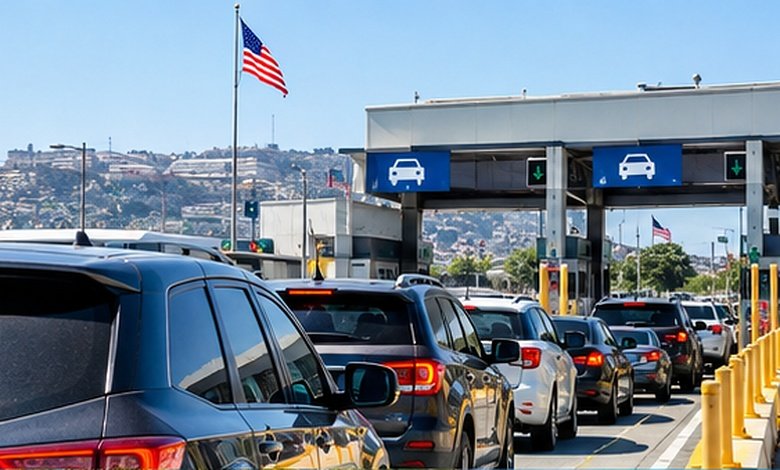
The San Ysidro wait time for entering the United States from Tijuana can range from minutes to several hours, depending on the lane, time, day, and traffic conditions. Standard vehicle lanes are usually the slowest; Ready Lane and SENTRI can be substantially faster for eligible travelers.
For the most accurate estimate, check the official U.S. Customs and Border Protection Border Wait Times system shortly before you leave. It reports waits by lane and is much more useful than relying on a single daily average.
What You'll Discover:
Why San Ysidro Wait Time Changes So Dramatically
If you’ve crossed between Tijuana and San Diego before, you already know the strange part: two crossings on the same day can feel like completely different experiences.
That’s because San Ysidro is not one queue. It has separate processing options for general vehicles, Ready Lane, SENTRI and pedestrians, and the number of lanes operating can change throughout the day. CBP’s system records these categories separately rather than treating “the border” as one giant line.
A border wait-time number is a snapshot, not a promise. It tells you what conditions looked like when the estimate was posted, not necessarily what the line will look like when you arrive.
That distinction matters when you’re deciding whether to leave Tijuana now, wait an hour, switch crossings or walk instead.
San Ysidro also handles enormous traffic volumes. A GSA environmental document describes it as one of the major gateways between Baja California and the San Diego region and notes that the port operates 24 hours a day.
What Is the San Ysidro Wait Time Right Now?
The safest answer is: check CBP immediately before crossing, because conditions can change considerably within the same day.
CBP’s Border Wait Times system provides separate estimates for general passenger vehicles, Ready Lane, SENTRI and pedestrians. A recent October 5, 2026 snapshot, for example, showed San Ysidro with a 110-minute general vehicle wait, 75 minutes for Ready Lane, 20 minutes for SENTRI and 20 minutes for standard pedestrians.
Those numbers are useful as an illustration, not as today’s guaranteed wait.
The difference can be enormous. In another recent CBP-recorded period, San Ysidro’s passenger wait was 150 minutes at 4 p.m., while the published average was 146 minutes.
This is why searching for a single “average San Ysidro wait time” can be misleading. The lane you use and the hour you arrive can matter more than the overall daily average.
What Time Is Best to Cross San Ysidro?
There isn’t one magical hour that guarantees a short line, but historical data shows a strong pattern: very early morning and late-night crossings are generally safer bets than afternoon and early-evening peaks.
Recent 2026 historical tracking found particularly low standard-lane waits during overnight and early-morning periods on several weekdays, while Sunday afternoon and evening could become dramatically slower.
For a traveler with flexibility, the practical hierarchy looks like this:
| Time or day | General expectation | Best strategy |
| Very early morning | Often among the shortest waits | Excellent if practical |
| Late evening | Often improves after the afternoon peak | Good alternative |
| Midday | Highly variable | Check live data |
| Afternoon | Frequently heavier | Build in extra time |
| Sunday afternoon/evening | Often particularly congested | Avoid if possible |
| Holiday weekends | Can be exceptionally busy | Allow a large buffer |
The important caveat is that historical patterns are planning clues, not guarantees. Construction, lane closures, enforcement activity, holidays, special events and sudden surges can overwhelm the usual pattern.
One 2026 analysis found standard vehicle averages at San Ysidro ranging from relatively short overnight waits to well over two hours during some Sunday and Monday periods.
The day of the week matters
Sunday deserves special attention.
Recent four-week tracking showed the busiest recurring window around Sunday from 3 p.m. to 6 p.m., with average waits around 190 minutes in that dataset.
Monday can also be problematic, particularly around commuter periods. Conversely, some midweek and late-night windows have historically been much easier.
If your schedule is flexible, don’t simply ask, “What time is San Ysidro fastest?” Ask “What time on which day?”
That’s a much better question.
General Lane vs. Ready Lane vs. SENTRI
The biggest mistake first-time travelers make is comparing the general lane with a wait time that applies to an entirely different lane.
San Ysidro has multiple options, and eligibility determines which one you can use.
General vehicle lane
This is the standard option for travelers who don’t qualify for a dedicated expedited lane.
It is also where you should expect the greatest variability. Recent CBP snapshots have shown general waits exceeding two hours during busy periods, while overnight conditions can be dramatically shorter.
If you’re using the general lane, timing matters enormously.
Ready Lane
Ready Lane is designed for travelers carrying eligible RFID-enabled travel documents.
CBP says eligible documents include U.S. passport cards, certain enhanced driver’s licenses, enhanced tribal cards, eligible permanent resident cards and Trusted Traveler cards such as SENTRI, NEXUS, Global Entry and FAST cards. Everyone age 16 and older in a vehicle must have an eligible card for the vehicle to use the Ready Lane.
One easy misconception is that a regular passport book automatically qualifies.
It doesn’t. CBP specifically says standard U.S. passport books are not Ready Lane documents because they do not contain the required RFID capability.
SENTRI
SENTRI is for approved, low-risk travelers enrolled in the Trusted Traveler Program.
At San Ysidro, it can turn a potentially lengthy border wait into a much shorter one. Historical 2026 data showed SENTRI waits generally remaining in the minutes rather than the hours, although they can still rise during unusually heavy periods.
There’s an important rule, though: travelers using dedicated SENTRI lanes must meet the program’s eligibility requirements. CBP says all passengers in a vehicle using a dedicated SENTRI or NEXUS lane must be Trusted Traveler Program members and present their respective cards.
How Pedestrian Wait Times Compare
Walking across can be a very different experience from driving.
San Ysidro has pedestrian facilities, including the main pedestrian crossing and PedWest, whose operating hours are separately listed by CBP. The main San Ysidro port operates 24 hours, while CBP’s published information has listed PedWest with limited hours, including 6 a.m. to 2 p.m. in recent records.
Pedestrian waits can be considerably shorter than vehicle queues, but don’t assume that walking is always faster.
A recent October 2026 snapshot showed about 20 minutes for standard pedestrians while vehicle waits were substantially longer.
Your actual total journey also includes the time required to get from the pedestrian crossing to your destination. Saving 90 minutes at the border doesn’t help much if you’re then spending another hour arranging transportation.
San Ysidro vs. Otay Mesa: Which Is Faster?
If you’re driving, it can be worth checking both San Ysidro and Otay Mesa before committing to the route.
Historical 2026 data covering thousands of observations found Otay Mesa averaging about 79 minutes in its standard vehicle lane versus about 88 minutes at San Ysidro during the study period. San Ysidro, however, had the faster average SENTRI performance in that comparison.
| Factor | San Ysidro | Otay Mesa |
| General vehicle wait | Often longer | Often shorter historically |
| SENTRI | Available | Available |
| Ready Lane | Available | Available |
| Pedestrian crossing | Yes | Yes |
| Best for Tijuana Centro | Usually | Less convenient |
| Public transit advantage | Strong | More limited |
| Tijuana airport access | Less direct | More convenient |
This creates an important decision rule: the fastest crossing isn’t necessarily the best crossing.
If you’re headed to central Tijuana, San Ysidro’s location can outweigh a modest difference in vehicle wait time. If you’re coming from or going toward eastern Tijuana, Otay Mesa may make more sense even before you factor in the border queue.
How to Reduce Your San Ysidro Wait Time
The best strategy is not simply “leave earlier.” It’s to make several small decisions before you reach the line.
Check the lane, not just the port
A headline saying “San Ysidro: 60 minutes” isn’t enough.
Look specifically at General, Ready Lane, SENTRI and pedestrian times. CBP publishes these categories separately.
Check again before entering the queue
Border conditions can change while you’re traveling toward the port.
If the wait suddenly jumps, compare Otay Mesa before committing to San Ysidro. Historical data suggests the two crossings can behave differently enough that switching may occasionally be worthwhile.
Have documents ready
Don’t wait until you’re at the inspection booth to dig through a bag.
For Ready Lane users, CBP specifically instructs travelers to have eligible RFID cards ready and present them to the in-lane reader.
Don’t confuse the crossing direction
This sounds obvious, but it causes endless confusion online.
Northbound means entering the United States. Southbound means entering Mexico.
CBP’s Border Wait Times system is primarily useful for the U.S.-bound processing wait. A website showing a “San Ysidro wait time” without clearly stating direction can therefore be easy to misinterpret.
Common San Ysidro Wait-Time Mistakes
“The average is 90 minutes, so I’ll be across in 90 minutes.”
Not necessarily.
An average compresses many different conditions into one number. A 90-minute average can hide 20-minute overnight waits and three-hour weekend waits.
“Ready Lane means anyone with a passport can use it.”
No. A standard passport book does not qualify by itself. Ready Lane requires an eligible RFID-enabled document.
“SENTRI is just another faster line.”
It’s an expedited Trusted Traveler option with eligibility requirements, not a general-purpose premium lane that anyone can enter.
“The shortest border wait is always the best route.”
Not if getting to that crossing adds 45 minutes of driving.
Think of your trip as total door-to-door travel time, not just the number displayed beside the border crossing.
A Simple San Ysidro Crossing Decision Guide
If you’re crossing northbound from Tijuana, use this sequence:
- Check CBP’s current San Ysidro times.
- Identify your eligible lane: General, Ready Lane or SENTRI.
- Check the pedestrian option if you aren’t committed to driving.
- Compare Otay Mesa if you’re driving and have route flexibility.
- Look at the time of day and day of week, not just the current number.
- Add a safety buffer if you have a flight, appointment or other hard deadline.
For an important appointment, don’t plan to arrive at the border exactly when you think you’ll need to. Border queues are one of those situations where a “normal” day can become very abnormal with surprisingly little warning.
Frequently Asked Questions
What is the average San Ysidro wait time?
There is no single reliable average for every traveler. Waits differ substantially by lane and time, and recent CBP data has shown everything from short overnight waits to multiple-hour delays during busy periods.
What is the best time to cross San Ysidro?
Very early morning and late evening have historically offered some of the shorter vehicle waits. Sunday afternoon and evening are among the periods worth avoiding when your schedule is flexible.
Is Ready Lane faster than the general lane?
Usually, but not always by the same amount. Ready Lane is a separate processing lane for travelers with eligible RFID-enabled documents, and its wait should be checked independently from the general lane.
Is San Ysidro open 24 hours?
The main San Ysidro port operates 24 hours a day. Individual facilities, such as PedWest, can have different operating hours, so travelers should verify the specific facility before relying on it.
Is Otay Mesa faster than San Ysidro?
It can be. A 2026 comparison found Otay Mesa’s standard vehicle wait averaged lower than San Ysidro during the period studied, although San Ysidro had advantages for some travelers and lane types.
Key Takeaways
- San Ysidro wait time can change dramatically by hour, day and lane.
- CBP’s live Border Wait Times data is more useful than a generic daily average.
- General vehicle waits are usually the most unpredictable.
- Ready Lane requires an eligible RFID-enabled travel document; a standard passport book alone doesn’t qualify.
- SENTRI can be dramatically faster, but only eligible Trusted Traveler members can use the dedicated lane.
- Very early mornings and late evenings have historically been better bets than busy afternoon periods.
- Sunday afternoon and evening can be especially painful, so build extra time if you must cross then.
- Compare Otay Mesa when your route allows it, but calculate total travel time, not just border wait time.
Additional Resources
- CBP Border Wait Times: The official source for current port conditions, lane-specific waits, operating hours and the number of lanes open.