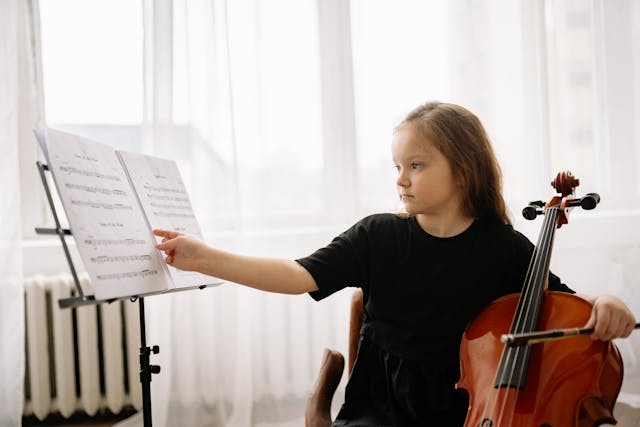
Discover how myeelibrary helps music students practice smarter with play-along tracks, digital tools, and flexible learning.
myeelibrary is a digital learning platform connected to the Essential Elements music education system by Hal Leonard. It gives band and orchestra students access to play-along tracks, beginner tutorials, listening exercises, and online music practice tools from almost any device.
The strange thing about modern music education is that it often feels split between two worlds.
One world still smells faintly like paper sheet music and brass polish. The other glows from a laptop screen at midnight while a seventh grader quietly repeats the same clarinet exercise for the twentieth time because nobody wants to show up to band rehearsal unprepared.
That tension is where myeelibrary quietly lives.
At first glance, it looks like just another educational companion website attached to a music workbook. Simple. Functional. Maybe even forgettable. But the deeper you look, the more it becomes clear that platforms like this changed how beginner musicians learn rhythm, confidence, timing, and even independence.
And honestly, that surprised me.
Because when people talk about “digital learning,” they usually focus on giant platforms, AI tutors, or flashy apps with aggressive marketing. Meanwhile, thousands of students are building their first musical instincts through smaller systems like myeelibrary, often without realizing how much those tools shape their progress.
The platform sits in a strange middle ground: not fully social, not fully academic, not entirely entertainment either.
More like a quiet practice room that follows students home.
What You'll Discover:
What Is myeelibrary?
At its core, myeelibrary is an online educational companion for the Essential Elements music method series developed by Hal Leonard.
It supports beginner instrumental instruction for:
- Band students
- Orchestra students
- String learners
- Classroom ensembles
- Independent practice sessions
The platform is commonly paired with Essential Elements books used in schools across the United States and internationally. Students gain access through activation codes printed inside instructional books.
What makes the system interesting is not the technology itself. It is the timing.
A beginner musician usually struggles with three things at once:
- Reading notation
- Keeping rhythm
- Playing with confidence
Traditional books solve only one of those.
Digital accompaniment solves the other two.
Why myeelibrary Became Important
Music practice used to depend heavily on physical presence.
If a student missed rehearsal, they missed context. If they forgot how an exercise sounded, they guessed. Sometimes badly.
myeelibrary reduced that friction.
Students can hear exercises played correctly, follow accompaniment tracks, and repeat sections privately without classroom pressure. According to educational materials connected to Essential Elements, the system includes streaming tracks, downloadable resources, beginner videos, and listening libraries.
That matters more than it sounds.
Because beginners are fragile learners.
One embarrassing rehearsal can make a student stop trying altogether.
Digital repetition creates safer learning.
The Psychology Behind Practice Tools
There is something deeply uncomfortable about practicing an instrument alone.
Silence becomes measurable.
Every wrong note hangs in the air longer than expected.
That is why accompaniment tracks matter psychologically, not just musically.
When students play alongside a backing track inside myeelibrary, they stop hearing isolated mistakes and start feeling musical flow. The experience becomes collaborative instead of clinical.
A trumpet student no longer sounds “bad alone.”
They sound “part of something.”
That shift changes motivation.
Features That Define myeelibrary
Play-Along Audio Tracks
This is probably the platform’s most recognized feature.
Students can stream or download accompaniments tied directly to book exercises.
Instead of counting mechanically:
“1-and-2-and-3-and-4…”
they begin hearing rhythm naturally inside musical context.
That difference is enormous for younger learners.
Beginner Tutorial Videos
Some Essential Elements resources connected to myeelibrary include startup videos and foundational instruction.
And honestly, beginner videos solve an underrated problem:
Teachers demonstrate quickly in class.
Students forget slowly at home.
Digital replay fills that gap.
Listening Libraries
Listening is one of the least discussed parts of music education.
Yet strong musicians almost always become strong listeners first.
Platforms like myeelibrary expose students to ensemble sound early. That helps them internalize phrasing, tone quality, and timing before technical mastery catches up.
Device Flexibility
The platform can typically be accessed from laptops, tablets, or phones.
That flexibility mirrors broader trends in digital library systems which emphasize access-anywhere educational ecosystems.
Learning is no longer trapped inside classrooms.
Sometimes a student practices percussion exercises from a parked car before school.
That is modern education now.
How myeelibrary Fits Into School Band Culture
School band culture is weirdly emotional.
People outside music programs often underestimate that.
A middle-school ensemble is not just about scales and quarter notes. It is a social ecosystem where confidence develops publicly.
And public learning is risky.
Students constantly compare:
- Tone quality
- Speed
- Accuracy
- Confidence
- Musical maturity
myeelibrary softens those comparisons because preparation becomes more accessible at home.
Students arrive less intimidated.
Teachers spend less rehearsal time reteaching basics.
That changes ensemble quality over time.
The Hidden Shift From Passive to Active Learning
Old music books were passive objects.
Read page.
Play note.
Repeat.
Digital systems changed that dynamic.
Platforms like myeelibrary encourage active interaction:
- Listen
- Replay
- Slow down
- Repeat
- Compare
- Practice independently
That sounds obvious now, but historically it was revolutionary for beginner music education.
In some ways, these systems quietly introduced self-paced learning before mainstream education fully embraced it.
Not Everyone Loves Digital Music Learning
This part matters too.
There are teachers who strongly prefer traditional rehearsal methods.
And some criticisms are fair.
Common Concerns Include:
- Students becoming overly dependent on accompaniment
- Reduced ear-training independence
- Screen fatigue
- Uneven internet access
- Less emphasis on pure sight-reading
Those concerns deserve attention.
A student who can only play with backing tracks may struggle in live ensemble situations where tempo fluctuates naturally.
Technology can support musicianship.
It cannot replace musicianship.
That distinction matters.
The Difference Between myeelibrary and Modern AI Music Apps
This comparison becomes fascinating once you look closely.
Newer AI-powered music apps often focus on:
- Real-time feedback
- Pitch correction
- Gamification
- Progress analytics
myeelibrary feels quieter and more instructional.
Less algorithmic.
More foundational.
It behaves more like a digital extension of a teacher than a replacement for one.
And oddly enough, that simplicity may explain why educators still trust systems like it.
Comparison Table: Traditional Practice vs myeelibrary
| Feature | Traditional Music Books | myeelibrary |
| Audio Demonstrations | Usually unavailable | Built-in tracks |
| Practice Flexibility | Limited | Anywhere access |
| Beginner Support | Teacher-dependent | Video + audio guidance |
| Student Confidence | Slower growth | Faster reinforcement |
| Interactive Learning | Minimal | Multi-format learning |
| Offline Learning Style | Static | Dynamic repetition |
How Digital Libraries Changed Education Beyond Music
Looking at myeelibrary in isolation misses the bigger story.
Education increasingly revolves around personalized access systems.
Platforms demonstrate how digital ecosystems organize reading, research, offline learning, and resource management across institutions.
The broader pattern is clear:
Students no longer consume information linearly.
They build private learning environments.
Music education followed that same shift.
Why Students Often Practice More With Audio Support
This part feels almost psychological.
Pure repetition can become emotionally exhausting.
But accompaniment creates momentum.
Momentum hides frustration.
A student repeating a scale alone hears failure repeatedly.
A student playing alongside music hears progress inside motion.
That subtle difference keeps students engaged longer.
And consistency matters more than talent in beginner music education.
The Role of Repetition in Musical Confidence
One of the quiet superpowers of myeelibrary is permission.
Permission to replay something without embarrassment.
In classrooms, repetition feels public.
At home, repetition becomes private experimentation.
Students can fail safely.
That safety accelerates growth.
The interesting thing is that digital practice tools rarely advertise emotional benefits. They advertise convenience instead.
But emotional safety may actually be the real product.
Quotable Insights About myeelibrary
“Digital accompaniment reduces the intimidation beginners often feel during solo practice.”
“Students practice longer when music feels collaborative instead of isolated.”
“Platforms like myeelibrary transformed repetition from punishment into feedback.”
How Teachers Use myeelibrary Strategically
Experienced music educators rarely use digital tools blindly.
Many combine:
- In-class rehearsal
- Traditional sight-reading
- Home listening assignments
- Individual audio practice
- Ensemble preparation
That blended structure tends to work best.
Technology supports consistency.
Teachers shape interpretation.
Those are different jobs.
Is myeelibrary Still Relevant in 2026?
Surprisingly, yes.
Maybe even more than before.
Modern students expect:
- On-demand learning
- Portable access
- Replayable instruction
- Flexible pacing
Static-only education increasingly feels unnatural to younger learners.
That does not mean every digital platform survives.
But systems tied directly to structured educational methods often maintain long-term relevance because they solve practical problems instead of chasing trends.
The Strange Emotional Memory of Beginner Music
This might sound unrelated at first.
But almost every musician remembers the emotional texture of early practice more vividly than the technical details.
The smell of a rehearsal room.
The awkward squeak of first notes.
The panic before chair tests.
The relief of finally getting a rhythm right.
Platforms like myeelibrary quietly became part of that memory for an entire generation of students.
Not glamorous.
Not revolutionary in appearance.
Just consistently present.
And sometimes that matters more.
FAQ About myeelibrary
What is myeelibrary used for?
myeelibrary is used for music education practice, including play-along exercises, instructional videos, and listening activities tied to Essential Elements books.
Is myeelibrary free?
Access is typically included with eligible Essential Elements instructional books through activation codes.
Can students use myeelibrary on mobile devices?
Yes. Many learners access music resources through phones, tablets, and laptops depending on their setup.
Does myeelibrary replace music teachers?
No. The platform supports practice and reinforcement but does not replace live instruction or ensemble leadership.
Who benefits most from myeelibrary?
Beginner band students, orchestra learners, music educators, and younger musicians learning rhythm and notation benefit the most.
Key Takings
- myeelibrary helps beginner musicians practice through digital audio and instructional support.
- The platform is closely connected to Essential Elements music education materials.
- Audio accompaniment improves confidence and reduces isolated practice anxiety.
- Digital music learning works best when combined with teacher-led instruction.
- Flexible access allows students to practice from nearly anywhere.
- Repetition becomes more engaging when learners hear musical context.
- myeelibrary reflects the broader shift toward personalized educational ecosystems.