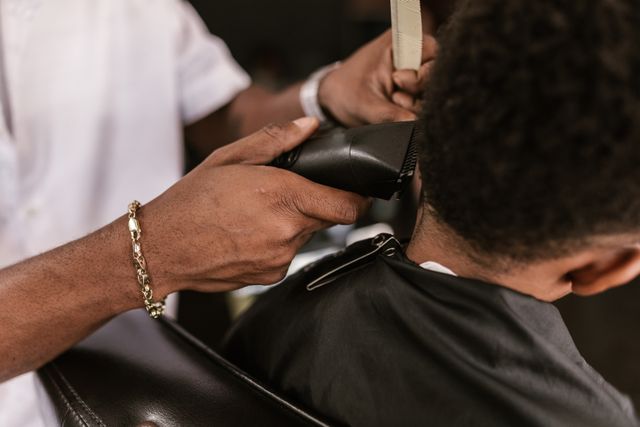
Mid taper fade black male styles explained, sharp, versatile, and easy to keep fresh.
A mid taper fade black male haircut starts the blend around the temples and keeps the neckline neat. It gives enough contrast to look modern without being as dramatic as a high fade, and it pairs especially well with curls, waves, afros, twists, and beards.
If you want a haircut that looks deliberate the moment you leave the chair, the mid taper fade is one of the safest bets. It sits in that sweet spot between subtle and sharp, which is why barber guides keep treating it as a middle-ground style for textured hair.
For Black men, that balance matters. The cut keeps the sides and neckline clean while leaving the top free to show off natural texture, whether that means waves, coils, curls, twists, or a shaped afro.
What You'll Discover:
What a Mid Taper Fade Actually Is
A mid taper fade is a haircut where the hair gradually shortens around the temples and sides while the top stays longer. Barber schools describe fades as smooth transitions down the sides and back, while tapers are softer and may not blend completely to skin.
That difference is the part people often miss. A taper keeps some softness at the base, while a fade usually creates a stronger contrast, so a mid taper fade gives you the clean outline of a fade with a slightly more controlled finish.
Mid taper vs taper vs fade
Think of it this way: taper means softer edge, fade means stronger contrast, and mid taper fade means the balance between the two. Shop guides often describe the mid taper as the most popular middle-ground option because it feels polished without looking extreme.
A useful line to remember is this: the mid taper starts around the temples, not the crown. That placement is why it looks cleaner than a low taper but less aggressive than a high taper.
Why the Mid Taper Fade Black Male Cut Works So Well
Textured Black hair naturally creates volume, and that volume is part of the style. A mid taper fade trims the bulk at the perimeter without flattening the character of the top, so the haircut still feels full instead of overprocessed.
That matters for care as well. Board-certified dermatologists note that curly and coily hair is more prone to dryness and breakage, so a cut that preserves shape while reducing friction around the edges is often easier to live with day to day.
Here are three short facts worth remembering. The mid taper fade starts around the temples. A taper is softer than a fade. Curly and coily hair usually does better with moisture and less frequent washing.
Best Mid Taper Fade Black Male Variations
The best version is the one that fits your texture, your routine, and how much contrast you actually want. Current barber guides show the mid taper fade paired with waves, curls, afros, twists, low cuts, and beard blends because the shape is flexible enough to carry all of them.
With waves
A mid taper fade can frame waves beautifully because the sides stay neat while the wave pattern remains the focus. In practical terms, that means the haircut supports the brush work instead of competing with it.
With curls
This is one of the cleanest pairings. Forte Series recommends lightweight styling cream and low-heat diffusion to keep curly tops defined without collapsing the shape, which fits the mid taper’s clean outline very well.
With an afro
An afro with a mid taper fade has a strong silhouette because the top keeps its height while the taper controls the edges. Barber guides describe this combination as a clean way to preserve volume while making the haircut look intentional and tidy.
With twists or locs
Twists and locs benefit from a mid taper because the fade sharpens the perimeter without stealing attention from the style on top. The cleaner the temple area and neckline, the more the texture stands out.
With a beard
A beard can make the whole cut look more complete, especially when the sideburns are blended into the taper instead of stopping abruptly. The Spot Barbershop notes that a connected fade-and-beard shape keeps the look from feeling separate, which is exactly the detail that makes the finish look premium.
How to Ask Your Barber for It
Vague requests are how good haircuts go sideways. Barber advice consistently says to name the taper height, show a photo, and point to where you want the blend to start before the clippers come out.
A strong script sounds like this: “I want a mid taper fade, keep the blend around the temples, leave the top textured, and keep the neckline clean.” If you already know how short you want the sides, say so clearly, because contrast changes a lot depending on whether the fade finishes at skin, zero, one, or two.
You should also talk about the top, not just the sides. Barbers say details like “two inches on top,” “keep it natural,” or “blend it into my beard” make the final shape much easier to execute well.
How to Keep It Fresh Between Cuts
The mid taper fade grows out cleanly, but it still needs upkeep if you want the shape to stay crisp. Shop guidance commonly puts mid taper touch-ups at about every two to three weeks, which is the point when the outline starts to soften.
Hair care matters just as much as the fade itself. Dermatologists recommend washing curly or coily hair only when needed, conditioning all of the hair, and using leave-in conditioner or oil after washing to help keep moisture in.
If you wear curls or coils, think in terms of preservation, not just styling. Detangle gently with a wide-tooth comb or your fingers, avoid dry brushing, and protect the hair at night so friction does not undo the shape you paid for.
A simple routine can do a lot. Use a moisturizing shampoo when your scalp actually needs it, follow with conditioner, and keep heavy product buildup in check so the fade and the top both look clean. Dermatologists also note that a clarifying shampoo can help if you use gels, oils, creams, or pomades often.
Comparison: Mid Taper Fade vs Low Taper Fade vs Mid Fade
The biggest difference is where the blend starts and how much contrast it creates. Barber schools define the mid fade around the temple area, while low fades begin closer to the ears and high fades move higher toward the crown.
| Style | Where it starts | Best for | Main tradeoff |
| Mid taper fade | Around the temples | Balanced, modern, versatile looks | Needs more upkeep than a low taper |
| Low taper fade | Just above the ears | Subtle, conservative finish | Less contrast and less visual lift |
| Mid fade | Around the temple area, often with stronger contrast | Sharper, more defined style | Can look harsher as it grows out |
For most Black men, the mid taper fade is the safest “first serious fade” because it gives shape without feeling too bare. If you want a softer profile, go lower; if you want more edge and height, go higher.
Common Mistakes People Make
One common mistake is asking for “a fade” and expecting the barber to know exactly how high you mean. Barber guides repeatedly emphasize that the height, guard length, top length, and beard blend all change the final result.
Another mistake is forgetting that texture changes the visual effect. The same fade can look softer on one head and sharper on another, especially when the top is curly, coily, dense, or shaped into an afro.
A third mistake is underestimating maintenance. If the beard, neckline, and sideburns grow out at different speeds, the cut can start looking unfinished even when the fade itself is still in decent shape.
FAQ
What is a mid taper fade black male haircut?
It is a haircut where the blend begins around the temples and gradually shortens the hair on the sides and neckline while keeping more length on top. The result is clean, modern, and easy to adapt to textured hair.
Is a mid taper fade good for curly or coily hair?
Yes. Textured hair works well with a mid taper fade because the cut removes bulk around the edges while preserving the top’s natural volume and shape. Dermatologists also recommend moisture-focused care for curly and coily hair.
How often should I get it touched up?
Many barber guides suggest a refresh every two to three weeks for a mid taper fade. That keeps the blend, neckline, and edges looking crisp before the grow-out becomes noticeable.
What should I tell my barber?
Say the height you want, show a photo, and describe the top length and beard blend. Specific details help your barber match the cut to your hair type and routine instead of guessing.
What is the difference between a taper and a fade?
A taper is usually softer and leaves some length at the base, while a fade blends more dramatically and can go closer to skin. A mid taper fade sits between those ideas, which is why it feels balanced.
Key Takeaways
- The mid taper fade starts around the temples and gives a balanced, modern look.
- It works especially well on Black hair because it cleans the perimeter without flattening the top’s texture.
- The cut pairs naturally with waves, curls, afros, twists, and beard blends.
- A taper is softer than a fade, so the mid taper fade sits in the middle of the two.
- Ask for the height, top length, neckline shape, and beard connection before the cut starts.
- Expect touch-ups about every two to three weeks if you want the shape to stay sharp.
- Moisture, gentle detangling, and low-friction nighttime care help the haircut look better for longer.
Additional Resources
- 6 curly hair care tips from dermatologists: Practical, board-certified advice on moisture, washing, detangling, and protecting curly or coily hair.