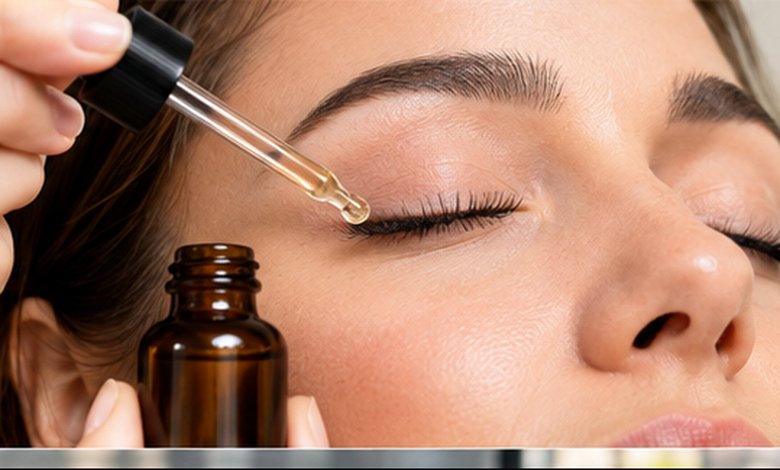
Lash serum without prostaglandin can support fuller-looking lashes without prostaglandin analogues. Learn what to look for.
A lash serum without prostaglandin is an eyelash-conditioning or enhancing serum formulated without prostaglandins or prostaglandin analogues such as isopropyl cloprostenate, bimatoprost, or certain tafluprostamide-related compounds. These formulas commonly use peptides, panthenol, botanical extracts, amino acids, or conditioning ingredients instead, although the evidence for dramatic lash growth is less established than it is for prescription bimatoprost.
What You'll Discover:
Why Prostaglandin-Free Lash Serums Have Become So Popular
There is a particular irony with eyelash growth products: the ingredients capable of producing the most obvious growth are also the ones that have generated the most discussion about unwanted effects around the eyes.
Bimatoprost is the clearest example. It is an FDA-approved prescription treatment for eyelash hypotrichosis, meaning inadequate or not enough eyelashes, but its use can be associated with effects such as eyelid or surrounding-skin pigmentation and, potentially, permanent increased brown pigmentation of the iris.
That does not mean every prostaglandin-containing lash product will cause these effects, nor does it mean prostaglandin analogues are inherently dangerous in every medical context. Prostaglandin analogues remain important ophthalmic medicines, particularly for glaucoma. The issue is that cosmetic lash serums put pharmacologically active substances close to the eye for an aesthetic purpose.
A 2024 review of eyelash serums found a major evidence gap: non-prostaglandin ingredients show promise, but there are considerably fewer high-quality clinical data specifically demonstrating their effectiveness for eyelash growth.
The key distinction is simple: “prostaglandin-free” describes an ingredient choice, not a guarantee that a product will be irritation-free or clinically proven to grow lashes.
What Is a Prostaglandin Analogue?
Prostaglandins are naturally occurring lipid compounds involved in numerous processes throughout the body. A prostaglandin analogue is a compound designed to produce effects through related biological pathways.
For lashes, the important point is that some prostaglandin analogues can influence the eyelash growth cycle. Bimatoprost, for example, has demonstrated an ability to increase eyelash prominence and is the active ingredient in LATISSE, the prescription treatment approved for eyelash hypotrichosis in the United States.
Cosmetic products can contain other compounds that consumers may not immediately recognize as prostaglandins. Examples discussed by regulators and researchers include isopropyl cloprostenate, ethyl tafluprostamide/DDDE, and methylamido-dihydro-noralfaprostal (MDN).
That makes ingredient-label literacy more useful than relying solely on front-of-package language.
Ingredients Worth Checking For
If avoiding prostaglandin analogues is important to you, look beyond phrases such as “hormone-free” or “natural.”
Check the complete ingredient list for names including:
- Isopropyl cloprostenate
- Ethyl tafluprostamide
- Dechloro dihydroxy difluoro ethylcloprostenolamide, often abbreviated DDDE
- Methylamido-dihydro-noralfaprostal, or MDN
- Bimatoprost
- Other specifically identified prostaglandin analogues
The terminology can be confusing because manufacturers may use chemical names, abbreviations, or proprietary descriptions.
A useful rule is this: if a brand says its serum is prostaglandin-free, look for an ingredient list that allows you to verify the claim rather than relying on the marketing headline alone.
What Does a Prostaglandin-Free Lash Serum Use Instead?
Without a prostaglandin analogue, formulators generally take a different approach. Instead of relying on a pharmacologically active growth-promoting compound, they may combine conditioning ingredients intended to improve the appearance, strength, flexibility, or overall condition of the lashes.
Common categories include peptides, panthenol, amino acids, humectants, botanical extracts, antioxidants and other conditioning agents.
Peptides are particularly common. Ingredients such as Myristoyl Pentapeptide-17 and Biotinoyl Tripeptide-1 appear in some lash formulations, while other products use plant-derived extracts or peptide complexes. Current examples include peptide-based formulas from UKLASH and plant/peptide-based formulas from Vegamour.
But there is an important nuance here.
A peptide appearing on an ingredient list does not automatically mean it has been proven to make human eyelashes grow dramatically. The 2024 scientific review specifically noted that non-prostaglandin ingredients need more formal evidence in eyelash-serum applications.
Conditioning Is Not the Same as Growth
Think about the difference between making a lawn healthier and changing how quickly grass grows.
A conditioning serum may help lashes look smoother, stronger, darker, shinier or less prone to breakage. If fewer lashes break prematurely, the visible result can be a fuller-looking lash line even without dramatically altering follicle biology.
That distinction matters when interpreting claims such as “longer,” “fuller,” “healthier” and “stronger.” They can describe overlapping but biologically different outcomes.
Lash Serum Without Prostaglandin vs. Prostaglandin-Based Serum
| Feature | Prostaglandin-free serum | Prostaglandin-based serum |
| Prostaglandin analogues | No | Yes |
| Typical ingredients | Peptides, panthenol, botanical extracts, conditioning agents | Prostaglandin analogues, sometimes alongside peptides and botanicals |
| Main approach | Conditioning and cosmetic enhancement | Pharmacological stimulation of lash growth |
| Evidence for dramatic growth | More limited | Strongest evidence exists for prescription bimatoprost |
| Iris pigmentation concern associated with bimatoprost | Not expected from bimatoprost because it is absent | A documented concern with bimatoprost |
| Periocular pigmentation concerns | Still possible from irritation or individual ingredients | Reported with prostaglandin analogue exposure |
| Best way to evaluate | Ingredient list + evidence + safety information | Ingredient, concentration/use instructions, medical guidance where applicable |
The table should not be interpreted as saying every product in either category has identical effects. Formulations differ considerably, and irritation can occur with many cosmetic ingredients.
Are Prostaglandin-Free Lash Serums Actually Effective?
They can improve the appearance of lashes, but the strength of evidence varies enormously from one formulation to another.
The 2024 comprehensive review is useful here because it separates the marketing promise from the state of the research. The authors found that non-prostaglandin ingredients have promising data, but that additional research is needed because formal evidence specifically supporting their use in eyelash serums remains limited.
That means you should be skeptical of a product claiming that a peptide serum produces exactly the same biological effect as bimatoprost.
It may not.
Instead, look for evidence tied to the finished formula, not merely evidence that one ingredient has an interesting laboratory mechanism.
What a Realistic Result Looks Like
Suppose someone has naturally short lashes and starts a prostaglandin-free serum.
After several weeks, they might notice that their lashes appear healthier, less brittle or more substantial. If the formulation genuinely supports lash conditioning and reduces breakage, the visual difference can be meaningful.
Another person might see very little change.
Lashes naturally cycle through growth, transition and shedding phases, so visible changes are not instantaneous. Brand-specific timelines should therefore be treated as product claims rather than universal biological deadlines.
A believable lash-serum claim should leave room for individual variation.
How to Read a Lash Serum Ingredient List
The fastest way to evaluate a product is to ignore the glamorous front label for a moment and turn the bottle around.
Step 1: Look for the Complete Ingredient List
“Clean,” “natural,” “hormone-free” and “prostaglandin-free” are not substitutes for knowing what is actually inside the formula.
Look for a complete INCI ingredient list and check the specific chemical names.
Step 2: Separate Active-Sounding Ingredients From Evidence
An ingredient can sound impressive without having strong clinical evidence for lash growth.
Peptides, biotin, botanical extracts and vitamins are common examples. Their presence tells you what the formula contains; it does not by itself establish how much your eyelashes will grow.
Step 3: Check How the Product Is Supposed to Be Applied
The eye area is unforgiving. A formula designed for the upper lash line is not necessarily intended to be brushed directly into the eye or smeared across the eyelid.
For example, UKLASH’s prostaglandin-free Sensitive formula instructs users to apply a single stroke along the upper lash line and specifically warns against direct eye contact.
Step 4: Look for Safety and Testing Information
“Ophthalmologist-tested” can be useful information, but it is not the same thing as FDA approval.
In the United States, cosmetic products generally do not receive FDA premarket approval. Companies are responsible for ensuring their cosmetics are safe and properly labeled, while FDA enforcement is primarily post-market.
That distinction is surprisingly important when evaluating online beauty claims.
Why “Natural” Does Not Automatically Mean Safer
Castor oil, plant extracts and other naturally derived ingredients are common in lash products. But natural origin does not eliminate the possibility of irritation, allergy or sensitivity.
The skin around the eye is thin and easily exposed to products through blinking, rubbing or accidental migration.
A prostaglandin-free formula can therefore still cause redness or irritation. If burning, persistent redness, swelling, eye pain or visual symptoms develop, stop using the product and seek appropriate medical advice rather than trying to “push through” the reaction.
What Recent Research Says About Prostaglandin Analogues
The regulatory conversation has become more significant in recent years.
In February 2026, the European Commission’s Scientific Committee on Consumer Safety published an opinion concluding that three prostaglandin analogues, ethyl tafluprostamide, MDN and isopropyl cloprostenate, could not be considered safe for use in cosmetic products intended to promote eyelash or eyebrow growth at the concentrations assessed. The committee cited their potent pharmacological activity and insufficient data to exclude potential adverse effects, including reproductive and developmental toxicity concerns.
This is not the same as saying every prostaglandin analogue has been proven harmful in every circumstance. It reflects the SCCS’s assessment of the evidence for these compounds in cosmetic eyelash and eyebrow products.
There is also evidence that these ingredients are not merely theoretical concerns. A 2026 study analyzing 79 eyelash-lengthening cosmetic products reported that about 30% contained a prostaglandin analogue, with ethyl tafluprostamide/DDDE and isopropyl cloprostenate among the most common.
That finding makes checking the actual formula particularly worthwhile.
Who Might Prefer a Prostaglandin-Free Formula?
There is no universal “right” lash serum for everyone, but several situations make a prostaglandin-free option particularly relevant to consider.
Someone who wants to avoid prostaglandin analogues may choose one because of concerns about pigmentation or periocular effects. Others simply prefer a cosmetic conditioning approach rather than a pharmacologically active lash-growth ingredient.
People with persistent eye problems, a history of significant eye sensitivity, or questions about whether a particular ingredient is appropriate should discuss the product with an ophthalmologist or another qualified healthcare professional.
Pregnancy and breastfeeding deserve particular caution. Product-specific instructions vary, and some manufacturers explicitly advise against use during pregnancy or nursing, for example, UKLASH’s Sensitive formula does so.
How to Use a Prostaglandin-Free Lash Serum Carefully
Application technique matters almost as much as formulation.
Start with clean skin and follow the manufacturer’s directions. Use only the amount recommended; applying more serum does not necessarily produce faster results and may increase exposure to ingredients around the eye.
Keep the applicator clean and avoid sharing it. Do not deliberately place lash serum inside the eye unless the product is specifically designed and approved for ophthalmic use.
If your eyes become persistently red, painful, swollen or unusually sensitive, discontinue the product and get medical advice if symptoms do not resolve.
Common Mistakes to Avoid
Mistaking “Hormone-Free” for “Prostaglandin-Free”
These phrases are related but are not necessarily interchangeable in marketing language. The safest approach is to verify the ingredient list and the manufacturer’s specific prostaglandin statement.
Assuming Expensive Means Better
Price does not establish clinical effectiveness. A $100 serum can still have less convincing evidence for lash growth than a less expensive formula.
Expecting Prescription-Level Results
Bimatoprost has a very different evidence base from most cosmetic lash serums. Comparing every peptide serum directly with prescription therapy creates unrealistic expectations.
Ignoring Irritation Because the Serum Is “Clean”
“Clean” is a marketing concept, not a medical guarantee. Eye-area products still deserve careful use regardless of how natural or minimalist their ingredient list sounds.
How to Choose a Prostaglandin-Free Lash Serum
A sensible checklist is more useful than chasing whichever bottle has the biggest before-and-after photographs.
Look for:
- A complete, transparent ingredient list
- An explicit statement that the formula contains no prostaglandin analogues
- Clear application instructions
- Appropriate warnings and contraindications
- Evidence about the finished product where available
- A manufacturer that identifies the actual ingredients rather than hiding behind vague “proprietary” language
- A realistic description of expected results
- Packaging that allows controlled application near the lash line
And remember that “prostaglandin-free” should be your starting filter, not your entire buying decision.
FAQ
Is lash serum without prostaglandin safe?
A prostaglandin-free formula avoids prostaglandin analogues, but that does not guarantee zero irritation or allergy. Safety depends on the complete formulation, correct use and individual sensitivity.
What ingredients are used instead of prostaglandins?
Common alternatives include peptides, panthenol, botanical extracts, amino acids, humectants and conditioning ingredients. Scientific evidence for dramatic eyelash growth from these ingredients is more limited than the evidence for bimatoprost.
Does prostaglandin-free mean hormone-free?
Not necessarily. The terms should not be treated as identical without checking the manufacturer’s formulation and ingredient list.
Can a prostaglandin-free lash serum make lashes longer?
It may improve the appearance of lash length, fullness or strength, but results vary. Non-prostaglandin lash-serum ingredients generally have less robust clinical evidence for substantial growth than prescription bimatoprost.
Can I use lash serum with eyelash extensions?
Some prostaglandin-free formulas are specifically marketed as compatible with extensions, but compatibility depends on the individual product. Check the manufacturer’s instructions rather than assuming every serum is extension-safe.
Key Takeaways
- Lash serum without prostaglandin avoids prostaglandin analogues such as isopropyl cloprostenate and bimatoprost.
- Prostaglandin-free formulas commonly rely on peptides, panthenol, botanical extracts and conditioning ingredients.
- Non-prostaglandin serums can support the appearance and condition of lashes, but evidence for dramatic growth is more limited than for prescription bimatoprost.
- Bimatoprost can cause eyelid pigmentation and potentially permanent iris pigmentation, which is one reason some consumers prefer prostaglandin-free products.
- European regulators have raised specific safety concerns about several prostaglandin analogues used in cosmetic eyelash and eyebrow products.
- “Natural,” “clean” or “hormone-free” does not automatically mean irritation-free.
- The most reliable way to evaluate a serum is to examine the complete ingredient list, evidence, application instructions and safety information rather than relying on the front label.