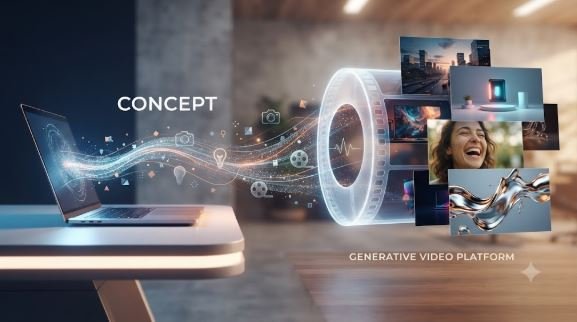
Discover how Seedance 2.5 transforms text into high-quality videos, streamlining content creation for creators and businesses.
The digital content landscape is shifting at a rapid pace. As audiences demand more dynamic, high-fidelity visual assets, creators, marketers, and enterprises continuously seek tools that bridge the gap between imagination and execution. Traditional video production workflows often involve lengthy timelines, substantial resource allocations, and complex technical barriers. In response to these industry demands, the latest technological iteration, the Seedance 2.5 text to video generator, has emerged as a notable development in generative media, offering a streamlined approach to turning textual concepts into cohesive visual narratives.
This release introduces significant upgrades to AI-driven video synthesis, focusing on structural coherence, motion realism, and workflow efficiency. By minimizing the friction traditionally associated with video production, the Seedance 2.5 text to video generator provides a practical avenue for modern content creators to scale their visual output without compromising on quality.
What You'll Discover:
Understanding the Product Upgrade: Beyond Basic Generation
Early iterations of generative video tools often struggled with temporal consistency, anatomical accuracy, and adherence to complex prompts. Subjects would frequently morph mid-scene, backgrounds lacked depth, and lighting remained static or unnatural. The development cycle leading to the Seedance 2.5 text to video generator addresses these foundational limitations through refined neural architecture and expanded training datasets.
At its core, this updated system interprets textual prompts with greater nuance. It parses semantic relationships, spatial dynamics, and stylistic cues more effectively than its predecessors. When a creator inputs a detailed prompt, specifying camera angles, lighting conditions, and subject movement, the model maps out a temporally consistent sequence. The result is a smoother transition between frames, reduced artifacting, and a higher degree of fidelity that aligns closely with professional production standards.
Furthermore, the upgrade emphasizes user control. Creators are no longer passive recipients of random AI outputs; instead, they can guide the generation process with targeted parameter adjustments, ensuring that the final video reflects their exact creative vision or brand guidelines.
Enhancing Workflow Efficiency in Digital Media
For marketing agencies, independent creators, and in-house communication teams, time is often the most constrained resource. Conceptualizing a campaign, storyboarding, sourcing stock footage, or rendering 3D animations can take weeks. The integration of advanced generative tools into daily operations fundamentally alters this timeline.
By utilizing the Seedance 2.5 text to video generator, production teams can compress the ideation and prototyping phases significantly. Instead of spending days searching for matching B-roll or waiting on render farms for preliminary drafts, creators can generate custom visual assets in a matter of minutes.
This acceleration does not merely save time; it changes how teams iterate. Creative directors can test multiple narrative directions, visual styles, and pacing options in real time during the initial strategy phase. If a particular concept does not resonate with the team or client, generating an alternative takes minutes rather than days. This agility allows organizations to respond more rapidly to cultural trends, market shifts, and emerging social media topics, keeping their content relevant and timely.
Practical Use Cases Across Industries
The versatility of modern text-to-video technology makes it applicable across a wide spectrum of professional sectors. Its utility extends far beyond experimental art, finding practical homes in commercial marketing, social media management, and narrative visual storytelling.
1. Marketing Campaigns and Commercials
In the fast-paced world of digital advertising, capturing consumer attention within the first three seconds is critical. Marketing teams frequently run multiple A/B tests with different video creatives to optimize conversion rates. Producing distinct video variations traditionally required substantial budgets for shoots and post-production.
With generative tools, marketers can rapidly prototype diverse advertisement concepts tailored to specific demographic segments. Whether a campaign requires a cinematic product reveal in a minimalist studio setting or a vibrant lifestyle sequence set in an urban environment, the technology allows for rapid customization. Brands can localize campaigns or alter visual themes efficiently, maximizing their return on advertising investment.
2. Social Media Content and Digital Engagement
Social media managers face a relentless demand for fresh, engaging video content across platforms like TikTok, Instagram Reels, and YouTube Shorts. Consistency is key to algorithmic visibility and audience retention, yet maintaining a steady stream of high-quality video content is notoriously difficult.
Creators use text-to-video generation to produce eye-catching background loops, illustrative B-roll for educational essays, and conceptual introductions for vlogs. By automating the visual creation process, creators can maintain a consistent posting schedule while dedicating more energy to scripting, audience interaction, and strategic growth.
3. Visual Storytelling and Pre-Production
For independent filmmakers, animators, and writers, visualizing a script before committing to principal photography is a perennial challenge. Storyboards are static, and traditional animatics require considerable artistic skill to produce.
Generative video systems serve as an advanced pre-production tool. Directors can input scene descriptions to generate moving storyboards, often referred to as “v-blocks”, to evaluate pacing, framing, and mood. This visual reference helps align the entire production crew, from cinematographers to set designers, ensuring a shared vision before cameras roll on set.
Creator Value and Accessibility
A central theme in the evolution of media technology is the democratization of creation. High-end video production tools historically required specialized hardware, expensive software licenses, and years of technical training in software like After Effects or Blender.
The accessibility of web-based AI generation platforms lowers these barriers to entry. Independent creators working with limited resources can now produce professional-grade visual assets that compete with those of larger studios. This leveling of the playing field fosters a more diverse ecosystem of storytellers, where the strength of an idea matters more than the size of a production budget.
At the same time, professional creators benefit from reduced mechanical overhead. By offloading repetitive tasks, such as generating transitional clips, background plates, or texture loops, to generative systems, human editors and artists can focus their expertise on higher-level tasks like narrative structure, emotional resonance, and fine-tuning.
Navigating the Future of Generative Video
As generative media technology matures, industry conversations increasingly focus on responsible use, transparency, and the collaborative relationship between human creators and artificial intelligence. Tools like those developed in this latest wave are not designed to replace human creativity, but rather to augment it. They serve as an extension of the creator’s toolkit, much like digital painting software replaced physical canvases for many graphic designers, or how digital non-linear editing systems transformed film cutting.
The emphasis moving forward will likely remain on improving control, expanding integration with existing editing suites, and refining ethical standards for AI training and content attribution. For organizations and individuals willing to adapt their workflows, the integration of advanced generative tools represents a meaningful step toward more efficient, expressive, and scalable communication.
Media Contacts
To enhance the effectiveness of this announcement and to facilitate further inquiries, journalists, researchers, and media professionals are invited to reach out for additional information, interviews, or clarifications regarding the platform update.
- Contact Person: Ming Hu
- Email: capcutweb@bytedance.com
- Company Name: CapCut