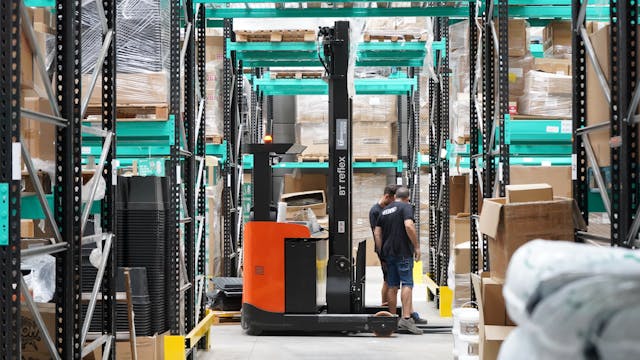
CoreTrak helps businesses organize orders, deliveries, vendors, and communication in one connected workflow system.
CoreTrak is a workflow and order management platform designed to centralize deliveries, dispatching, customer communication, vendor coordination, and operational tracking in one place. Businesses use it to reduce workflow confusion, improve visibility, and manage fulfillment processes more efficiently.
Most operational problems do not begin with massive failures. They begin quietly.
An unanswered message. A spreadsheet with the wrong version number. A delivery ETA buried inside someone’s inbox. A customer waiting for an update while three departments assume someone else already handled it.
That is the strange thing about operational chaos. It rarely looks dramatic from the outside. It looks ordinary.
And that is probably why platforms like CoreTrak are getting attention.
At first glance, CoreTrak sounds like another business software platform trying to promise “streamlined workflows” and “real-time visibility.” The internet is crowded with those phrases already. But after digging deeper into how businesses actually use systems like this, something more interesting starts to appear.
CoreTrak is less about software. It is more about removing friction between people.
That distinction matters.
Because most organizations today are not suffering from a lack of tools. They are drowning in disconnected ones.
A warehouse team uses one platform. Dispatch uses another. Customers rely on emails. Vendors text updates through WhatsApp. Managers jump between spreadsheets and dashboards trying to stitch together a coherent picture.
The result feels like trying to conduct an orchestra where every musician is listening to a different song.
CoreTrak enters that confusion with a surprisingly straightforward idea: bring everything into one operational flow.
Simple concept. Difficult execution.
And maybe that is exactly why people are paying attention.
What You'll Discover:
What Is CoreTrak?
CoreTrak is an order and workflow management platform designed to centralize operational activity across deliveries, dispatching, customer communication, vendor updates, documentation, and fulfillment tracking.
Instead of forcing teams to bounce between disconnected systems, CoreTrak creates a shared operational environment where everyone sees the same information in real time.
That sounds technical. But the impact is deeply human.
A dispatcher no longer needs to chase delivery confirmations manually. A customer no longer needs to send three emails asking for an ETA. A vendor can upload updates directly into the workflow instead of creating another communication thread that eventually gets lost.
According to the platform’s positioning, CoreTrak focuses heavily on:
- Order management
- Dispatch and delivery tracking
- Vendor integration
- Customer visibility portals
- Real-time notifications
- Document management
- Workflow transparency
The interesting part is not the feature list itself.
It is the philosophy underneath it.
CoreTrak appears designed around operational clarity rather than feature overload.
That is increasingly rare.
Why Businesses Struggle Without Systems Like CoreTrak
Most operational breakdowns are invisible until they become expensive.
A late delivery damages customer trust.
A missing invoice delays payment.
A disconnected vendor update creates scheduling problems.
A driver misses a dispatch change because the message arrived too late.
Individually, these seem small.
Collectively, they drain organizations slowly.
This is where platforms like CoreTrak become less of a convenience and more of a survival mechanism.
The Spreadsheet Trap
Many growing companies accidentally build operational systems out of patches.
One spreadsheet becomes five. Five become fifty.
At some point, nobody knows which document contains the correct information anymore.
The strange part is that teams often normalize this confusion. People adapt to operational friction the same way city residents eventually stop hearing traffic noise.
But adaptation is not efficiency.
CoreTrak attempts to replace fragmented tracking systems with a centralized operational layer.
That matters because operational visibility changes behavior.
When teams can see the same data at the same time, coordination becomes less emotional and more factual.
Communication Is Usually the Real Problem
Most businesses think they have a logistics issue.
In reality, they often have a communication issue disguised as a logistics issue.
Consider this simple scenario:
A customer order changes. The sales department updates the CRM. Dispatch never sees the update. Delivery arrives incorrectly. Customer support absorbs the frustration.
The operational failure did not happen because people were careless.
It happened because information moved poorly.
CoreTrak attempts to solve exactly that problem by creating a connected operational environment.
Short quote-worthy fact:
“Operational delays often originate from fragmented communication rather than physical logistics failures.”
That sentence sounds obvious. Yet many companies still operate as if departments are separate islands.
CoreTrak Features That Actually Matter
Software companies love long feature lists.
But most users care about something much simpler:
Will this reduce stress?
CoreTrak’s strongest features appear valuable because they target operational tension directly.
Order Management Without Chaos
This may be the platform’s clearest value proposition.
Orders generate layers of operational complexity:
- Documents
- Invoices
- Status updates
- Delivery schedules
- Vendor coordination
- Customer communication
- Internal notes
When those elements live in separate systems, operational fatigue increases.
CoreTrak consolidates them into a unified workflow.
That sounds minor until you experience the alternative.
Anyone who has searched through old email threads while a customer waits on hold understands the emotional cost of disorganized systems.
Dispatching and Delivery Tracking
Modern delivery operations move quickly.
Sometimes too quickly for traditional coordination methods.
CoreTrak provides real-time dispatch tracking and proof-of-delivery visibility.
This matters because delivery transparency is no longer optional.
Customers expect visibility.
Not eventually. Instantly.
The rise of companies like Amazon permanently changed customer psychology around tracking expectations.
Even B2B clients now expect similar operational clarity.
Customer Portals
One overlooked operational truth:
Customers become less frustrated when they can see what is happening.
Silence creates anxiety.
CoreTrak includes customer-facing portals that allow clients to track orders, updates, documents, and delivery progress.
That self-service visibility reduces repetitive communication.
And more importantly, it reduces uncertainty.
Vendor Integration
Vendors are often the missing link in operational software.
Many systems optimize internal workflows while treating external partners as afterthoughts.
CoreTrak appears to approach vendor coordination differently by allowing suppliers and partners to contribute updates directly into the workflow.
This creates operational continuity.
The result is fewer disconnected updates floating through email inboxes.
The Psychology Behind Operational Visibility
This is where the conversation gets more interesting.
CoreTrak is technically software.
But emotionally, it functions as a trust system.
People relax when information becomes visible.
That applies to customers tracking deliveries. It applies to managers monitoring fulfillment. It applies to warehouse teams coordinating inventory movement.
Uncertainty drains mental energy.
Visibility restores it.
This is why workflow software has become increasingly important in modern business environments. Companies are no longer competing solely on products or pricing.
They are competing on operational experience.
A company that communicates clearly feels more trustworthy.
Even when delays happen.
That distinction matters.
Because modern customers tolerate problems more easily than confusion.
CoreTrak and the Rise of Unified Operations
There is a larger trend happening underneath platforms like CoreTrak.
Businesses are moving away from isolated systems.
For years, companies built technology stacks department by department:
- Sales used one platform
- Logistics used another
- Accounting used another
- Vendors used email
- Customers used phone calls
That model created information silos.
Now organizations increasingly want unified operational ecosystems.
CoreTrak fits directly into that transition.
The platform positions itself as the missing connection between ERP systems, CRMs, POS software, vendors, dispatch teams, and customers.
That is significant because most operational delays occur in the gaps between systems.
Not inside the systems themselves.
Short factual statement:
“Disconnected workflows increase operational lag even when individual software tools perform well independently.”
This is becoming one of the defining business lessons of the modern logistics era.
CoreTrak vs Traditional Workflow Management
| Feature | Traditional Workflow Systems | CoreTrak Approach |
| Communication | Scattered across email and messaging apps | Centralized within workflow |
| Customer Visibility | Limited or manual | Real-time portal access |
| Vendor Updates | Often disconnected | Integrated into operations |
| Delivery Tracking | Fragmented systems | Unified tracking environment |
| Operational Notes | Spread across departments | Shared operational workspace |
| Scalability | Often rigid | Built to adapt with growth |
The table only tells part of the story.
The real difference is experiential.
Traditional systems often force employees to become translators between disconnected tools.
CoreTrak tries to remove the need for translation altogether.
Why Operational Simplicity Is Becoming Valuable Again
For a while, business software moved toward complexity.
Dashboards everywhere. Endless integrations. More features than users actually needed.
Somewhere along the way, many platforms became difficult to live with.
CoreTrak appears to move in the opposite direction.
Its messaging consistently emphasizes clarity, visibility, and operational simplicity.
That shift feels timely.
Because businesses today are exhausted.
Not just financially. Cognitively.
Teams are overwhelmed by notifications, software layers, fragmented communication channels, and constant context switching.
Operational simplicity is no longer a luxury.
It is becoming a competitive advantage.
Industries That Benefit Most From CoreTrak
CoreTrak’s operational model appears particularly useful for industries where coordination matters more than isolated transactions.
Logistics and Delivery Operations
This is the most obvious fit.
Dispatch teams, drivers, vendors, and customers all require synchronized visibility.
Without centralized coordination, delays multiply quickly.
Distribution Companies
Distributors manage constant movement between suppliers, warehouses, and customers.
That creates communication pressure.
CoreTrak helps centralize updates and operational status tracking.
Wholesale Businesses
Wholesale environments often involve large order volumes and vendor coordination.
Even small visibility gaps can create expensive mistakes.
Multi-Department Organizations
Any business struggling with operational silos may benefit from workflow centralization.
Sometimes the biggest improvement is not speed.
It is alignment.
The Hidden Cost of Poor Workflow Systems
Companies usually calculate operational costs incorrectly.
They measure labor.
They measure software.
They measure inventory.
But they rarely measure confusion.
Confusion is expensive.
It slows decisions.
It increases errors.
It damages morale.
It weakens customer confidence.
And over time, confusion quietly becomes culture.
That may sound dramatic. But anyone who has worked inside disorganized operations understands how quickly uncertainty spreads through teams.
CoreTrak’s value proposition ultimately centers on reducing operational ambiguity.
That is less glamorous than “digital transformation.”
But far more practical.
CoreTrak and Customer Expectations in 2026
Customers have changed.
Not gradually. Radically.
People now expect:
- Instant updates
- Real-time tracking
- Transparent communication
- Faster responses
- Self-service visibility
The modern customer experience is increasingly built around information access.
If people cannot see what is happening, trust begins to weaken.
CoreTrak addresses this expectation directly by giving customers visibility into orders, deliveries, documents, and workflow progress.
This transforms customer communication from reactive to proactive.
That difference shapes perception.
A customer who constantly asks for updates feels ignored.
A customer who already has visibility feels informed.
Where CoreTrak May Face Challenges
No platform solves everything.
And pretending otherwise usually creates shallow analysis.
CoreTrak’s biggest challenge may be adoption behavior.
Centralized systems only work when teams actually use them consistently.
That sounds simple.
It is not.
Organizations often underestimate how emotionally attached employees become to existing workflows — even inefficient ones.
People adapt to operational friction over time.
Replacing old habits requires cultural change, not just software implementation.
Another potential challenge involves integration complexity.
Businesses already operate with multiple systems. Bringing everything into a unified operational layer requires thoughtful onboarding and process alignment.
Still, these are common challenges across workflow management platforms generally.
The more interesting question is whether businesses are finally ready to prioritize operational clarity over fragmented convenience.
Increasingly, the answer appears to be yes.
What Makes CoreTrak Different From Generic Business Software
Many workflow platforms feel abstract.
CoreTrak feels operational.
That distinction matters.
Its messaging consistently revolves around:
- Deliveries
- Dispatching
- ETAs
- Documents
- Vendor coordination
- Operational accountability
This creates a more grounded positioning.
The platform appears built around the reality of moving goods and coordinating people rather than simply organizing digital tasks.
That operational specificity gives it a more practical identity.
It is not trying to become everything.
And strangely, that may be one of its strengths.
The Future of Workflow Platforms Like CoreTrak
Business operations are becoming increasingly interconnected.
That trend is unlikely to reverse.
Several shifts are accelerating demand for centralized workflow visibility:
Remote Coordination
Teams now work across locations, time zones, and devices.
Disconnected workflows become harder to manage at scale.
Customer Transparency Expectations
Customers increasingly expect live operational visibility.
Tracking has evolved from a bonus feature into a baseline expectation.
Vendor Collaboration
Modern supply chains rely on constant coordination between external partners.
Static communication methods struggle to keep pace.
Real-Time Operations
Businesses increasingly make decisions based on live operational data rather than delayed reporting.
CoreTrak aligns naturally with these shifts.
And perhaps that is why workflow visibility software is becoming more strategically important.
Not because operations suddenly became more complicated.
But because disconnected systems became impossible to ignore.
FAQ About CoreTrak
What is CoreTrak used for?
CoreTrak is used for managing orders, dispatching, delivery tracking, vendor communication, customer visibility, and operational workflows within one centralized platform.
Is CoreTrak a logistics platform?
CoreTrak supports logistics and operational coordination, particularly around deliveries, workflow visibility, and fulfillment tracking.
Does CoreTrak include customer tracking features?
Yes. CoreTrak includes customer portal functionality that allows clients to monitor order updates, ETAs, documents, and delivery progress.
Can vendors interact inside CoreTrak?
CoreTrak includes vendor integration features that allow suppliers and external partners to upload updates and coordinate directly within workflows.
Why do businesses use platforms like CoreTrak?
Businesses use workflow platforms like CoreTrak to reduce operational confusion, centralize communication, improve transparency, and streamline coordination across teams and partners.
Key Takings
- CoreTrak centralizes order management, dispatching, delivery tracking, and operational communication.
- The platform focuses heavily on visibility, accountability, and workflow clarity.
- Businesses increasingly need unified operational systems instead of disconnected software stacks.
- Customer expectations around transparency and real-time updates continue to rise.
- CoreTrak helps reduce workflow friction caused by fragmented communication.
- Operational confusion creates hidden financial and organizational costs.
- Modern workflow systems succeed when they simplify coordination rather than adding complexity.
Additional Resources:
- Gartner Supply Chain Research: Research and analysis on supply chain transformation, logistics trends, and operational visibility strategies.