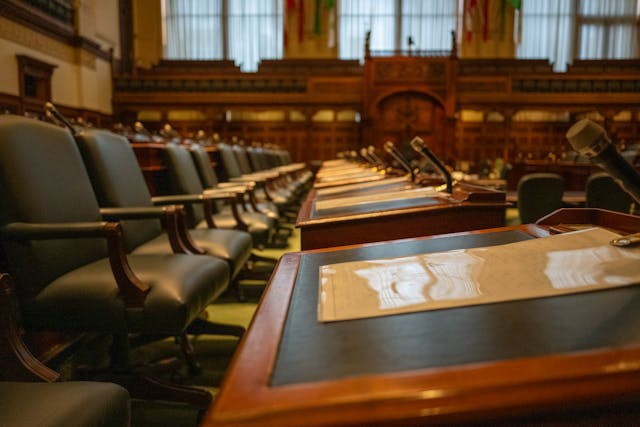
Brown Act cheat sheet explaining California open meeting rules, agendas, public comments, closed sessions, and violations.
A Brown Act cheat sheet is a simplified guide to California’s open meeting law for local government bodies. It explains when meetings must be public, how agendas work, what counts as a violation, and when closed sessions are legally allowed.
The law exists to stop public business from being handled in secret.
The strange thing about transparency laws is that nobody notices them until something feels hidden.
A school board suddenly votes on an issue nobody saw coming. A city council member replies to a chain of private emails. A committee meets “informally” at a restaurant and somehow arrives at the exact same decision later in public. People start using phrases like serial meetings and agenda violations, and suddenly the Brown Act stops sounding like dry legal code and starts feeling personal.
That’s probably why so many people search for a Brown Act cheat sheet instead of reading the full statute. The actual law stretches across government code sections and legal commentary that can feel heavier than wet concrete. Most people are not trying to become municipal attorneys. They just want to know:
What are public officials allowed to do?
What are they not allowed to hide?
And how can ordinary residents tell when something crosses the line?
The deeper I looked into California’s open meeting rules, the more obvious something became: the Brown Act is less about procedure and more about trust. It is essentially a guardrail against invisible government.
And yet, like every guardrail, people keep testing how close they can get to the edge.
What You'll Discover:
What Is the Brown Act?
The Ralph M. Brown Act is California’s open meeting law for local government agencies. It was passed in 1953 to ensure that public business happens publicly.
The law applies to local legislative bodies, including:
- City councils
- County boards
- School boards
- Special districts
- Standing committees
- Advisory boards with continuing jurisdiction
The core principle is surprisingly direct:
“The people do not yield their sovereignty to the agencies which serve them.”
That sentence feels almost rebellious for government language. And maybe that is why the Brown Act still matters decades later.
Because secrecy tends to grow quietly.
Brown Act Cheat Sheet: The Fastest Practical Breakdown
Meetings Must Be Open to the Public
If a majority of a legislative body discusses public business, it usually qualifies as a meeting under the Brown Act.
That means the meeting generally must:
- Be publicly accessible
- Have advance notice
- Include an agenda
- Allow public participation
It does not matter whether the conversation happens in a council chamber, on Zoom, in a hallway, or through coordinated emails.
The law cares less about location and more about collective deliberation.
Regular Meetings Require 72-Hour Notice
This is one of the most cited Brown Act rules.
For regular meetings:
- Agendas must be posted at least 72 hours beforehand
- The agenda must describe each item clearly
- The public must know where and when the meeting occurs
Vague agenda wording can become a legal problem.
“Personnel issue” might not be enough.
“Discussion regarding city infrastructure” can be too broad.
Transparency dies in ambiguity.
Special Meetings Need 24-Hour Notice
Special meetings are allowed for urgent matters, but they follow stricter limits.
Under the Brown Act:
- Only listed agenda items can be discussed
- Notice generally must be given 24 hours in advance
- Media organizations requesting notice must receive it
This shorter timeline exists for emergencies, not convenience.
Public Comment Is Protected
The public has a legal right to comment during meetings.
That includes:
- Agenda items
- Matters within the body’s jurisdiction
Agencies can impose reasonable time limits, but they generally cannot silence criticism just because it is uncomfortable.
This part feels small until you attend a tense meeting and realize public comment is often the only moment ordinary residents can directly confront power in real time.
Three minutes at a microphone can carry years of frustration.
What Counts as a Brown Act Violation?
This is where the law becomes more interesting — and more human.
Most violations are not dramatic smoke-filled-room conspiracies. They are usually quieter. More procedural. Sometimes almost accidental.
And yet the consequences can still be serious.
Serial Meetings
A serial meeting happens when officials communicate in a chain to avoid gathering publicly as a quorum.
Example:
- Member A calls Member B
- Member B texts Member C
- Ideas circulate privately
- Consensus forms before the public meeting
No single gathering included a quorum. But collectively, deliberation happened behind closed doors.
The Brown Act specifically tries to stop this.
Modern technology makes this rule messy. Email threads, group texts, Slack channels, and even social media reactions can create gray areas surprisingly fast.
And honestly, this is where many people become skeptical. Because proving intent is difficult. Officials can always say they were “sharing information,” not deliberating.
Sometimes that explanation is true.
Sometimes it feels carefully engineered.
Taking Action on Non-Agenda Items
Generally, officials cannot suddenly vote on issues not listed on the agenda.
There are limited exceptions for emergencies or urgent developments that arose after posting.
But the rule exists because surprise decisions undermine public participation.
A meeting agenda is supposed to function like a roadmap, not a magician’s sleeve.
Closed Session Abuse
The Brown Act allows certain closed sessions.
Common examples include:
- Pending litigation
- Personnel evaluations
- Labor negotiations
- Real estate negotiations
But agencies cannot simply hide controversial discussions behind vague legal language.
Closed sessions are supposed to be narrow exceptions, not escape hatches.
Brown Act Cheat Sheet for Closed Sessions
Allowed Closed Session Topics
Here are the most common legally permitted reasons:
| Closed Session Type | Usually Allowed? | Why |
| Employee discipline | Yes | Privacy concerns |
| Pending lawsuits | Yes | Legal strategy |
| Real estate negotiations | Yes | Prevent price manipulation |
| General policy debates | No | Must occur publicly |
| Budget discussions | Usually No | Public interest requires openness |
| Political strategy | No | Violates transparency principles |
This distinction matters because agencies sometimes stretch definitions.
A “personnel issue” can occasionally become a shield for political conflict.
A “legal discussion” can drift into policymaking.
That tension is constant in Brown Act disputes.
The Brown Act and Technology
The internet changed everything.
The Brown Act was written long before group chats, livestreams, and instant messaging. Yet modern governance runs through digital communication.
That creates friction.
Can Officials Email Each Other?
Yes — but carefully.
Officials may exchange information individually, but they generally cannot use email chains to develop collective agreement outside public meetings.
The distinction sounds simple until you actually imagine real-life communication.
Where does “sharing information” end and “deliberation” begin?
One sentence can change the answer.
Social Media Risks
A council member commenting on another official’s Facebook post might seem harmless.
But if enough members interact publicly or privately about agency business, it could potentially raise Brown Act concerns.
Transparency law now lives in the same ecosystem as memes, notifications, and algorithmic feeds.
That still feels unresolved.
Why the Brown Act Matters More Than People Think
Most people encounter the Brown Act only when conflict appears.
A controversial school policy.
A zoning fight.
A police oversight issue.
A budget cut.
But underneath those moments is something larger: procedural trust.
When residents believe decisions were shaped privately before public discussion even began, participation starts feeling performative.
The meeting becomes theater instead of governance.
That erosion is dangerous because democracy depends heavily on perceived legitimacy.
Not perfection.
Not agreement.
Legitimacy.
Brown Act Cheat Sheet vs Bagley-Keene Act
Many people confuse these two laws.
Here is the easiest distinction:
| Law | Applies To | Focus |
| Brown Act | Local government bodies | Cities, counties, school boards |
| Bagley-Keene Act | State government agencies | State boards and commissions |
The Brown Act governs local agencies. The Bagley-Keene Open Meeting Act governs state bodies.
It sounds technical, but this distinction matters because different notice rules and procedures may apply.
Common Misunderstandings About the Brown Act
“Officials Can Never Talk Outside Meetings”
Not exactly.
Officials can communicate individually in certain circumstances. The problem arises when communications effectively create collective deliberation outside public view.
This nuance frustrates many people because it feels slippery.
And honestly, it sometimes is.
“Every Violation Invalidates Decisions”
Not automatically.
Some violations can lead courts to invalidate actions, but there are procedural steps involved, including cure-and-correct demands.
The law aims to encourage compliance first, litigation second.
“The Brown Act Applies Everywhere”
No.
The Brown Act applies to California local legislative bodies. Private organizations and many homeowner associations operate under different laws entirely.
That confusion appears constantly online.
Quotable Brown Act Facts
According to California’s Attorney General, the Brown Act is intended to ensure that “the public’s business” is conducted openly.
Under the Brown Act, regular meeting agendas generally must be posted at least 72 hours before the meeting.
Serial meetings designed to avoid public scrutiny are prohibited under California open meeting law.
How Citizens Usually Discover Brown Act Problems
Rarely through legal analysis.
Usually through instinct.
People notice:
- Officials sounding oddly coordinated
- Decisions appearing prearranged
- Last-minute agenda changes
- Public comments being rushed
- Closed sessions expanding suspiciously
Transparency violations often feel emotional before they look legal.
That pattern kept surfacing while researching this topic. Residents describe a sensation first: something feels hidden.
Then they begin learning procedural language afterward.
What Happens When the Brown Act Is Violated?
Possible consequences include:
- Legal challenges
- Court orders
- Voided decisions
- Attorney’s fees
- Public backlash
- Criminal misdemeanor exposure in extreme cases
But public trust damage usually lasts longer than legal penalties.
A city can survive litigation.
Recovering credibility is harder.
Practical Brown Act Checklist
Before a Meeting
- Post agenda on time
- Clearly describe agenda items
- Ensure public access
- Avoid private deliberation beforehand
During a Meeting
- Allow public comment
- Stay within agenda scope
- Report required closed-session actions
- Keep discussions accessible and documented
After a Meeting
- Maintain records properly
- Publish minutes if required
- Respond transparently to public concerns
Simple checklist.
Surprisingly difficult in practice.
FAQ: Brown Act Cheat Sheet
What is the Brown Act in simple terms?
The Brown Act is California’s open meeting law requiring local government decisions to happen publicly rather than secretly.
What is considered a Brown Act violation?
Common violations include secret deliberations, improper closed sessions, serial meetings, and taking action on non-agenda items.
Does the Brown Act apply to emails?
Yes, email communications can potentially violate the Brown Act if they create collective deliberation outside a public meeting.
Can the public record meetings?
Generally yes. The Brown Act permits the public to audio or video record open meetings in most circumstances.
What agencies must follow the Brown Act?
City councils, county boards, school boards, commissions, committees, and many local public agencies in California.
Key Takings
- A Brown Act cheat sheet helps simplify California’s complex open meeting rules.
- The law exists to prevent secret decision-making in local government.
- Regular meetings generally require 72-hour public notice and agendas.
- Serial meetings and hidden deliberations are major Brown Act concerns.
- Closed sessions are allowed only for limited legal exceptions.
- Public comment rights are a central part of government transparency.
- Trust in local government often depends more on openness than agreement.
Additional Resources:
- California Attorney General Open Meetings Guide: Official overview of California open meeting laws, public access rights, and transparency requirements.