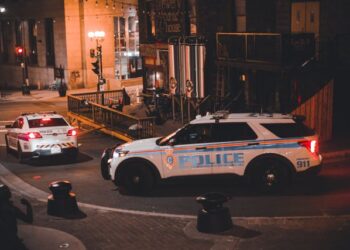
What happened during the i-95 fredericksburg shutdown power lines event, why it stalled traffic, and what drivers should know.
The i-95 fredericksburg shutdown power lines incident was a same-day closure near Exit 130 (Route 3) after downed power lines blocked both directions of the interstate. VDOT reopened the road later that day, but traffic backed up hard on I-95 and nearby detours.
“According to VDOT, all lanes were closed at Exit 130 (Route 3) due to downed power lines.”
“By about 1:30 to 1:42 p.m., I-95 had reopened, but the delays were not over yet.”
“Virginia 511 is the public system for checking what is on the road before you go.”
There are traffic jams that feel ordinary, the kind you grumble through with one hand on the wheel and a coffee cooling in the cup holder. Then there are the ones that make you stop and stare at the map like it has just changed the rules mid-game. The i-95 fredericksburg shutdown power lines event belonged to that second category.
One set of downed lines near Exit 130 was enough to shut down both directions of a highway that so many people treat like a daily artery. That is the strange thing about major roads: they look permanent, almost stubborn, until one dangerous object lands on them and the whole system has to pause. In Fredericksburg, that pause came with detours, frustration, and a reminder that traffic is never just traffic. It is people, timing, weather, utility crews, and a lot of nerves all colliding in one place.
What You'll Discover:
What happened on I-95 in Fredericksburg
The basic version is simple. On June 16, 2025, VDOT reported that all lanes of Interstate 95 were closed near Route 3 in Fredericksburg because power lines were down on the highway. Local coverage said the shutdown affected both northbound and southbound traffic at Exit 130, and the closure began around midday.
The road reopened later the same day. WJLA reported that all lanes had reopened by 1:42 p.m., while WTVR said the reopening happened at about 1:30 p.m. The exact minute varies slightly by outlet, but the point is consistent: the shutdown was temporary, though the traffic damage lingered well beyond the reopening.
That is the part people forget. A closure can end before the backlog does. The road opens, but the rhythm stays broken for a while. Brake lights remain in the body of the highway like an afterimage.
Why the closure spread so fast
I-95 is not a side street. When something dangerous lands on it, the shutdown ripples outward almost instantly because the route carries commuter traffic, regional traffic, freight, and the kind of through-travel that has no patience for surprises. A hazard at one exit becomes a problem for several miles in each direction before anyone has fully processed what happened.
There is also a practical reason closures like this can look sudden. Downed power lines are treated as live until crews make the scene safe. That means the response is not just about moving cars around; it is about protecting drivers, roadside workers, and anyone who might come into contact with the lines. Dominion Energy advises people to stay away from downed lines, never touch them, and keep at least 30 feet away.
How the detour web worked
The detour pattern around Fredericksburg was not random. According to local reporting, southbound traffic was diverted at Exit 140 in Stafford County and northbound traffic at Exit 126 in Spotsylvania County. Drivers were also encouraged to use Route 301 or Route 29 to move around the congestion zone, while traffic signal timing on Route 1 was adjusted to handle the extra volume.
That detail matters because detours are not magic escape hatches. They are trade-offs. One road may be shorter, another may be slower, and a third may be so overloaded that it turns into a second version of the same problem. In this case, the roads east and west of I-95 became pressure valves for the entire corridor.
The part drivers actually feel
On paper, a detour looks neat. In real life, it feels like a slow exhale through a narrow tube. WJLA reported that congestion began south of Exit 136 near Centreport Parkway in Stafford and north of Exit 118 around Thornburg in Spotsylvania. That is what shutdowns do: they move the pain outward until the surrounding roads absorb it.
A road closure is never just the closed road. It is a chain reaction. The exit ramps fill. The frontage roads thicken. Route 1 becomes a patience test. Nearby signals are retimed. Everyone is doing math in their head, and nobody loves the answer.
Why downed power lines create outsized shutdowns
This is where the story becomes bigger than a traffic alert. A downed line is not just debris. It is a live-risk situation, which means the safest response is often the most disruptive one. Crews cannot simply wave traffic through and hope for the best. They have to secure the area, assess the hazard, and make sure the scene is stable enough for people to move again.
That is why these incidents often feel dramatic even when nobody is injured. The stakes are invisible. You can see the road, the cars, the waiting drivers. What you cannot see is whether a line is energized, whether a shoulder is safe, or whether a nearby object could become dangerous if touched. The shutdown is the visible part of an invisible emergency.
There is another tension here. People are used to thinking of power lines as background scenery. Then one falls, and the whole mental model changes. Suddenly the ordinary road becomes a no-go zone, and the thing that looked fixed and forgettable becomes the reason everyone has to stop. That shift is unsettling, but it is also the point of the safety response.
What this shutdown says about the Fredericksburg corridor
Fredericksburg is one of those places where regional travel and local life are constantly sharing the same pavement. When I-95 hiccups there, the impact is not isolated. It reaches commuters, delivery drivers, shoppers, and people just trying to get home on time.
The event also shows how quickly a modern traffic network leans on real-time information. VDOT’s travel advisories and Virginia 511 exist for exactly this kind of moment. The official guidance is simple: check the road before you go, because closures can change without warning and new lane restrictions can appear without much notice.
That is the quiet lesson buried inside the chaos. The road can look open on a map and still be functionally blocked by the time you reach it. Real-time updates are not a luxury anymore. They are part of the trip.
Comparison: route options during the shutdown
| Option | What it offered | Trade-off |
| I-95 through Fredericksburg | The direct route once reopened | Closed during the hazard; backups lingered after reopening |
| Route 1 corridor | A main local bypass with signal adjustments | Heavy congestion as traffic shifted off the interstate |
| Route 301 | Recommended alternate around the closure | Useful relief, but still part of the regional reroute pattern |
| Route 29 | Another east-west relief option | Better for spreading traffic, not for making travel vanish |
FAQ
What caused the I-95 shutdown in Fredericksburg?
VDOT said downed power lines were on the highway near Exit 130/Route 3, which forced a closure in both directions.
When did I-95 reopen?
Local reports said the road reopened around 1:30 to 1:42 p.m. on June 16, 2025.
Were there detours?
Yes. Drivers were routed to Exit 140 in Stafford County and Exit 126 in Spotsylvania County, with Route 301 and Route 29 suggested as alternate paths.
Why are downed power lines taken so seriously?
Because they can be energized and dangerous. Dominion Energy advises staying at least 30 feet away, not touching the line, and calling 911 if anyone is in immediate danger.
How can drivers check for future disruptions?
VDOT recommends using Virginia 511 and the travel advisories page before heading out. The system is meant for exactly this kind of real-time road check.
Key Takings
- The i-95 fredericksburg shutdown power lines incident closed both directions near Exit 130 on June 16, 2025.
- VDOT reopened the interstate later the same day, but delays continued after the lanes reopened.
- Route 301 and Route 29 helped absorb some of the detour pressure, while Route 1 carried extra traffic and signal adjustments.
- Downed power lines are treated as a serious live hazard, not just a road obstacle.
- Virginia 511 and VDOT travel advisories are the best public tools for checking road status before you leave.
- The Fredericksburg corridor is especially vulnerable to ripple effects because one closure quickly spreads onto nearby routes.