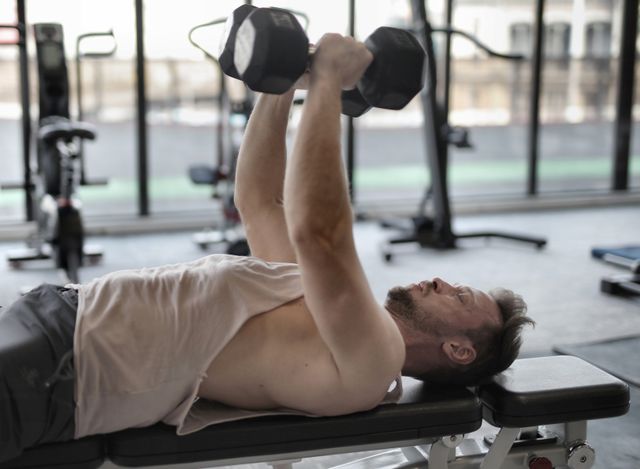
Learn the dumbbell incline row with proper form, benefits, mistakes, variations, and expert tips for a stronger back.
The dumbbell incline row is a chest-supported rowing exercise performed while lying face down on an incline bench and pulling dumbbells toward the torso. It primarily targets the upper back, lats, rhomboids, rear delts, and biceps while reducing stress on the lower back.
It is widely considered one of the most effective rowing variations for building upper-back strength and muscle while maintaining strict form.
The first time I tried a dumbbell incline row, I expected it to feel like every other rowing exercise. Pick up the weight. Pull it. Lower it. Repeat.
Simple.
At least that’s what I thought.
A few reps later, something unexpected happened. The movement exposed every weakness I didn’t know I had. The bench removed momentum. My lower back couldn’t assist. My hips couldn’t swing. My shoulders couldn’t hide behind sloppy mechanics.
For the first time, my back had to do exactly what it was designed to do.
That experience changed how I viewed rowing exercises.
Many gym movements reward creativity. You can subtly alter mechanics, recruit extra muscles, and move more weight. The dumbbell incline row is different. It quietly demands honesty. Either your back pulls the weight, or it doesn’t.
That’s one reason this exercise has remained a favorite among bodybuilders, strength athletes, and everyday gym-goers. It delivers results without unnecessary complexity.
Yet despite its effectiveness, many people overlook it in favor of flashier exercises.
That may be a mistake.
Because sometimes the most powerful training tools are the ones hiding in plain sight.
What You'll Discover:
What Is a Dumbbell Incline Row?
The dumbbell incline row is a chest-supported rowing movement performed on an incline bench. The lifter lies face down while holding a dumbbell in each hand and pulls the weights toward the body.
Unlike traditional bent-over rows, the chest remains supported throughout the movement.
That support fundamentally changes how the exercise feels and functions.
Instead of worrying about maintaining a bent-over position, the lifter can focus almost entirely on moving the weight with the back muscles.
The result is often cleaner technique, greater muscle awareness, and more consistent tension.
Primary Muscles Worked
The dumbbell incline row develops multiple muscles simultaneously.
These include:
- Latissimus dorsi
- Rhomboids
- Middle trapezius
- Lower trapezius
- Rear deltoids
- Biceps
- Forearms
Together, these muscles create a stronger, thicker, and more balanced upper body.
Think of them as the framework behind a building. Most people notice the exterior first, but the structure underneath determines everything.
The same principle applies to the back.
Why the Dumbbell Incline Row Is So Effective
Every exercise has strengths and weaknesses.
The dumbbell incline row’s biggest strength is that it limits cheating.
That may not sound exciting.
In reality, it’s incredibly valuable.
Reduced Momentum
Many rowing exercises allow subtle body movement.
A small hip drive here.
A slight torso swing there.
Eventually, those little movements add up.
The dumbbell incline row removes most of those opportunities.
The bench acts like an anchor, forcing the upper back to handle the workload.
Greater Muscle Isolation
Isolation isn’t always the goal.
But when trying to develop specific muscles, it matters.
Because the torso remains stable, lifters often feel stronger contractions in the rhomboids, rear delts, and middle traps.
Those muscles can be difficult to target effectively during standing rows.
Lower Back Relief
Not every training session needs to challenge the lower back.
Heavy squats, deadlifts, and bent-over rows already create significant fatigue.
The incline row offers a way to continue training the back while giving the spinal erectors a partial break.
For many lifters, that’s the difference between productive training and excessive fatigue.
Improved Mind-Muscle Connection
The phrase “mind-muscle connection” gets overused.
Yet there is real value in learning how to feel a muscle working.
The incline row creates an environment where those sensations become easier to recognize.
The body becomes quieter.
The back becomes louder.
How to Perform the Dumbbell Incline Row Correctly
Proper execution transforms a good exercise into a great one.
Step 1: Set the Bench
Adjust an incline bench between 30 and 45 degrees.
Most lifters find this range comfortable and effective.
Step 2: Grab the Dumbbells
Choose a weight that allows complete control.
Ego has ended many good workouts.
Technique builds more muscle than pride.
Step 3: Position Your Body
Lie face down against the bench.
Allow the arms to hang naturally.
Keep the chest connected to the pad.
Step 4: Initiate the Pull
Pull the elbows upward and backward.
Imagine driving the elbows toward the ceiling rather than lifting the dumbbells.
This simple cue often improves technique instantly.
Step 5: Squeeze the Back
At the top of the movement, pause briefly.
Focus on contracting the upper-back muscles.
A one-second squeeze can make a dramatic difference.
Step 6: Lower Slowly
Control the descent.
Avoid letting gravity take over.
The lowering phase contributes significantly to muscle development.
Common Dumbbell Incline Row Mistakes
Even excellent exercises can become ineffective when performed incorrectly.
Using Too Much Weight
This is the most common mistake.
Many lifters chase heavier dumbbells before mastering the movement.
The result is usually reduced muscle activation and sloppy mechanics.
Pulling With the Arms
Rows are back exercises.
That sounds obvious.
Yet many people perform them like bicep curls.
Focus on leading with the elbows rather than the hands.
Shrugging the Shoulders
Excessive shrugging shifts emphasis away from the intended muscles.
Keep the shoulders controlled and stable.
Rushing the Repetitions
Fast repetitions often reduce tension.
Slow, deliberate movement usually produces better results.
Lifting the Chest Off the Bench
The bench exists for a reason.
Maintain contact throughout the set whenever possible.
Benefits of the Dumbbell Incline Row
Increased Back Thickness
A wide back gets attention.
A thick back earns respect.
The incline row excels at developing the dense musculature that creates depth and dimension.
Better Posture
Modern life encourages forward-rounded shoulders.
Hours spent at desks, driving, and looking at screens contribute to muscular imbalances.
The dumbbell incline row helps strengthen muscles responsible for pulling the shoulders back.
Enhanced Athletic Performance
Many sports involve pulling, stabilizing, or resisting force.
A stronger upper back contributes to performance in:
- Wrestling
- Football
- Rugby
- Swimming
- Climbing
- Martial arts
Even activities outside athletics become easier.
Carrying groceries.
Moving furniture.
Lifting children.
Strength has a way of showing up when life gets heavy.
Improved Shoulder Stability
The shoulder is remarkably mobile.
That mobility comes with responsibility.
Strong supporting muscles help maintain healthy shoulder mechanics.
The incline row strengthens several of those key stabilizers.
Dumbbell Incline Row vs Other Row Variations
| Exercise | Lower Back Stress | Muscle Isolation | Learning Curve | Momentum Potential |
| Dumbbell Incline Row | Low | High | Easy | Low |
| Bent-Over Row | High | Moderate | Moderate | Moderate |
| Seated Cable Row | Low | Moderate | Easy | Moderate |
| Single-Arm Row | Moderate | High | Moderate | Moderate |
| T-Bar Row | Moderate | Moderate | Moderate | Moderate |
Each exercise has merit.
The dumbbell incline row simply fills a unique role.
It provides stability without sacrificing effectiveness.
Best Rep Ranges
For Muscle Growth
- 8 to 15 reps
- 3 to 5 sets
This range balances tension, volume, and fatigue.
For Strength
- 5 to 8 reps
- 3 to 5 sets
Heavier weights can be effective when form remains strict.
For Endurance
- 15 to 20 reps
- 2 to 4 sets
These higher-repetition sets create prolonged tension and muscular endurance.
Advanced Dumbbell Incline Row Techniques
Once basic execution becomes second nature, advanced methods can increase challenge.
Pause Repetitions
Pause for one to two seconds at the top.
This eliminates momentum and reinforces muscle engagement.
Slow Negatives
Lower the weight over three to five seconds.
The movement instantly feels more demanding.
That’s because the muscles remain under tension longer.
Mechanical Drop Sets
Begin with strict incline rows.
After reaching fatigue, switch to a less restrictive rowing variation.
This extends the set without sacrificing quality work.
Partial Repetitions
Near the end of a set, short-range repetitions can increase metabolic stress and prolong tension.
Used carefully, they can be a valuable tool.
Who Should Perform Dumbbell Incline Rows?
Beginners
The chest-supported setup simplifies technique.
New lifters can focus on learning proper pulling mechanics.
Intermediate Lifters
Intermediate trainees often use incline rows to improve muscle activation and correct weaknesses.
Advanced Lifters
Experienced athletes appreciate the exercise’s ability to provide significant training stimulus without excessive systemic fatigue.
Lifters Managing Lower Back Fatigue
For individuals who struggle with heavy bent-over positions, incline rows can be an excellent alternative.
Programming the Dumbbell Incline Row
One question often appears after discovering the exercise:
Where should it fit in a workout?
The answer depends on the goal.
For muscle growth, many lifters place incline rows early in their training session when energy levels are highest.
For strength athletes, the exercise often appears after major compound lifts.
For general fitness enthusiasts, it can serve as the primary rowing movement of the workout.
A simple approach might look like:
- Pull-Ups: 3 sets
- Dumbbell Incline Rows: 4 sets
- Lat Pulldowns: 3 sets
- Face Pulls: 3 sets
Simple.
Effective.
Sustainable.
The Most Overlooked Advantage
Most discussions focus on muscle growth.
That’s understandable.
Visible results attract attention.
But perhaps the most underrated benefit of the dumbbell incline row is accountability.
The exercise exposes weaknesses.
Weak scapular control.
Poor pulling mechanics.
Reliance on momentum.
Insufficient upper-back strength.
At first, that can feel frustrating.
Eventually, it becomes empowering.
Because awareness creates improvement.
And improvement creates results.
The dumbbell incline row doesn’t hide reality.
It reveals it.
In the long run, that honesty may be the very reason it works so well.
FAQ Section
What muscles does the dumbbell incline row work?
The exercise primarily targets the lats, rhomboids, trapezius muscles, rear deltoids, biceps, and forearms.
Is the dumbbell incline row better than the bent-over row?
Not necessarily. The incline row reduces lower-back involvement and promotes stricter form, while the bent-over row generally allows heavier loading.
What bench angle is best for dumbbell incline rows?
Most people achieve optimal results using a bench angle between 30 and 45 degrees.
Can beginners perform dumbbell incline rows?
Yes. The exercise is beginner-friendly because the bench support simplifies technique and improves stability.
How often should I do dumbbell incline rows?
Most trainees benefit from performing them one to three times per week depending on recovery, goals, and overall training volume.
Are dumbbell incline rows good for posture?
Yes. The exercise strengthens several muscles that help maintain healthy shoulder positioning and upper-back posture.
Key Takings
- The dumbbell incline row is a chest-supported rowing exercise designed to strengthen the upper back.
- It targets the lats, rhomboids, traps, rear delts, biceps, and forearms.
- Bench support minimizes lower-back stress and limits momentum.
- The exercise promotes strict technique and improved muscle activation.
- Dumbbell incline rows can enhance posture, shoulder stability, and pulling strength.
- They are suitable for beginners, intermediate trainees, and advanced athletes.
- Consistency, controlled repetitions, and proper form matter more than lifting heavier weights.
- The dumbbell incline row remains one of the most effective yet underrated exercises for building a stronger back.
Additional Resources:
- National Strength and Conditioning Association (NSCA): Research-backed strength training education, coaching principles, and exercise science resources from a leading authority.