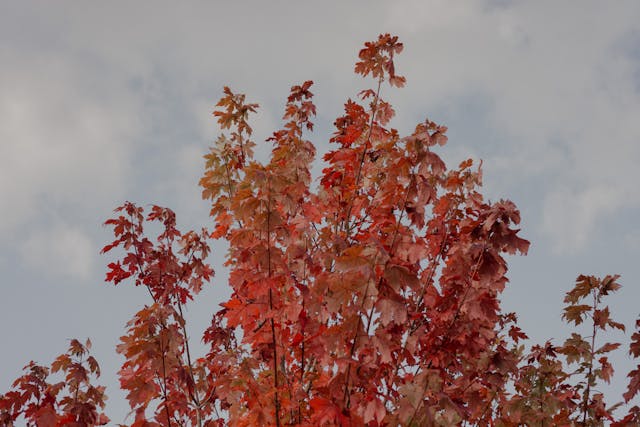
Acer rubrum Florida Flame delivers brilliant red fall color, fast growth, and heat tolerance perfect for southern landscapes.
Acer rubrum ‘Florida Flame’ is a heat-tolerant red maple cultivar prized for its vivid red fall foliage, fast growth, and adaptability to warm southern climates. Unlike many traditional maples, it maintains strong autumn color even in regions with mild winters, especially across the southeastern United States.
There’s something slightly unfair about maple trees in warm climates.
You grow up seeing photographs of blazing red forests in Vermont or New England, and somewhere along the way, you quietly assume that kind of autumn drama belongs to colder places. Then you move south. The air stays humid into October. Palms thrive. Winters barely whisper. And suddenly the idea of a fiery maple feels almost fictional.
That’s where Acer rubrum ‘Florida Flame’ changes the conversation.
The first time I saw one in late fall, it looked almost out of place, like a northern tree that had wandered too far south and decided to stay anyway. Everything around it was still green. But this tree had turned incandescent red, glowing against the soft Florida light like it was carrying its own season.
And honestly, that contrast explains why this cultivar matters so much.
It isn’t just another red maple. It’s a red maple selected specifically to perform where many maples hesitate. Warm climates. Humid summers. Inconsistent winters. Landscapes that need shade quickly but still want beauty that feels seasonal and alive.
The deeper I looked into it, the more interesting it became. Because Florida Flame isn’t perfect. No tree is. It grows quickly, but that speed comes with structural quirks. It loves moisture, but hates alkaline soil. It’s dramatic in autumn, yet surprisingly understated during most of the year.
Which somehow makes it more compelling.
What You'll Discover:
What Is Acer Rubrum Florida Flame?
Acer rubrum ‘Florida Flame’ is a cultivated variety of the native red maple tree. It was selected for one major reason: reliable fall color in warm southern climates.
That sounds simple until you realize how difficult that actually is.
Many maples rely on long periods of cold weather to trigger intense autumn coloration. In places like central and southern Florida, that process becomes inconsistent. Trees may stay green longer, turn dull yellow, or skip dramatic color entirely.
Florida Flame was bred to resist that disappointment.
According to the University of Florida’s IFAS extension, this cultivar produces “good fall color, even in Florida.”
That single sentence explains why landscapers and homeowners keep planting it.
Key Characteristics
Size and Shape
Florida Flame typically reaches 40–60 feet tall with a spread of 25–40 feet.
Young trees grow with an upright oval form before gradually developing a rounded canopy. It feels structured without looking rigid.
There’s a softness to mature red maples that many modern landscape trees lack. They don’t stand like soldiers. They drift outward.
Growth Rate
This tree grows fast.
Most sources estimate roughly 12–18 inches of growth per year under favorable conditions.
That speed changes how a yard feels. A sapling becomes shade faster than expected. Empty spaces close in. Heat softens. Birds arrive.
Fast-growing trees often feel temporary, but Florida Flame occupies an interesting middle ground. It grows quickly while still carrying the visual weight of a classic hardwood.
Fall Color
This is the headline feature.
Brilliant scarlet. Orange-red. Deep crimson. Sometimes all at once.
And unlike many northern maples, Florida Flame performs surprisingly well in warmer USDA zones.
The color isn’t subtle. It announces itself.
Why Florida Flame Works So Well in Southern Landscapes
Most maples look happiest in postcards from colder states. Florida Flame looks adapted to reality in the South.
That distinction matters more than gardening catalogs usually admit.
Southern landscapes are hard on trees. Humidity stresses foliage. Sandy soils drain too quickly. Winters fluctuate unpredictably. Long summers stretch into exhaustion.
Florida Flame was selected because it handles these conditions better than standard red maple varieties.
Heat Tolerance
One of the biggest advantages of Florida Flame is its ability to tolerate warm temperatures and humidity.
That doesn’t mean it enjoys drought. There’s an important difference.
The tree tolerates heat well when soil moisture remains reasonably consistent. In dry, compacted urban soil, it can struggle.
That contradiction surprises many homeowners. They assume “Florida” in the name means indestructible.
It isn’t.
It’s adaptable, not invincible.
Wet Soil Adaptation
Red maples naturally evolved in swampy environments and wet woodland edges.
Florida Flame retains much of that preference.
If your property has poor drainage, seasonal wet spots, or low areas where other shade trees decline, this cultivar can become unexpectedly valuable.
Some trees merely survive wet soil. Florida Flame often thrives in it.
Reliable Shade
Fast-growing shade trees usually involve compromise.
Silver maples grow quickly but become brittle. Live oaks become majestic but take patience. Hybrid maples often sacrifice structure for speed.
Florida Flame sits somewhere in the middle.
It grows fast enough to matter but retains the softer elegance of a traditional red maple canopy.
That balance explains its popularity in suburban landscapes.
The Part Nobody Talks About Enough: Soil pH
This is where many Florida Flame plantings quietly fail.
Red maples strongly dislike alkaline soil.
When soil pH rises above roughly 7.2, the tree may develop chlorosis, a yellowing of leaves caused by nutrient deficiencies, particularly manganese.
The frustrating part is how deceptive this can look.
Homeowners often assume the tree needs fertilizer. They add more nutrients. The leaves stay pale. Growth weakens anyway.
The actual issue is chemistry, not feeding.
Signs of Alkaline Soil Stress
Yellow Leaves With Green Veins
This is classic chlorosis.
The tree struggles to absorb nutrients even when those nutrients are technically present in the soil.
Slow Growth
A stressed Florida Flame loses one of its best features: rapid establishment.
Sparse Canopy
Instead of producing dense summer shade, branches begin thinning.
This is why soil testing matters before planting.
Not because gardening should become scientific and joyless, but because matching the right tree to the right conditions saves years of frustration.
Florida Flame vs Other Red Maple Cultivars
Not all red maples behave the same way.
Some prioritize faster growth. Others emphasize structure. Some explode into color early. Others hold leaves longer into autumn.
Florida Flame occupies a unique niche because it was selected specifically for warm climates.
Comparison Table
| Cultivar | Best Feature | Weakness | Ideal Climate |
| Florida Flame | Reliable southern fall color | Sensitive to alkaline soil | Warm, humid regions |
| Autumn Blaze | Extremely fast growth | Weak branch structure | Broad adaptability |
| October Glory | Long-lasting fall color | Slower coloration in warm zones | Cooler regions |
| Red Sunset | Strong branch structure | Less heat adapted | Temperate climates |
| Autumn Flame | Early scarlet color | Less humidity tolerance | Northern to mid-south |
One interesting detail keeps appearing in horticultural discussions: southern growers repeatedly gravitate toward cultivars like Florida Flame because traditional northern maples often underperform in warm winters.
Climate changes everything.
Planting Acer Rubrum Florida Flame Correctly
A beautiful tree planted badly becomes a long-term disappointment.
And maples are strangely unforgiving about certain mistakes.
Choose the Right Location
Florida Flame needs space.
Its roots spread aggressively near the surface over time, and mature canopies become broad.
Avoid planting too close to:
- Sidewalks
- Driveways
- Foundations
- Narrow parking strips
This is not a tiny ornamental tree pretending to be a shade tree.
It eventually becomes the real thing.
Sunlight Requirements
Full sun produces the best fall color.
Partial shade works, especially in hotter southern zones, but intense autumn coloration tends to improve with stronger sunlight exposure.
Watering During Establishment
Young Florida Flame trees need consistent moisture during the first two years.
After establishment, they become more resilient, but prolonged drought still stresses them.
The phrase “drought tolerant” gets thrown around too casually in landscaping. Florida Flame tolerates occasional dryness better than expected, but it remains fundamentally a moisture-loving species.
Wildlife Benefits Most Homeowners Miss
People usually plant this tree for aesthetics.
But ecologically, it contributes more than many realize.
According to the Florida Native Plant Society, red maples support pollinators, moth species, birds, and small mammals.
Its seeds feed squirrels and rodents. Its flowers attract bees. Its canopy supports insect life that birds rely on.
That matters because modern landscapes often become biologically empty without homeowners noticing.
A lawn can look pristine while functioning like ecological concrete.
Trees like Florida Flame quietly reverse some of that emptiness.
Common Problems and Weaknesses
No honest tree guide should pretend otherwise: Florida Flame has flaws.
And some are significant.
Brittle Branches
Young twigs can break during storms.
This is one of the tradeoffs for rapid growth.
Proper pruning early in life becomes important. Strong branch structure doesn’t happen automatically.
Surface Roots
As the tree matures, roots may rise toward the soil surface.
This can complicate mowing and hardscape planning.
Pest and Disease Issues
Like many maples, Florida Flame can experience:
- Aphids
- Scale insects
- Borers
- Leaf spot diseases
- Verticillium wilt
Verticillium wilt deserves particular attention because it can become fatal.
Healthy soil and reduced stress dramatically improve resilience.
Why People Become Emotionally Attached to Red Maples
This surprised me while researching.
People talk about red maples differently than they talk about many other trees.
There’s affection in the language. Memory. Attachment.
Maybe it’s because maples visibly change. They mark seasons with theatrical confidence. A live oak remains mostly itself year-round. A maple transforms.
That transformation affects people more deeply than landscaping trends admit.
One Reddit user described ordinary red maples as “really beautiful trees with nice colors” even without special cultivars.
Another called them their “fav species” while discussing bonsai cultivation.
That emotional connection matters.
Because landscapes aren’t only functional systems. They become background scenery for entire periods of life.
A tree that burns bright every autumn eventually becomes tied to memory itself.
Is Florida Flame the Right Tree for Your Yard?
Maybe.
And that uncertainty is important.
Florida Flame is ideal if you:
- Live in a warm southern climate
- Want vivid fall color
- Need shade relatively quickly
- Have acidic or neutral soil
- Can provide moderate moisture
It’s less ideal if you:
- Have strongly alkaline soil
- Need exceptional drought tolerance
- Want a perfectly tidy tree
- Have very limited planting space
That nuance matters more than blanket recommendations.
A tree can be extraordinary in one landscape and disappointing in another.
FAQ About Acer Rubrum Florida Flame
How fast does Acer rubrum Florida Flame grow?
Florida Flame typically grows 12–18 inches per year under favorable conditions.
Does Florida Flame maple turn red in warm climates?
Yes. Reliable red fall color is one of the cultivar’s defining characteristics, even in Florida and other southern regions.
Is Acer rubrum Florida Flame drought tolerant?
It tolerates occasional dry periods once established, but it performs best with consistent soil moisture.
How large does Florida Flame maple become?
Mature trees generally reach 40–60 feet tall with spreads of 25–40 feet.
Does Florida Flame have invasive roots?
The tree develops shallow surface roots over time, which can interfere with sidewalks and lawns if planted too close.
Key Takings
- Acer rubrum ‘Florida Flame’ was selected for reliable fall color in warm southern climates.
- The tree grows quickly while maintaining the classic beauty of native red maples.
- Acidic soil is critical for long-term health and vibrant foliage.
- Florida Flame performs especially well in moist or seasonally wet landscapes.
- Brilliant autumn color remains its biggest advantage over standard red maple varieties.
- Surface roots and brittle branches are manageable but important considerations.
- Beyond aesthetics, Florida Flame supports pollinators, birds, and native wildlife naturally.
Additional Resources:
- University of Florida IFAS Tree Guide: Research-backed tree selection and care advice for warm-climate landscapes and urban planting decisions.