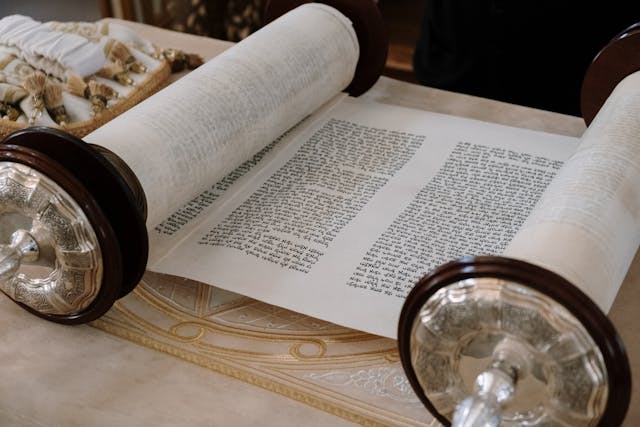
Explore Reagan Library Dead Sea Scrolls: ancient texts, history, and why this rare exhibit reshaped how visitors see the past.
The Reagan Library Dead Sea Scrolls exhibit features ancient manuscripts over 2,000 years old.
These scrolls provide rare insight into early biblical texts and ancient religious communities.
I thought it would feel like any other museum visit. Quiet halls, glass cases, polite curiosity.
But standing in front of fragments from the Dead Sea Scrolls at the Reagan Library… something shifted.
Not dramatically. Not all at once.
More like a slow realization: this isn’t just history, it’s continuity. Someone wrote these words over two thousand years ago, and somehow they’ve traveled through war, dust, and time to end up here.
And I kept thinking… how does something survive that long? And more importantly, why does it still matter?
What You'll Discover:
What Are the Dead Sea Scrolls, and Why Are They at the Reagan Library?
The Reagan Library Dead Sea Scrolls exhibit centers around one of the most important archaeological discoveries of the 20th century.
The scrolls were first uncovered between 1947 and 1956 in caves near the Dead Sea.
They include:
- Portions of the Hebrew Bible
- Religious laws and community rules
- Previously unknown ancient writings
According to historical research, the scrolls date from roughly 250 BCE to 70 CE.
That alone is staggering. These texts existed before many modern religious traditions fully formed.
So why bring them to California?
The Reagan Library hosts rotating exhibits to connect global history with modern audiences.
Displaying the scrolls there does something subtle but powerful. It removes them from purely academic or religious spaces and places them into a broader human story.
And that changes how people engage with them.
The Exhibit Experience: More Than Just Looking at Old Paper
Walking through the Reagan Library Dead Sea Scrolls exhibit doesn’t feel like flipping through history, it feels like stepping into it.
The Lighting, The Silence, The Weight
Everything is dimly lit. Not for drama, but preservation.
The fragments are fragile. Some are no bigger than a credit card.
Yet they carry immense weight.
You lean in. You squint. And suddenly you’re trying to decode ancient handwriting like it matters personally.
And somehow, it does.
The Human Element
One thing that surprised me was how human the scrolls felt.
These weren’t written by distant mythical figures. They were written by people, people who worried about rules, identity, faith, and survival.
According to exhibit interpretations, many scrolls reflect community debates about law and belief.
Which sounds… oddly familiar.
Why the Reagan Library Dead Sea Scrolls Exhibit Matters Today
At first glance, it might seem like a niche historical display. Ancient texts. Religious context. Limited relevance.
But that’s not really what’s happening here.
It Challenges What We Think We Know
The scrolls contain some of the oldest known copies of biblical texts.
And here’s the interesting part: they don’t always match modern versions exactly.
Not drastically, but enough to raise questions.
- How did these texts evolve?
- Who decided what stayed and what changed?
That uncertainty doesn’t weaken history, it deepens it.
It Connects Past and Present
You start to notice patterns.
Community struggles.
Interpretation debates.
Search for meaning.
These aren’t ancient problems. They’re ongoing ones.
And suddenly, the gap between “then” and “now” feels smaller than expected.
A Subtle Tension: Sacred Artifact or Historical Object?
There’s an interesting contradiction running through the Reagan Library Dead Sea Scrolls exhibit.
Are these scrolls:
- Sacred religious texts?
- Or historical artifacts?
The answer depends on who you ask.
Two Ways of Seeing
Some visitors approach them with reverence. Others approach them with curiosity.
Both perspectives are valid, but they create completely different experiences.
And maybe that’s the point.
The exhibit doesn’t force an interpretation. It invites one.
Comparing the Scrolls to Other Historical Discoveries
To understand the significance of the Reagan Library Dead Sea Scrolls exhibit, it helps to compare it with other major discoveries:
| Discovery | Time Period | Impact | Accessibility |
| Dead Sea Scrolls | 250 BCE–70 CE | Oldest biblical texts | Limited rotating exhibits |
| Rosetta Stone | 196 BCE | Deciphered Egyptian hieroglyphs | Permanent museum display |
| Nag Hammadi Texts | 3rd–4th century CE | Early Christian writings | Mostly academic access |
What stands out is how the scrolls sit at the intersection of religion, language, and identity.
They’re not just informative. They’re foundational.
The Unexpected Emotional Impact
I didn’t expect to feel anything.
But there’s a moment, standing there, when everything else fades.
And you realize: these fragments outlived empires.
They survived when entire civilizations didn’t.
That kind of endurance does something to your perspective.
It makes modern urgency feel… temporary.
Practical Details: Visiting the Exhibit
If you’re considering visiting the Reagan Library Dead Sea Scrolls exhibit, here’s what typically matters:
Location
The Ronald Reagan Presidential Library in Simi Valley, California.
Exhibit Style
- Rotating scroll fragments
- Interactive displays
- Contextual historical panels
What to Expect
- Strict lighting and photography rules
- Quiet, reflective environment
- Heavy emphasis on preservation
It’s not flashy. It’s intentional.
FAQ: Reagan Library Dead Sea Scrolls
What are the Dead Sea Scrolls?
They are ancient manuscripts dating from 250 BCE to 70 CE, including early biblical texts and community writings.
Are the original scrolls at the Reagan Library?
Yes, selected authentic fragments are displayed temporarily as part of rotating exhibits.
Why are the scrolls important?
They provide the oldest known copies of parts of the Hebrew Bible and insight into ancient religious life.
Can you take photos inside the exhibit?
Photography is usually restricted to protect the fragile manuscripts.
How long is the exhibit available?
The display is typically temporary and rotates, so availability varies by year.
Key Takings
- The Reagan Library Dead Sea Scrolls exhibit showcases 2,000-year-old manuscripts with deep historical significance.
- These scrolls were discovered near the Dead Sea and remain one of archaeology’s most important finds.
- The exhibit blends history with human emotion, making ancient texts feel relevant today.
- Visitors experience both scholarly insight and personal reflection in a quiet setting.
- The scrolls challenge assumptions about how religious texts evolved over time.
- Their presence at the Reagan Library connects global history with modern audiences.
- The Reagan Library Dead Sea Scrolls reveal continuity between ancient and modern human concerns.
Additional Resources
- Dead Sea Scrolls Digital Library: Browse high-resolution images and translations of the scrolls, making ancient texts accessible to anyone online.