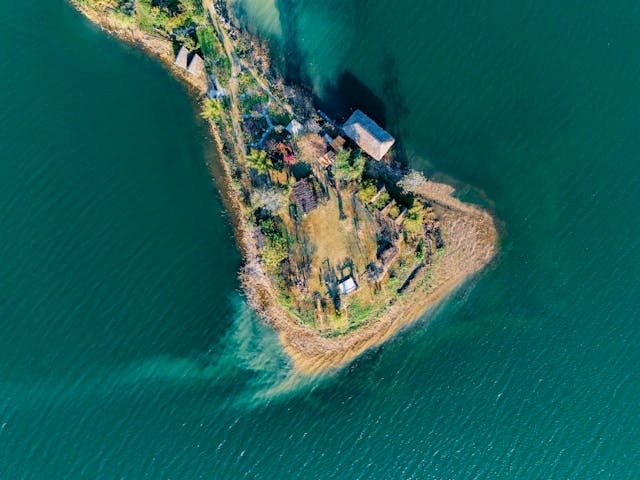
Why is Daufuskie Island so cheap? Discover the real reasons behind its low property prices, isolation, and unique lifestyle.
Daufuskie Island is often considered cheap because it is accessible only by boat, has limited infrastructure, fewer services, a small year-round population, and a niche real estate market. While its beaches and natural beauty rival far more expensive coastal destinations, the trade-off is convenience, accessibility, and everyday practicality.
At first glance, Daufuskie Island doesn’t make sense.
You look at a map and see a beautiful barrier island sitting between Hilton Head and Savannah. There are miles of beaches, historic landmarks, marsh views, and waterfront homes. Yet property prices often appear surprisingly low compared to neighboring coastal communities.
That contradiction pulls people in.
I remember looking at listings and thinking there had to be a catch. How could an island surrounded by some of the most expensive real estate in the Southeast be selling homes and land for a fraction of nearby prices?
The deeper I dug, the more fascinating the answer became.
The story isn’t really about cheap real estate. It’s about isolation, culture, logistics, economics, and a place that has intentionally resisted becoming another overdeveloped beach destination.
The question isn’t simply why Daufuskie Island is cheap.
The real question is what buyers are giving up—and what they’re gaining—in exchange.
What You'll Discover:
Why Is Daufuskie Island So Cheap Compared to Nearby Coastal Areas?
The biggest reason Daufuskie Island remains affordable is simple:
Accessibility shapes value.
Unlike Hilton Head, Charleston, or most popular coastal destinations, Daufuskie has no bridge connecting it to the mainland. Residents, visitors, groceries, construction materials, vehicles, and everyday supplies must arrive by ferry, barge, or private boat.
That single fact changes everything.
For many buyers, convenience is worth paying for. Daufuskie removes convenience from the equation.
A spontaneous grocery run isn’t always possible.
A quick trip to a medical specialist requires planning.
Even furniture deliveries become logistical projects.
As a result, buyer demand remains lower than it would be for a similarly beautiful island connected by road.
The Real Estate Rule Nobody Talks About
In real estate, beauty does not determine price.
Accessibility does.
A beachfront home that requires multiple transportation steps often sells for less than a similar home reachable by car.
Daufuskie is a perfect example of that principle.
Ferry-Only Access Limits Demand
One of the strongest forces affecting property values is the size of the buyer pool.
The moment people hear “boat access only,” many potential buyers immediately lose interest.
That doesn’t mean the island lacks appeal.
It means it appeals to a specific type of person.
Someone seeking convenience may see a problem.
Someone seeking peace may see a dream.
There is no bridge to Daufuskie Island, and most transportation relies on ferries and boats.
That dramatically narrows the number of potential residents and investors.
And fewer buyers generally means lower prices.
A Useful Analogy
Imagine two identical houses.
One is five minutes from a grocery store.
The other requires checking a ferry schedule first.
Most buyers choose the first house.
The second house becomes cheaper—not because it’s worse, but because fewer people want the lifestyle.
Limited Infrastructure Keeps Prices Lower
Another reason Daufuskie Island remains affordable is its intentionally limited infrastructure.
Many modern conveniences common on the mainland are less available or less developed on the island.
Residents often deal with:
- Limited shopping options
- Fewer restaurants
- Limited healthcare facilities
- Fewer paved roads
- Dependence on golf carts
- Smaller service networks
- Reduced public utilities in some areas
These limitations make everyday life more complicated for some residents.
The Hidden Equation
More infrastructure usually creates higher property values.
Less infrastructure often creates lower property values.
Ironically, the very things that keep prices down are often the same things longtime residents love most.
No traffic lights.
No giant shopping centers.
No endless strip malls.
No towering condo developments.
The Island’s Small Economy Affects Property Prices
Real estate values are heavily connected to local earning power.
Daufuskie has a relatively small year-round population and a limited local economy. The island’s population remains only a few hundred permanent residents.
That matters.
When local wages are lower and employment opportunities are limited, housing values often remain lower as well.
A market cannot sustainably support luxury-level prices if there aren’t enough people with luxury-level incomes buying property.
Many residents either work remotely, operate small businesses, commute by boat, or rely on tourism-related industries.
This creates a different economic ecosystem than nearby luxury destinations.
Development Has Been Slower Than Neighboring Islands
When people compare Daufuskie to Hilton Head, the difference becomes obvious.
Hilton Head embraced large-scale tourism and development.
Daufuskie largely didn’t.
That choice preserved something rare.
The island maintained much of its natural landscape, cultural heritage, and slower pace of life.
However, preservation often comes with economic consequences.
Less development means:
- Fewer major employers
- Fewer commercial projects
- Less speculative investment
- Lower tourism volume
- Reduced demand for housing
All of these factors help keep prices lower.
A Contradiction Worth Noticing
People often complain about overdevelopment destroying coastal communities.
Then they wonder why an undeveloped coastal community has lower prices.
Those two realities are connected.
Construction Costs Are Actually High
Here’s where things get interesting.
Many people assume cheap property means cheap living.
Not necessarily.
Buying land may be relatively affordable.
Building on that land is another story.
Construction materials, contractors, equipment, and supplies often need transportation by ferry or barge.
In some cases, construction expenses can surprise buyers who thought they were getting an incredible bargain.
Quotable Fact
“Affordable land does not automatically mean affordable development.”
That’s one of the most important lessons prospective buyers learn about Daufuskie.
Weather and Coastal Risk Influence Prices
Like many barrier islands along the Atlantic coast, Daufuskie faces environmental risks.
Storms, hurricanes, erosion, flooding concerns, and coastal insurance costs all influence buyer behavior.
Properties exposed to greater environmental uncertainty often sell at a discount compared to inland alternatives.
This isn’t unique to Daufuskie.
It’s a pattern seen across many coastal communities.
The difference is that Daufuskie’s small market magnifies the effect.
Daufuskie Island Appeals to a Niche Buyer
One overlooked reason for lower prices is that Daufuskie isn’t trying to be everything for everyone.
The island attracts people who want:
- Privacy
- Nature
- History
- Gullah culture
- Quiet beaches
- Slower living
- Golf-cart transportation
It does not primarily attract people seeking:
- Luxury shopping
- Nightlife
- Major entertainment venues
- Fast-paced convenience
That specialization limits demand.
But it also preserves character.
A Short Quote Worth Remembering
“Scarcity increases value only when enough people want the product.”
Daufuskie is scarce.
But the lifestyle appeals to a smaller audience.
The Power of Gullah Heritage and Preservation
One of Daufuskie’s most valuable assets isn’t financial.
It’s cultural.
The island sits within the historic Gullah Geechee cultural region and has preserved traditions that have disappeared elsewhere.
That heritage contributes to the island’s identity.
Yet cultural significance doesn’t always translate directly into higher property values.
In many ways, preserving culture has required resisting some forms of commercial development that might otherwise push prices upward.
The result is a place that feels increasingly rare in modern America.
A Hidden Factor: Investors Often Look Elsewhere
Another reason prices remain relatively modest is that Daufuskie Island doesn’t fit the typical investment playbook.
Many real estate investors chase markets with strong rental demand, rapid appreciation, and easy access.
Daufuskie offers something different.
The island’s transportation challenges and smaller tourism footprint can make it harder to achieve the same rental occupancy rates seen in heavily visited destinations.
Investors often choose convenience-driven markets.
That leaves Daufuskie with fewer speculative buyers competing for properties.
In many ways, the island filters out people looking for a quick profit.
What remains are buyers who genuinely want the lifestyle.
Why Some People Believe Daufuskie Is Undervalued
Not everyone sees the island’s lower prices as a warning sign.
Some see an opportunity.
Supporters argue that Daufuskie offers:
- Coastal property at relatively affordable prices
- Protected natural beauty
- Historic significance
- Less commercial development
- Greater privacy
- A stronger sense of community
From this perspective, the island isn’t cheap because it’s undesirable.
It’s cheap because it doesn’t conform to modern expectations of convenience.
That distinction matters.
A place can be undervalued and inconvenient at the same time.
Comparison: Daufuskie Island vs Hilton Head Island
| Factor | Daufuskie Island | Hilton Head Island |
| Bridge Access | No | Yes |
| Population | Small | Much Larger |
| Shopping | Limited | Extensive |
| Tourism Volume | Low to Moderate | High |
| Transportation | Ferry + Golf Cart | Standard Vehicles |
| Development Level | Limited | Extensive |
| Property Demand | Niche | Broad |
| Pace of Life | Slow | Faster |
This comparison explains much of the price difference.
One island prioritizes convenience.
The other prioritizes preservation.
Is Daufuskie Island Actually Cheap?
The answer depends on perspective.
If you’re comparing it to Hilton Head waterfront property, yes.
If you’re comparing it to inland South Carolina communities, maybe not.
If you’re calculating ferry costs, maintenance, transportation challenges, insurance, and logistical hurdles, the definition of “cheap” becomes more complicated.
Many residents would argue the island isn’t cheap at all.
The costs are simply different.
Some are financial.
Others are measured in time and convenience.
That’s perhaps the most accurate way to understand Daufuskie.
The island doesn’t eliminate costs.
It redistributes them.
You pay less in purchase price.
You may pay more in patience.
FAQ
Why is Daufuskie Island property so inexpensive?
Property is often cheaper because the island lacks bridge access, has limited infrastructure, a smaller buyer pool, and fewer economic opportunities than nearby coastal destinations.
Can you drive to Daufuskie Island?
No. Daufuskie Island is accessible only by boat, ferry, barge, or private water transportation.
Is Daufuskie Island a good place to live?
For people seeking quiet, nature, and a slower pace of life, many consider it exceptional. For those needing convenience and urban amenities, it can be challenging.
Why don’t more people move to Daufuskie Island?
Transportation logistics, limited services, healthcare access, and employment opportunities discourage many potential residents.
Is Daufuskie Island growing?
Development exists, but growth has historically been slower and more restrained than nearby coastal communities due to accessibility and preservation priorities.
Key Takings
- The main reason why Daufuskie Island is so cheap is its ferry-only access and lack of a bridge.
- Lower buyer demand keeps property values below nearby luxury coastal markets.
- Limited infrastructure and services reduce convenience but preserve character.
- Construction and transportation costs can offset some apparent savings.
- The island’s small economy influences housing demand and pricing.
- Cultural preservation and slower development have helped maintain affordability.
- Daufuskie Island offers a unique trade-off: less convenience in exchange for more authenticity.