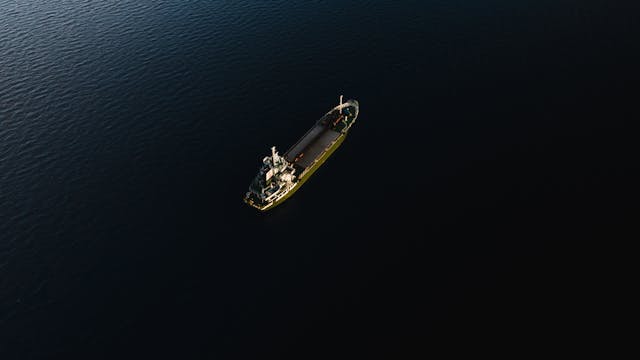
USS Santa Barbara LCS drone systems explained: how this Navy ship uses unmanned tech to reshape modern naval warfare.
The USS Santa Barbara LCS drone capability refers to how the USS Santa Barbara (LCS-32) deploys unmanned aerial, surface, and subsurface drones for surveillance, defense, and combat missions. It represents a shift toward flexible, tech-driven naval warfare.
I remember the first time I came across the idea of a warship that didn’t rely entirely on its crew. It felt… off. Like something from a half-finished sci-fi script.
Then I started digging into the USS Santa Barbara LCS drone ecosystem, and suddenly it made sense.
This isn’t just a ship. It’s more like a floating control center. A brain surrounded by mechanical extensions, eyes in the sky, sensors in the water, and machines doing what used to take dozens of sailors.
And the deeper I went, the more one thing became clear:
Modern naval power isn’t about size anymore. It’s about intelligence, adaptability, and reach.
What You'll Discover:
What Is USS Santa Barbara LCS-32?
The USS Santa Barbara (LCS-32) is part of the U.S. Navy’s Littoral Combat Ship (LCS) program, designed for operations close to shore, where traditional warships struggle.
Why “Littoral” Matters
“Littoral” sounds technical, but it simply means coastal waters.
These areas are messy:
- Shallow depths
- Civilian traffic
- Hidden threats like mines or small attack boats
Big destroyers? Overkill.
Small patrol boats? Underpowered.
That’s where LCS fits in, and where drones become essential.
According to naval doctrine summaries, LCS ships are built for speed, modularity, and unmanned integration.
The Core Idea Behind USS Santa Barbara LCS Drone Systems
Here’s the part that took me a while to understand:
The ship itself is only part of the weapon system.
The real power lies in its network of drones.
Types of Drones Used
1. Aerial Drones (UAVs)
The ship can deploy systems like the MQ-8 Fire Scout and similar UAVs.
What they do:
- Real-time surveillance
- Target tracking
- Reconnaissance beyond radar range
Think of them as the ship’s eyes, but way farther out.
2. Surface Drones (USVs)
Unmanned boats that operate ahead of the ship.
Roles include:
- Mine detection
- Electronic warfare
- Patrol missions
They’re like scouts walking into danger so the ship doesn’t have to.
3. Underwater Drones (UUVs)
Silent, patient, and honestly a bit eerie.
Used for:
- Anti-submarine warfare
- Mine clearance
- Seabed mapping
They extend the ship’s awareness into a dimension humans struggle to dominate.
How USS Santa Barbara Uses Drones in Real Missions
This is where things stop being theoretical.
Imagine this scenario:
A coastal region with suspected mines.
Instead of risking the ship:
- A UUV is deployed first
- It scans the seabed
- Identifies threats
- Sends data back in real time
Then:
- A USV confirms and neutralizes the threat
- UAVs monitor the area from above
The ship? Still at a safe distance.
That’s not just efficiency. That’s survival.
Modern naval operations increasingly rely on unmanned systems to reduce human risk.
The Technology Behind the System
The USS Santa Barbara LCS drone ecosystem depends on integration more than raw hardware.
Key Technologies
Modular Mission Packages
The LCS can swap mission modules depending on the situation:
- Anti-submarine warfare
- Mine countermeasures
- Surface warfare
It’s like changing apps on a phone, but each one changes the ship’s entire role.
Data Fusion Systems
All drones feed information back to the ship.
The system:
- Combines radar, sonar, and visual data
- Creates a unified battlefield picture
No single drone sees everything.
Together, they see almost everything.
Remote Control + Autonomy
Some drones are controlled by operators onboard.
Others operate semi-autonomously.
That balance matters.
Too much automation? Risky.
Too little? Inefficient.
Why USS Santa Barbara’s Drone Capability Matters
At first, I thought this was just about tech upgrades.
It’s not.
It’s about changing how wars are fought at sea.
1. Reduced Risk to Human Life
Drones go where it’s dangerous.
That simple shift changes everything.
2. Extended Operational Reach
A drone can travel far beyond the ship’s sensors.
The ship becomes a hub, not the limit.
3. Faster Decision-Making
Real-time data from multiple sources means quicker reactions.
And in naval combat, seconds matter.
4. Cost Efficiency (Debatable)
Drones are cheaper than full-scale ships.
But maintaining them? Not always simple.
This is where opinions split.
Contradictions: Is This Really the Future?
Not everyone is convinced.
The Optimistic View
- Drones reduce casualties
- Increase efficiency
- Enable smarter warfare
The Skeptical View
- Heavy reliance on tech = vulnerability to cyber attacks
- Communication disruptions can cripple operations
- Autonomous systems raise ethical concerns
And honestly… both sides make sense.
A ship like USS Santa Barbara feels powerful, but also dependent.
USS Santa Barbara vs Traditional Warships
| Feature | USS Santa Barbara (LCS) | Traditional Destroyer |
| Drone Integration | Extensive | Limited |
| Speed | Very high | Moderate |
| Crew Size | Smaller | Larger |
| Mission Flexibility | Modular | Fixed roles |
| Cost | Lower (relative) | Higher |
Destroyers still dominate in heavy combat.
LCS shines in specialized, flexible missions.
Different tools. Different jobs.
The Human Element: Still Essential?
Even with all this automation… humans are still central.
Operators interpret data.
Commanders make decisions.
Engineers maintain systems.
The drones extend human capability, they don’t replace it.
At least, not yet.
Where This Is All Going
If USS Santa Barbara is a glimpse into the future, then that future looks like:
- Smaller crews
- Smarter ships
- Massive reliance on unmanned systems
And maybe something deeper:
A shift from brute force to information dominance.
Because in the end, the side that sees first… usually wins.
FAQ: USS Santa Barbara LCS Drone
What drones does USS Santa Barbara use?
It uses aerial drones like the MQ-8 Fire Scout, along with surface and underwater unmanned systems.
Is USS Santa Barbara fully autonomous?
No. It relies on human operators, though some drone functions are semi-autonomous.
What is the main purpose of LCS drones?
Surveillance, mine detection, anti-submarine warfare, and extending operational reach.
How is it different from other Navy ships?
Its heavy reliance on modular systems and drones makes it more flexible than traditional warships.
Are LCS ships like USS Santa Barbara controversial?
Yes. Critics question their survivability and reliance on complex technology.
Key Takings
- The USS Santa Barbara LCS drone system transforms the ship into a multi-domain control hub.
- Drones extend vision, reach, and operational safety far beyond the ship itself.
- Modular mission packages allow rapid role changes depending on threats.
- Human operators remain essential despite increasing automation.
- The system improves efficiency, but introduces new vulnerabilities.
- LCS ships excel in coastal and specialized missions, not heavy combat.
- The future of naval warfare is shifting toward information and unmanned dominance.
Additional Resources:
- Official U.S. Navy: Official U.S. Navy site with detailed updates on ship classes, missions, and modern naval strategy.