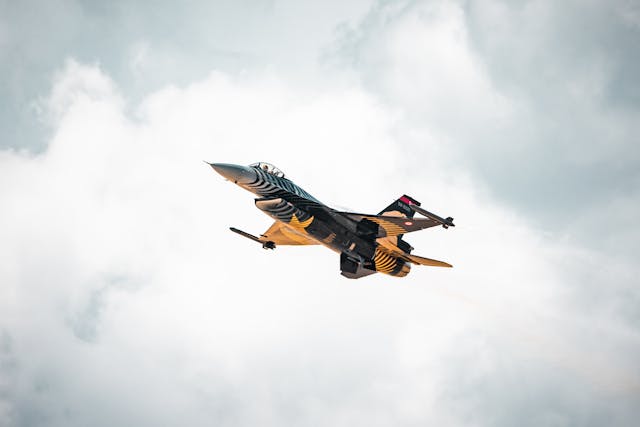
Ursa Major Stratolaunch Talon A hypersonic program explained: how it works, why it matters, and what comes next in speed.
The Ursa Major Stratolaunch Talon A hypersonic program is a reusable, rocket-powered test system designed for sustained hypersonic flight above Mach 5. It allows repeated testing of high-speed technologies, reducing cost and accelerating innovation in aerospace and defense.
I remember the first time I heard the word “hypersonic.” It felt distant. Abstract. Like something engineers whispered about in labs, far removed from everyday reality.
But the deeper I dug into the Ursa Major Stratolaunch Talon A hypersonic program, the more that distance collapsed.
This wasn’t just about speed anymore.
It was about control. Repetition. Mastery.
And somewhere between those ideas, I realized something:
we’re not just trying to go faster, we’re trying to make extreme speed usable.
What You'll Discover:
What Is the Ursa Major Stratolaunch Talon A Hypersonic System?
At its core, the system is a reusable hypersonic test platform. Not a disposable rocket. Not a one-time experiment.
A repeatable machine designed to push boundaries, again and again.
The Key Components
- A reusable autonomous vehicle (Talon-A)
- A rocket propulsion system designed for high-speed acceleration
- A massive carrier aircraft used for mid-air deployment
How It Works
The process feels almost cinematic, but it’s grounded in precise engineering:
- Talon-A is carried to high altitude by a large aircraft
- It is released mid-air
- Its rocket engine ignites seconds later
- It accelerates beyond Mach 5
- It completes its mission and lands autonomously
That last step is the quiet revolution.
Because landing means reuse.
And reuse changes everything.
Why Hypersonic Matters More Than You Think
Mach 5 is often thrown around like a bragging number. But the real story isn’t just how fast, it’s what happens because of that speed.
At hypersonic velocity, the rules shift.
A Different Kind of Physics
- Air compresses and heats dramatically
- Surfaces experience extreme thermal stress
- Control windows shrink to milliseconds
“Hypersonic flight is not just faster flight, it’s fundamentally different flight.”
That difference creates both opportunity and chaos.
Strategic Importance
Hypersonic technology is deeply tied to:
- Defense systems and interception challenges
- Rapid-response capabilities across continents
- High-speed reconnaissance platforms
But there’s a catch.
Testing at these speeds has always been painfully expensive and limited.
One flight often meant one destroyed vehicle.
Until now.
The Talon-A Advantage: Reusability Changes the Game
If there’s one idea that defines the Ursa Major Stratolaunch Talon A hypersonic system, it’s this:
Iteration.
Why Reusability Matters
Imagine learning to swim, but the pool disappears after every attempt.
That’s what hypersonic testing used to feel like.
Now, engineers can:
- Fly
- Collect data
- Land
- Analyze
- Fly again
“Reusable hypersonic platforms reduce testing costs and increase iteration speed dramatically.”
That’s not just efficiency, it’s acceleration of knowledge.
Real Impact
- Faster design improvements
- Lower long-term costs
- More reliable data from repeated conditions
It’s less dramatic than a record-breaking speed headline.
But it’s far more powerful.
The Engine Behind It All: Precision at Extreme Speed
The propulsion system powering Talon-A is where raw physics meets refined engineering.
What Makes It Different
- Built for high-thrust performance at altitude
- Designed with modern manufacturing techniques like 3D printing
- Optimized for reliability across multiple flights
Why Rocket Engines Still Dominate
There’s always debate around scramjets versus rockets.
Scramjets sound futuristic.
But rockets are dependable.
“Rocket propulsion remains the most reliable way to achieve controlled hypersonic speeds today.”
That reliability is exactly what a reusable system needs.
Because speed without control is just noise.
The Carrier Aircraft: A Launchpad in the Sky
One of the most fascinating parts of the system is the air-launch approach.
Instead of blasting off from the ground, Talon-A begins its journey mid-air.
Why This Matters
- Less fuel is required to reach hypersonic speeds
- Launch conditions can be optimized
- Weather limitations are reduced
It’s like starting a race halfway to the finish line.
And that advantage compounds with every mission.
The Tension: Is Hypersonic Worth It?
Not everyone is convinced that hypersonic development is the future.
And honestly, that skepticism feels necessary.
The Concerns
- High upfront costs
- Limited immediate commercial use
- Complex and risky engineering
Some see it as an arms race more than an innovation race.
The Counter Perspective
But here’s where it gets interesting.
Every major leap in technology started with similar doubts:
- Early aviation was seen as impractical
- Space travel was dismissed as too expensive
- The internet was once considered niche
Now they define modern life.
Hypersonics might follow that path.
Or it might carve a completely different one.
That uncertainty is part of what makes it compelling.
Comparison: Talon-A vs Traditional Hypersonic Testing
| Feature | Talon-A System | Traditional Systems |
| Reusability | Yes | No |
| Launch Method | Air-launch | Ground-launch |
| Cost per Test | Lower over time | Extremely high |
| Data Collection | Repeatable | Limited |
| Development Speed | Faster | Slower |
This isn’t just an upgrade.
It’s a philosophical shift in how testing is done.
Where This Could Lead Next
At some point, the technical details started to fade, and a bigger question took over:
What happens if this works perfectly?
Possible Futures
- Passenger flights crossing continents in under two hours
- Ultra-fast cargo delivery reshaping logistics
- Advanced atmospheric research unlocking new science
It sounds ambitious.
Maybe even unrealistic.
But then again, so did reusable rockets not too long ago.
FAQ: Ursa Major Stratolaunch Talon A Hypersonic
What is Talon-A used for?
Talon-A is a reusable hypersonic test vehicle designed for research, development, and high-speed flight testing.
How fast is Talon-A?
It operates at speeds above Mach 5, entering the hypersonic regime.
Why is reusability important in hypersonics?
Reusability lowers costs and allows multiple test flights, improving data collection and accelerating development.
How is Talon-A launched?
It is released mid-air from a carrier aircraft, then ignites its rocket engine to accelerate.
Is hypersonic technology only for military use?
Currently, much of the focus is defense-related, but future applications could include travel and logistics.
Key Takings
- The Ursa Major Stratolaunch Talon A hypersonic system introduces reusable hypersonic testing.
- Talon-A transforms hypersonic flight from one-time events into repeatable experiments.
- Air-launch systems improve efficiency and flexibility for high-speed missions.
- Rocket propulsion remains the most reliable method for controlled hypersonic travel.
- Reusability reduces cost while increasing the pace of innovation.
- Hypersonic flight brings entirely new aerodynamic and thermal challenges.
- The future may extend beyond defense into commercial travel and global logistics.
Additional Resources
- Hypersonic Science: A clear overview of hypersonic science, challenges, and ongoing aerospace research shaping future flight systems.