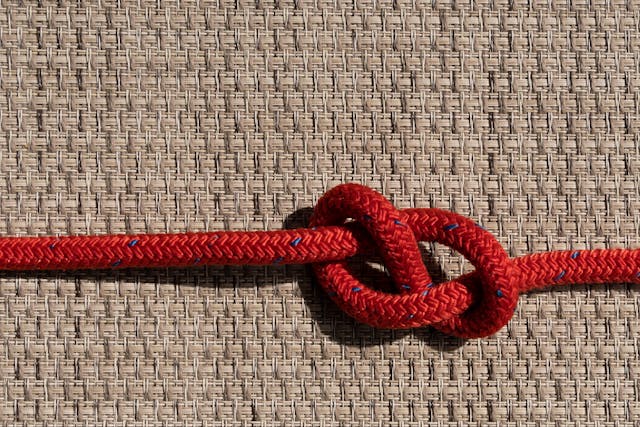
Learn the square butterfly bowline, a secure hybrid knot combining strength and versatility for climbing, rescue, and rigging.
The square butterfly bowline is a hybrid knot combining elements of the bowline and alpine butterfly, designed to create a strong, stable loop that resists slipping and maintains structure under load. It’s often used in climbing, rescue, and rope rigging where reliability matters.
I remember the first time I tried to understand complex knots. Not just tying them, but trusting them. There’s a quiet tension in that moment when you pull a rope tight and wonder, Will this actually hold?
That’s where the square butterfly bowline begins to make sense. It feels like someone took two dependable ideas, the bowline’s stability and the butterfly’s balance, and tried to solve a deeper problem: what if a loop could stay strong no matter how the rope is stressed?
And honestly, the more I looked into it, the more it felt less like a knot… and more like a philosophy of control under pressure.
What You'll Discover:
What Is a Square Butterfly Bowline?
The square butterfly bowline is essentially a fusion knot. It blends the fixed-loop security of a bowline with the midline strength of a butterfly knot.
At its core, it creates a loop that:
- Doesn’t easily slip
- Holds under multi-directional load
- Remains relatively easy to untie after stress
According to knotting experts, “Hybrid knots like the square butterfly bowline are designed to reduce failure points under variable tension.”
That sounds technical. But in practice? It just means fewer surprises when your rope is doing something unpredictable.
Why This Knot Exists (And Why It Matters)
There’s a quiet problem in rope work: most knots are optimized for one direction of pull.
The bowline is strong, but can loosen if shaken.
The alpine butterfly is stable, but less intuitive for beginners.
So what happens when you need both?
That’s where this knot steps in.
The Real-World Need
Imagine:
- A climber setting a mid-rope anchor
- A rescuer distributing weight across lines
- A rigger dealing with shifting loads
In these moments, failure isn’t dramatic. It’s subtle. A slight slip. A gradual loosening.
And that’s often worse.
The square butterfly bowline tries to eliminate that gray area.
How the Square Butterfly Bowline Works
The Structural Idea
This knot works by combining:
- A fixed loop foundation (bowline principle)
- A central load distribution loop (butterfly principle)
The result is a loop that sits firmly in place, even when force shifts direction.
Step-by-Step Overview (Conceptual)
Instead of rigid steps, think of it like building layers:
1. Form the Base Loop
Start with a loop similar to a bowline. This is your anchor point.
2. Introduce Twists
Add controlled twists in the standing part, this is where the butterfly logic enters.
3. Lock the Structure
Feed the working end back through in a way that “locks” both systems together.
4. Tighten Gradually
Pull evenly. This knot rewards patience. Rush it, and it looks messy.
Done right, it feels compact. Balanced. Almost intentional.
What Makes It Different From Other Knots?
There’s something slightly rebellious about this knot. It doesn’t follow the simplicity of traditional forms.
Strength vs Simplicity
Most knots force a trade-off:
- Simple knots = easy to tie, less stable
- Complex knots = stronger, harder to manage
The square butterfly bowline tries to live in the middle.
“Complex hybrid knots often outperform traditional knots under dynamic loads,” as noted in rope safety studies.
But here’s the contradiction:
- More complexity also means more room for error
So it’s not always the best choice. Just the smartest one in the right hands.
Common Uses of the Square Butterfly Bowline
Climbing
Climbers use it for:
- Mid-rope loops
- Backup anchors
- Situations where load direction may change
It’s not the most common knot, but when used, it’s intentional.
Rescue Operations
Rescue teams value:
- Stability under shifting weight
- Reliability in unpredictable conditions
In these moments, consistency matters more than speed.
Rigging and Load Management
In rigging, the knot helps:
- Distribute tension evenly
- Maintain structure under movement
It’s like giving your rope a memory, it remembers its shape.
The Hidden Downsides
Let’s not pretend this knot is perfect.
1. Complexity
It takes time to learn. And mistakes are easy to make.
2. Inspection Difficulty
Unlike simpler knots, errors aren’t always obvious at a glance.
3. Overkill for Basic Tasks
Sometimes, a simple bowline does the job just fine.
There’s a quiet truth here:
Not every strong solution is the right solution.
Comparison: Square Butterfly Bowline vs Other Knots
| Feature | Square Butterfly Bowline | Bowline | Alpine Butterfly |
| Loop Stability | Very High | Medium | High |
| Ease of Tying | Moderate to Hard | Easy | Moderate |
| Multi-Directional Load | Excellent | Limited | Excellent |
| Ease of Untying | Moderate | Easy | Moderate |
| Beginner Friendly | Low | High | Medium |
This table tells a simple story:
The square butterfly bowline isn’t about convenience. It’s about control.
When Should You Actually Use It?
This is the question that took me a while to answer.
Not when you’re in a hurry.
Not when you’re unsure.
Use it when:
- Load direction might change
- Safety margins matter
- You’ve practiced enough to trust your hands
Because here’s the thing:
A knot is only as reliable as the person tying it.
A Different Way to Think About Knots
At some point, learning knots stops being about memorization.
It becomes about:
- Understanding tension
- Predicting movement
- Respecting failure
The square butterfly bowline sits right in that transition.
It’s not a beginner’s knot.
It’s a thinking knot.
FAQ
What is the square butterfly bowline used for?
It is used for creating a stable loop in ropes that must handle multi-directional loads, especially in climbing and rescue.
Is the square butterfly bowline stronger than a bowline?
Yes, it generally offers better stability under shifting loads, though it is more complex to tie.
Can beginners learn this knot easily?
Not easily. It requires practice and understanding of rope behavior.
Does it slip under tension?
Properly tied, it resists slipping far better than a standard bowline.
Is it easy to untie after heavy load?
Moderately. It may tighten under stress but is usually still manageable.
Key Takings
- The square butterfly bowline combines bowline and butterfly knot principles.
- It provides strong, stable loops under multi-directional tension.
- Complexity is both its strength and its weakness.
- It is best suited for climbing, rescue, and rigging scenarios.
- Practice is essential, this is not a “tie once and hope” knot.
- It represents a shift from simple knot tying to strategic rope thinking.
- Not always necessary, but invaluable when conditions demand it.
Additional Resources:
- Animated Knots by Grog: A visual learning platform explaining knot techniques with step-by-step animations for practical understanding.