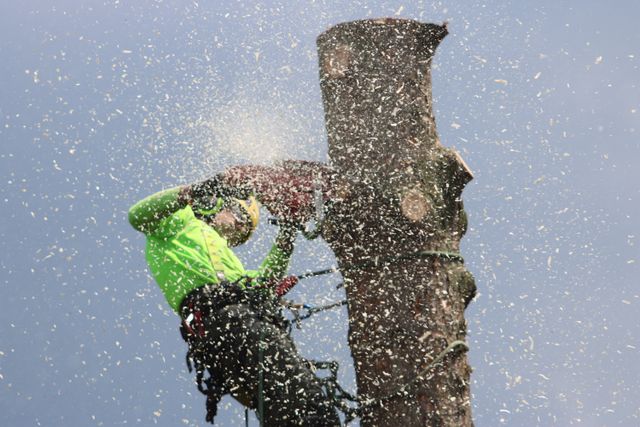
Oak tree pruning done right keeps trees strong, healthy, and safe, without inviting oak wilt.
Oak tree pruning is safest in the dormant season, when beetles that spread oak wilt are least active; in many regions that means winter or the coldest part of the local no-prune window. Focus on light structural cuts, deadwood, and damaged limbs, and avoid major pruning during spring and early summer unless storm damage forces it.
An oak is not the kind of tree you prune casually. One cut can shape its future for decades, and one badly timed cut can open the door to disease that moves fast enough to matter in a single season. That is why oak tree pruning is less about “tidying up” and more about making a few careful decisions with the tree’s long life in mind.
That difference explains why so much advice about oaks sounds oddly strict. The goal is not to cut more; it is to cut at the right time, in the right place, for the right reason. Do that well, and an oak can keep its natural shape, stay safer in wind, and avoid the wounds that invite oak wilt and decay.
What You'll Discover:
Why oak tree pruning is different from pruning other trees
Oaks are valuable landscape trees, but they are also vulnerable to oak wilt, a fungal disease that spreads through fresh wounds and through root connections in some situations. Red oaks are the most susceptible and can die within weeks; white and bur oaks are more tolerant, but they are not immune.
That is the first big misconception to drop: oak pruning is not just “tree pruning with a few extra steps.” In oak wilt country, timing is part of the cut itself. A clean cut made in the wrong season can be more dangerous than a slightly imperfect cut made when the risk is low.
A useful rule to remember: with oaks, timing matters as much as technique. A good cut made at the wrong time can still create a problem.
How oak tree pruning should be timed
The safest default is the dormant season
Most extension guidance points to winter as the safest season for pruning oaks, because the beetles that carry oak wilt are not active then. Iowa State recommends December through February, Missouri points to mid-March through mid-July as the risky window, and Wisconsin notes that calendar dates can shift with temperature and even provides a degree-day model to better predict risk.
That temperature detail matters more now than it used to. Warmer winters and unpredictable swings can make a simple date on the calendar misleading, which is why some regions are moving toward risk models rather than fixed dates alone. If you live in an oak wilt area, the local extension recommendation is more reliable than a generic “prune in winter” shortcut.
When summer pruning is acceptable
Dead, broken, or hazardous limbs can be removed anytime if safety is at stake. NC State notes that broken, dead, weak, or heavily shaded branches can be removed whenever needed, and emergency pruning is one of the few times when the normal no-pruning season may be overridden.
The catch is oak wilt risk. If an oak must be pruned in spring or summer, Iowa State says to paint the pruning cuts with latex house paint within 15 minutes to reduce transmission risk; Texas A&M Forest Service also advises painting oak cuts immediately. At the same time, general pruning guidance from Iowa State and Colorado State says wound dressings do not help ordinary tree healing and should not be used as a routine habit. The practical takeaway is simple: do not use wound paint as a general pruning crutch, but do follow local oak wilt guidance when emergency summer pruning cannot wait.
Species matters too
Not all oaks carry the same risk profile. Red oaks are the most vulnerable to oak wilt, while white and bur oaks are more resistant, and Texas A&M notes that live oaks sit in an intermediate zone. That does not make any oak “safe” to prune casually, but it does mean the species should influence how cautious you are.
What to prune on an oak tree
Good oak tree pruning is usually conservative. The best cuts remove what is broken, weak, rubbing, or structurally risky, not what is merely inconvenient. On young trees, pruning should focus on training a strong framework; on older trees, pruning should be lighter and more selective.
A smart pruning checklist looks like this:
- dead branches
- broken or storm-damaged limbs
- crossing or rubbing branches
- weak codominant stems
- water sprouts and basal sprouts
- limbs that threaten sidewalks, roofs, or power lines
What usually does not belong on the cutting list is a healthy branch that is simply part of the tree’s natural form. Oaks grow into strong, wide-canopied trees, and the goal is to preserve that architecture, not force them into an unnatural silhouette.
How to handle oak tree pruning without stressing the tree
Start with the reason for the cut
Every cut should answer a question: safety, structure, clearance, or health. If you cannot name the reason, the branch probably does not need to come off yet. That sounds strict, but it keeps people from overpruning oaks just because they are reachable.
Protect the branch collar
The branch collar is the swollen area where the branch meets the trunk. Colorado State explains that this area contains the tree’s defense zone, and the final cut should be just outside it; Iowa State gives the same advice and warns against flush cuts that remove the tree’s natural defenses.
That means no flush cuts and no stubs. A flush cut is too aggressive; a long stub is too sloppy. The clean middle ground is the one that respects the branch collar and leaves the tree room to seal the wound.
Use the three-cut method for big limbs
For larger branches, use the three-cut method so the branch does not tear bark down the trunk as it falls. NC State recommends this approach for limbs larger than 2 inches in diameter, while Virginia Tech and Wisconsin Extension both describe the same basic method for larger limbs.
The sequence is straightforward: make an undercut, make a second cut farther out to remove the branch’s weight, then make the final cut just outside the collar. That final cut matters most, because it determines whether the tree keeps its natural defenses intact.
Stop before you remove too much
Texas A&M Forest Service says not to remove more than 25% of a tree’s crown at one time. That limit is especially useful for homeowners, because it turns a vague “be careful” warning into a real boundary.
For oak tree pruning, less is usually better. If a tree needs a major reshaping, the smarter plan is often several small pruning sessions over a few years instead of one large, stressful reset.
Oak tree pruning by tree age and situation
| Situation | Best approach | What to avoid |
| Young oak | Train a single leader, keep well-spaced scaffold branches, and make small corrective cuts over the first several years. | Removing too much crown or forcing the tree into a shape it cannot sustain. |
| Mature oak | Prune lightly, mainly for deadwood, clearance, or structural issues, and keep the branch collar intact. | Topping, flush cuts, or heavy reduction cuts that create decay risk. |
| Storm-damaged oak | Remove torn or hazardous wood as soon as needed for safety; if pruning in the risky season, follow local oak wilt paint guidance. | Leaving ragged tears, long stubs, or delaying dangerous limbs because of the calendar. |
Common oak pruning mistakes
Topping is the fastest way to ruin the structure
Older oaks should never be topped. Wisconsin Extension says topping leads to poor branch structure and increased limb breakage, and Penn State’s extension guidance calls topping a costly mistake rather than a useful pruning method. Once an oak is topped, the tree often responds with weak regrowth that creates even more problems later.
Cutting at the wrong point creates decay
Leaving a stub slows closure. Cutting into the collar removes the tree’s defense zone. Either mistake can turn a pruning cut into a long-term wound.
Using fixed dates without checking local conditions can backfire
Warm spells can shift beetle activity earlier than expected, which is why Wisconsin Extension now emphasizes temperature and degree-day risk rather than trusting a single cutoff date every year. If your region has oak wilt, local conditions should decide the pruning window more than habit does.
Pruning too much at once weakens the tree
Trees need their leaves to make and store energy. Removing too much crown at once can slow growth and increase stress, which is why a conservative approach is usually the best one for oak tree pruning.
FAQ
When is the best time to prune oak trees?
Winter is the safest default in many regions, because oak wilt beetles are least active then. Exact timing can vary by location, so local extension guidance is better than a universal calendar rule.
Can I prune oak trees in summer?
Only if you need to remove dead, broken, or hazardous wood, or if storm damage leaves you no choice. If you must prune during the risky season, some extension services recommend painting the cuts immediately with latex paint to reduce oak wilt spread.
Should I paint oak pruning cuts?
Not as a routine practice. Extension guidance says wound dressings do not help ordinary pruning wounds, but oak wilt guidance makes an exception for spring or summer emergency cuts.
How much of an oak tree can I remove at once?
A conservative benchmark is no more than 25% of the crown in a single year. For mature oaks, even less is often better unless you are correcting a specific structural problem.
Should I top an oak tree to make it smaller?
No. Topping weakens the structure, encourages poor regrowth, and increases the chance of limb failure later. If an oak is too large for the space, the safer answer is usually selective reduction by a qualified arborist rather than topping.
Key takeaways
- The safest oak tree pruning usually happens in the dormant season, when oak wilt risk is lowest.
- Red oaks are much more susceptible to oak wilt than white and bur oaks, so species matters.
- Keep cuts just outside the branch collar; do not flush-cut into the trunk.
- Use the three-cut method for larger limbs so bark does not tear.
- Do not remove more than about 25% of the crown at once.
- Topping is a mistake that weakens the tree instead of helping it.
- If a summer cut is unavoidable, follow local oak wilt guidance immediately rather than treating it like an ordinary pruning job.