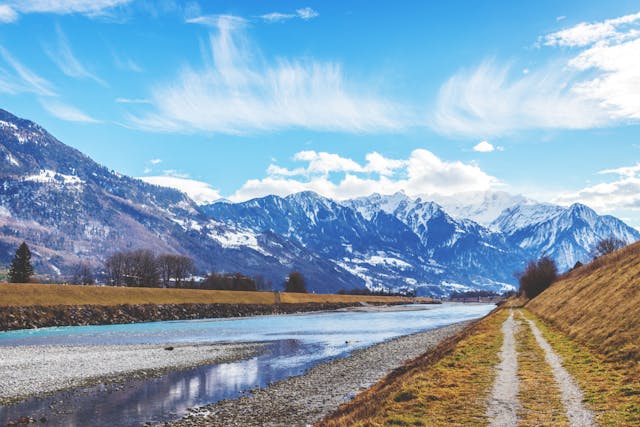
Discover the Rhaetian people and the ancient Rhaetian cultural area in a human, detailed journey through history and identity.
The Rhaetian people were ancient Alpine communities living across parts of modern Switzerland, Austria, and northern Italy. The Rhaetian cultural area blended mountain traditions, early Italic influences, and unique languages that eventually faded into history.
Let me be honest with you… I didn’t set out to learn about the Rhaetian people. I was actually looking up Alpine travel routes when I fell into this rabbit hole. And once you fall into the world of the Rhaetian cultural area, you don’t climb out quickly. Something about it lingers.
Maybe it’s the mystery. Maybe it’s the ruggedness. Or maybe it’s because the Rhaetians feel like people who lived so close to the edge of nature that their story still hums underneath the silence of the Alps.
As you read this, imagine both of us standing on some cliffside trail, trying to make sense of scattered clues left across ancient stone, old languages, and landscapes that shaped entire cultures. I’m figuring it out as I go… and I’m inviting you to do the same.
What You'll Discover:
The Rhaetian People: The Alpine Culture You Can Feel but Can’t Fully Trace
The Rhaetian Cultural Area as a Real, Living Zone
When you hear “Rhaetian cultural area”, picture a map of the Alps that overlaps parts of Switzerland, Austria, and northern Italy. Think of regions like Graubünden, Tyrol, South Tyrol, and Trentino.
But here’s the twist I quickly realized… there was no single “Rhaetian kingdom”. No unified tribe marching in formation. They were scattered communities connected by mountains, languages, beliefs, and the shared reality of surviving in places where the terrain doesn’t bend easily to human will.
At one point, I came across a simple idea that stuck with me… Rhaetians weren’t defined by ethnicity as much as they were shaped by altitude.
When you think about it, that makes perfect sense. Mountains don’t just divide land… they divide culture. Two villages could be a short walk apart, yet completely different in mindset because one sits in a valley and the other clings to a ridge.
It’s wild how geography can shape identity more strongly than borders ever could.
Who Were the Rhaetians Really?
This is where the story gets messy in a good way. Almost every source has its own version, which left me scratching my head a few times.
Some scholars say the Rhaetians were distant cousins of the Etruscans. Others shrug and say… maybe, but probably not exactly. Roman writers, who were famously dramatic, simply called them mountain tribes.
So what do we actually know?
They Had a Unique Language
We’ve found inscriptions, but not enough to build a full picture. It’s like discovering torn pages from a diary written in handwriting you can almost understand… but not quite.
Some letters match Etruscan shapes. Some don’t. Some words seem related. Others look completely alien.
It’s both fascinating and frustrating. But that uncertainty gives the Rhaetians their charm.
They Lived in the Mountains by Choice
Some cultures get pushed into mountains. The Rhaetians seem to have chosen the heights.
Higher altitude meant more control, more isolation, and more identity. When you live above the world, you don’t just survive… you adapt in ways lowland cultures never needed to.
Their Lifestyle Was More Sophisticated Than You Might Expect
We’re talking about people who built terraces on slopes you and I would hesitate to even climb. They traded across valleys, worked metal, herded animals, and developed economic patterns that made sense only in an Alpine ecosystem.
Their life wasn’t simple. It was strategic.
The Rhaetian Cultural Area: What Made It So Distinct?
A Culture Built by Altitude, Not Just Tradition
You know how desert cultures evolve around sand and heat, or coastal cultures evolve around fishing and tides? The Rhaetians evolved around altitude.
Cold weather. Steep cliffs. Limited farmland. Long winters. Short bursts of summer productivity.
And here’s the surprising part… their culture wasn’t shaped by distance, but by elevation. Two nearby communities could think differently because their altitude shaped their daily reality.
It makes you rethink what “neighbors” even means.
Religion Rooted in Stone, Sky, and Water
The Rhaetians didn’t leave behind a big temple or a neatly packaged mythology. Instead, we piece together their beliefs through shrines, carvings, and ritual items found high in mountain passes.
Standing on those heights, you almost get why their spirituality was centered on nature. When you live under cliffs that could drop rocks on your house, or near rivers that can flood without warning, you start to believe the world is alive… because it really feels like it is.
Their rituals probably centered on:
- spirits of the mountains
- seasonal blessings
- water sources
- protective symbols
- fertility of animals and land
Nothing about their belief system feels theatrical. It feels practical, emotional, and grounded in respect for an environment that gives and takes without warning.
Their Economy: Creativity Born on the Edge
If you and I were dropped into the Alpine world they lived in, we’d probably panic on day one. But the Rhaetians thrived.
They built terraced farms where cliffs almost dared them to try. They raised goats and sheep suited to rugged paths. They worked metal and exchanged goods across valleys.
And here’s something that surprised me… even before the Romans built mountain roads, the Rhaetians were already part of emerging trade networks. They didn’t need empires to teach them how to move goods. They figured it out themselves, step by step, ridge by ridge.
Their Language: The Part That Slipped Through Our Fingers
I won’t lie to you… this part feels bittersweet. The Rhaetian language didn’t survive in spoken form. What remains are inscriptions scratched into stone or metal.
Short. Mysterious. Almost like the universe teasing us with incomplete answers.
Some parts look related to Etruscan. Others feel completely unique.
The more I learned, the more I realized we’re looking at a language that lived fully in its time and didn’t owe the future an explanation.
There’s something poetic about that… even if it’s a little sad.
How Rome Reshaped the Rhaetian Cultural Area
Rome Arrives and Everything Changes… but Not All at Once
Rome had a habit of absorbing everything it touched. When they entered the Rhaetian cultural area, they reorganized the region almost immediately.
New roads. New laws. New names. New expectations.
But here’s what I didn’t expect… the Rhaetians didn’t disappear. Their culture seeped into the cracks of Roman life.
Place names stayed. Mountain practices stayed. Some aspects of their language influenced local Latin dialects. Their survival skills became part of Roman frontier life.
I’m starting to think no culture truly disappears… it just shifts forms until you can still feel it, even if you can’t point to it directly.
Where the Rhaetian Echo Still Exists Today
If you ever visit Graubünden, South Tyrol, Tyrol, or Trentino, pause for a moment. Look at the stonework. Listen to the way locals describe weather. Notice the structure of old farmhouses. Even the agricultural rhythm feels ancient.
And if you hear Romansh spoken in Switzerland, you’re hearing a language shaped by centuries of blending between local Alpine traditions, Latin, and the deeper echoes of lost Rhaetian speech.
It’s like the mountains refused to let everything fade.
Here is The Comparison…
| Feature | Rhaetian People | Celtic Tribes | Etruscans |
|---|---|---|---|
| Geography | Alpine highlands | Plains and hills | Central Italy |
| Language | Non-Indo-European (fragmentary) | Indo-European | Non-Indo-European |
| Economy | Terraces, herding, metalwork | Farming and warfare | Trade and city life |
| Culture Structure | Small Alpine clusters | Tribal confederations | City-states |
| Religion | Nature-focused rituals | Warrior deities | Temple systems |
Frequently Asked Questions
Who were the Rhaetian people?
They were ancient Alpine communities living across parts of Switzerland, Austria, and northern Italy, known for their unique language and mountain-based culture.
Where was the Rhaetian cultural area located?
It included Graubünden, Tyrol, South Tyrol, and Trentino… forming a wide Alpine cultural zone.
Did their language survive?
Only fragments remain. The spoken language disappeared over time, leaving inscriptions that researchers still study.
How did the Rhaetian culture blend with Rome?
Instead of vanishing, their customs mixed with Roman systems, influencing local dialects, practices, and traditions.
Is there a modern community descended from Rhaetians?
Not directly, but traces of their culture appear in Alpine traditions, place names, and the survival of Romansh.
Key Takings
- The Rhaetian people were independent Alpine communities shaped more by altitude than political alignment.
- The Rhaetian cultural area spread across Switzerland, Austria, and northern Italy, forming a mountain-based cultural ecosystem.
- Their language was unique, possibly related to Etruscan, but mostly lost today.
- Rhaetian beliefs centered on nature, seasons, and survival in harsh terrains.
- Rome reorganized the region but didn’t erase the Rhaetian identity… it absorbed it.
- Modern Alpine culture still carries subtle Rhaetian fingerprints.
- Understanding the Rhaetians feels like decoding whispers preserved in stone and landscape.
Additional Resources
- Alps – Human Impact, Environment, Preservation: A detailed overview of early Alpine societies and how mountain environments shaped their lifestyles.
- Etruscan Civilization: Useful background for understanding possible linguistic and cultural links between Rhaetians and Etruscans.