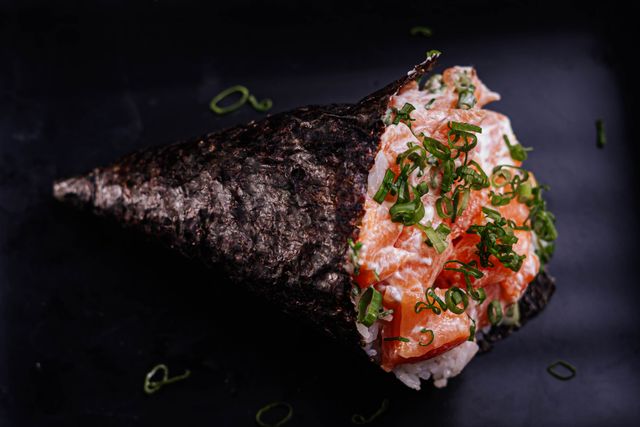
Hand roll vs cut roll sushi explained so you can order with confidence and choose the style that fits the moment.
A hand roll is temaki: a cone-shaped sushi roll meant to be eaten by hand, usually as one fresh, handheld piece. A cut roll is maki: a tubular roll sliced into bite-size pieces, often better for sharing and plated meals.
If you want crisp nori and a more immediate, personal experience, choose the hand roll. If you want a neater presentation, multiple bites, and easier sharing, choose the cut roll.
This is one of those sushi questions that sounds simple until you are staring at a menu and suddenly nothing feels obvious. The names can blur together, especially because both styles can use the same fish, rice, vegetables, and sauces.
The real difference is not glamour or quality. It is format: temaki is built for immediacy and hand-held eating, while maki is built to be rolled tightly, sliced cleanly, and served in tidy pieces. Once you notice that, the decision gets much easier.
“Temaki is the sushi equivalent of a fresh, handheld snack; maki is the plated version designed for slices.”
“The fillings can be similar, but the experience changes the moment the roll is cut.”
What You'll Discover:
Hand roll vs cut roll sushi: the simple distinction
Think of hand rolls as the more casual, immediate version of sushi. They are usually rolled into a cone shape by hand, served whole, and eaten right away so the nori stays crisp.
Cut rolls are the more structured version. The rice and fillings are rolled into a tube, then sliced into equal pieces, which makes the final plate feel more uniform and easier to share. In Japan, this broader category is called makizushi, or maki sushi.
That is why the same restaurant may offer both with nearly identical fillings. The difference is less about ingredients than about shape, pace, texture, and how the sushi is meant to be eaten.
What a hand roll is best at
A hand roll shines when you want sushi that feels fresh, fast, and personal. It is the format many guides describe as the easiest to assemble at home because you can set out sushi rice, nori, and fillings, then let everyone build their own roll at the table.
That easy setup matters. You do not need a bamboo mat, and you do not need the kind of precision slicing that cut rolls demand. For a weeknight dinner, that makes temaki feel closer to a DIY snack bar than a formal sushi project.
Hand rolls also reward speed. Because they are best eaten immediately, they preserve the contrast between warm rice, cool fillings, and crisp nori in a way that cut rolls often lose once they sit on the plate.
What a cut roll is best at
A cut roll is the better choice when you want neat portions and a more familiar sushi-bar feel. The standard maki format is rolled into a cylinder and then sliced into bite-size rounds, which creates a consistent bite from the first piece to the last.
That consistency helps in real life. It makes the roll easier to share, easier to plate, and easier to combine with other dishes when you are ordering for a group. It is also the format behind many common restaurant rolls, from hosomaki to futomaki to inside-out rolls like uramaki.
Cut rolls are usually the more practical option if you want variety. A table can order several rolls, split the pieces around, and sample more flavors without committing to one large handheld cone.
Hand roll vs cut roll sushi: side-by-side comparison
| Feature | Hand roll (temaki) | Cut roll (maki) |
| Shape | Cone-shaped or short hand-rolled form. | Tubular roll sliced into rounds. |
| How it is eaten | Usually as one handheld piece, like a cone or wrap. | Usually in multiple bite-size pieces; hands or chopsticks both work. |
| Texture | Best when eaten immediately, so the nori stays crisp. | More of a composed bite; the cut pieces are designed for neat service. |
| Equipment | Minimal; often no mat is needed at the table. | Often uses a bamboo sushi mat and a sharp knife. |
| Best for | Casual meals, custom builds, and home sushi nights. | Sharing, variety, and tidy restaurant plating. |
How to choose at a restaurant
Choose a hand roll when you want one satisfying, immediate portion. It is the better pick if you like crisp nori, want to avoid juggling pieces, or are in the mood for something that feels a little more spontaneous than a standard sushi order.
Choose a cut roll when you are ordering with other people, want to sample several styles, or prefer a cleaner bite that sits neatly on the plate. Because many sushi rolls are built from the same core ingredients, the choice is really about how you want to experience them.
There is also a social difference. A hand roll feels individual and immediate, while a cut roll feels shareable and conversational, like the sushi version of choosing between a taco and a platter of slices.
How to choose at home
If you are making sushi for the first time, hand rolls are the lower-friction path. The basic setup can be as simple as seasoned sushi rice, nori, fillings, and a table where everyone assembles their own rolls. That is why temaki is such a popular party format in home-cooking coverage.
Cut rolls take a little more technique. You need the roll to be tight enough to hold, and you need a sharp knife for clean slices, which is why many sushi guides describe traditional rolls as a good practice run before you move into thicker or more elaborate versions.
For a relaxed dinner, temaki usually wins on convenience. For a dinner party where you want the table to look organized and abundant, cut rolls often photograph better and make serving simpler.
The filling matters more than most people think
A lot of the confusion around hand roll versus cut roll comes from assuming the filling defines the style. In reality, both formats can use fish, vegetables, cooked seafood, and other combinations; sushi is about vinegared rice paired with other ingredients, not only raw fish.
That means the same spicy tuna, cucumber, avocado, or salmon idea can feel different depending on format. In a hand roll, the ingredients come through one at a time as you bite across the cone; in a cut roll, the pieces tend to read as a more even, compact blend.
Sushi rice also changes the result more than many people realize. Good sushi rice is seasoned after cooking; one serious recipe source notes that sushi, whether nigiri, maki, or hand rolls, is not made with plain rice.
Common misconceptions worth clearing up
One common misconception is that “hand roll” just means any sushi someone happened to make by hand. In sushi terminology, temaki is a specific cone-shaped style, not a general description of all handmade sushi.
Another misconception is that cut rolls must be eaten with chopsticks. Sushi etiquette sources note that hands are acceptable for many pieces, and cut rolls can be eaten by hand as well; the difference is style, not a hard rule of dignity.
A third misconception is that one format is automatically better than the other. The better choice depends on the occasion, the texture you want, and whether you care more about crispness, convenience, sharing, or presentation.
FAQ
Is a hand roll the same as temaki sushi?
Yes. Temaki is the Japanese term commonly used for a hand roll, and it refers to the cone-shaped style rolled by hand.
Is a cut roll the same as maki sushi?
In everyday sushi language, yes. Maki sushi is the rolled-and-sliced style, and it includes common types such as hosomaki, futomaki, chumaki, and uramaki.
Which is easier to make at home?
Hand rolls are usually easier. They require less equipment, are more forgiving to assemble, and work especially well for build-your-own sushi dinners.
Which tastes fresher?
Hand rolls often taste fresher because they are meant to be eaten immediately, which helps keep the nori crisp. Cut rolls still taste great, but they are less dependent on immediate timing.
Can you eat a cut roll with your hands?
Yes. Many sushi etiquette guides say hands are acceptable for rolls, even though chopsticks are also common.
Key Takeaways
- Hand roll sushi is temaki: a cone-shaped roll meant to be eaten by hand.
- Cut roll sushi is maki: a tubular roll sliced into bite-size pieces.
- The biggest difference is format, not ingredients.
- Hand rolls are best when you want crisp nori, speed, and a single handheld serving.
- Cut rolls are best when you want sharing, neat presentation, and multiple small bites.
- Hand rolls are usually easier for home cooks because they need less equipment.
- Sushi rice should be seasoned; sushi is not just plain rice wrapped around fillings.
Additional Resources
- Selecting and Serving Fresh and Frozen Seafood Safely: Clear, official guidance on raw seafood safety, freezing, and when cooking is the safer choice.