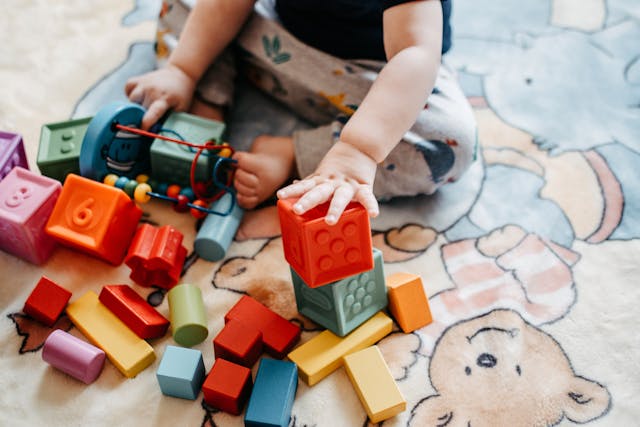
Discover educational toys that spark imaginative play, creativity, and learning while keeping kids happily engaged.
Choosing the right educational toys to boost imaginative play can feel tough, right? Research shows that open-ended toys like wooden blocks or pretend play sets help with cognitive development and creativity.
This blog will break down what makes a great toy for hands-on learning and fun, plus share easy tips you can use today. Ready to spark more imagination in your child’s day?
What You'll Discover:
Key Features of Educational Toys for Imaginative Play
Kids need toys that spark ideas and stretch their minds. Things like wooden blocks or magnetic squares let them build, invent, and pretend in endless ways—no batteries needed!
Open-ended design
Open-ended toys invite ideas and questions. A wooden block can be a spaceship, a house, or even a zoo for toy animals. Children use building blocks or magnetic tiles to build castles today and bridges tomorrow.
These tools help spark creative thinking, problem-solving skills, and hands-on learning.
“Anything that fuels imagination shapes the mind,” says many teachers in early childhood development. Open-ended design supports social skills too; friends work together on big projects while sharing feelings and solving little conflicts along the way.
No batteries needed—just minds ready for play.
No batteries or electronics
Educational toys without batteries or electronics can spark creativity. They let kids use their imaginations freely. Toys like building blocks and pretend play sets are great examples.
Children can build, create stories, and role-play without limits.
These toys support hands-on learning and cognitive development. Kids learn to solve problems using just their minds and hands. No screens mean more time for social skills too. Children talk, share ideas, and work together during playtime.
This kind of play nurtures emotional regulation as well; kids express feelings while they act out different scenarios.
Environmentally friendly materials
No batteries or electronics means less waste. Choosing toys made from environmentally friendly materials is a smart move. Look for items crafted from wood, recycled plastics, or organic fabrics.
These choices are safe for kids and kind to our planet.
Wooden toys add a warm touch and last longer than plastic ones. They invite creative thinking and imaginative play. Plus, natural materials often have fewer chemicals, which benefits children’s health.
With eco-friendly options, you help promote child development while caring for the environment too!
Top Types of Toys for Imaginative Play
Kids love using their imaginations. Some toys can really help with that.
Building blocks let children create anything they dream up. Pretend play sets, like kitchens and doctor kits, spark fun role-playing adventures. Play silks and scarves inspire kids to dance and act out stories.
Realistic toy animals and cars bring the world into their hands. Each of these toys encourages creativity while allowing for hands-on learning experiences.
Building blocks (e.g., LEGOs, wooden blocks)
Building blocks spark creativity. They let children build whatever they imagine. LEGOs and wooden blocks are classic examples that promote open-ended play. Kids can stack, create, and tear down their designs as they please.
These toys help develop fine motor skills too. Children learn balance and coordination while playing. Building blocks also encourage problem-solving skills as kids figure out how to make their structures stand tall or fit together.
With each build, they grow in confidence and creativity!
Pretend play sets (e.g., kitchen sets, doctor kits)
Incorporating learning toys into playtime can significantly enhance a child’s creativity and problem-solving abilities.
Pretend play sets spark creativity and fun. Kitchen sets let kids cook up meals in a make-believe world. They chop veggies, stir pots, and serve guests with delight. These activities build fine motor skills and boost language development as they talk about their pretend dishes.
Doctor kits help children explore roles in health care. Kids can check each other’s heartbeats or give toy shots. This type of play teaches empathy while also enhancing social skills.
Children learn to take care of others as they step into the shoes of a doctor or nurse.
These toys encourage imaginative play while making learning enjoyable. Next up are building blocks like LEGOs and wooden blocks that open even more doors for creative thinking!
Play silks and scarves
Transitioning from pretend play sets opens a vibrant world of play silks and scarves. These colorful fabrics spark imagination in kids. They can become capes, tents, or anything else they dream up.
Play silks encourage open-ended play and creativity. Children can use them for dress-up or to create stories.
Scarves also support physical activity and fine motor skills as children tie knots or toss them around. Made from soft, durable materials like silk or cotton, these toys are friendly for the environment too.
Kids learn through hands-on activities while having fun with their friends!
Realistic toy animals and vehicles
Realistic toy animals and vehicles spark imagination. Kids can create entire worlds with them. A child might build a zoo or race cars on a track. These toys help develop critical thinking and problem-solving skills as children figure out how to use them in play.
Flexible designs make these toys even better for imaginative play. They encourage open-ended play, letting kids explore different scenarios and learn from their choices. Playing with realistic animals or vehicles also boosts language development as children describe their adventures.
The joy of pretend play makes learning fun!
Benefits of Imaginative Play with Educational Toys
Imaginative play helps kids think creatively and solve problems. It boosts their social skills, too, as they learn to share and cooperate during playtime.
Enhances creativity and problem-solving skills
Creative play sparks the imagination. Children use educational toys to invent stories and build worlds. This open-ended play helps kids think outside the box. For example, building blocks allow them to create anything from castles to rocket ships.
They will experiment with different structures too.
Problem-solving skills grow as children face challenges during play. When a tower falls, they learn to try again differently. Pretend play sets encourage role-playing that teaches conflict resolution and decision-making.
Kids must think critically when deciding what character to be or how to solve a problem in their game. All these activities support cognitive development while having fun!
Encourages social and emotional development
Imaginative play boosts social and emotional development. Children learn to understand their feelings and those of others. They practice sharing, cooperation, and empathy with friends during pretend play.
For example, when kids set up a toy kitchen together, they take turns serving meals or playing different roles. This helps them build strong social skills.
Among the many options available, dinosaur toys are particularly popular for engaging children’s imaginations during playtime.
While playing with educational toys, children express themselves better. They also learn how to solve problems in group settings. Games that involve teamwork encourage cooperation and patience.
Such experiences are crucial for healthy emotional growth in young ones as they explore friendships.
Tips for Choosing the Right Toys
Choosing the right toys can be fun. Look for options that last and grow with your child. Pick items that match their age and interests, too. This way, kids stay engaged and happy while they learn!
Focus on durability and longevity
Durability matters when picking educational toys. Kids play hard, and toys should keep up. Strong materials last longer. Look for wooden toys or building blocks made from quality resources.
These can withstand rough play and daily adventures.
Longevity means kids can enjoy these toys for years. Open-ended play encourages creativity again and again. They spark different ideas with each use, making them worth the investment.
Choosing sturdy products helps support your child’s growth in fine motor skills, cognitive abilities, and social skills while keeping costs down over time.
Select toys appropriate for the child’s age and interests
Choose toys that fit the child’s age and interests. Toys like building blocks can help with fine motor skills. Kids love LEGOs or wooden blocks because they can create anything in their minds.
Pretend play sets, such as kitchen sets or doctor kits, let children role-play different scenarios. This sparks creativity.
Select options that grab their attention. For example, colorful play silks ignite imaginative stories and games. Realistic toy animals and vehicles inspire adventures outdoors or during quiet time at home.
Always keep the child’s preferences in mind to foster both cognitive development and fun!
Conclusion
Selecting educational toys can be a fun adventure for both kids and parents. These toys fuel imaginative play and spark creativity. Look for options that are sturdy, safe, and match your child’s interests.
Skip the batteries and screens; let their minds do the work! With the right choices, you’ll help them learn through play while having loads of fun together.