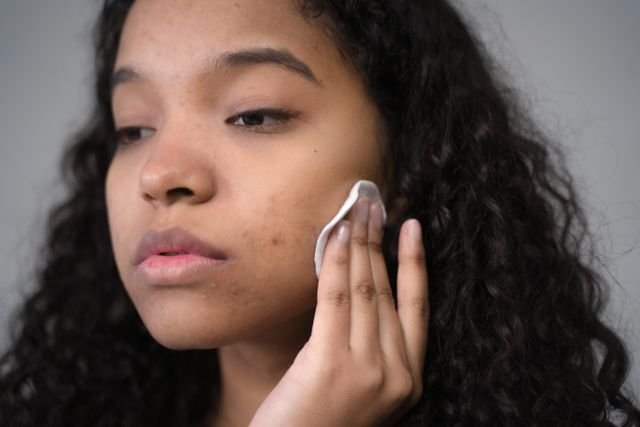
Can ashwagandha cause acne? Learn what research says about hormones, breakouts, side effects, and what to do next.
Can ashwagandha cause acne? There is no good clinical evidence showing that ashwagandha directly causes acne, but a breakout after starting it is possible and deserves attention. Ashwagandha may affect hormones in some people, and because androgens can increase oil production and contribute to acne, a hormonal connection is biologically plausible, but not proven.
What You'll Discover:
Why This Question Is More Complicated Than It Sounds
You start taking ashwagandha for stress, sleep, workouts, or general wellness. A few weeks later, your skin suddenly looks different. More oil, more clogged pores, perhaps those frustrating spots around your chin or jawline.
It is tempting to connect the two immediately. And if the timing is convincing, you may be wondering whether the supplement is the culprit or whether something else changed at the same time.
Ashwagandha is not an established acne trigger, but an individual reaction cannot be ruled out.
That distinction matters. Much of the online discussion treats anecdotal reports as proof that ashwagandha causes hormonal acne, while other sources swing too far in the opposite direction and suggest it can never affect breakouts. Neither position is supported by strong evidence.
The more useful question is: what could explain a new breakout after starting ashwagandha, and how can you tell whether the supplement is actually involved?
What Research Says About Ashwagandha and Acne
There is a major evidence gap here: clinical studies of ashwagandha generally investigate stress, sleep, fertility, performance, or other outcomes, not acne.
The National Institutes of Health’s Office of Dietary Supplements notes that studies use different ashwagandha preparations, doses, and extraction methods, making broad conclusions difficult. Short-term use appears reasonably well tolerated in clinical studies, while long-term safety remains uncertain.
Acne itself is strongly influenced by hormones, particularly androgens. Testosterone and related hormones can stimulate sebaceous glands, increasing sebum production and contributing to the chain of events that produces acne.
That creates a plausible, but still hypothetical, bridge between ashwagandha and breakouts.
A randomized, placebo-controlled study in men aged 40 to 70 found that eight weeks of a standardized ashwagandha extract was associated with higher DHEA-S and testosterone compared with placebo. The increase does not prove that the participants developed acne, nor does it establish that the same hormonal response occurs in everyone.
In other words, the science supports a possible mechanism without proving the outcome.
A hormonal effect is not the same thing as evidence that ashwagandha causes acne.
How Could Ashwagandha Potentially Affect Breakouts?
Hormonal changes may matter for some people
Androgens are one of the body’s major signals for sebaceous-gland activity. When androgen signaling increases, oil production can rise, making clogged pores and inflammatory acne more likely in susceptible skin.
Ashwagandha has been associated with changes in testosterone or related hormones in some studies, particularly in men. But the effects vary by population, extract, dose, and study design, and evidence in women is much less consistent.
So imagine two people taking the same supplement. One has naturally oily, acne-prone skin and is particularly sensitive to hormonal fluctuations. The other rarely breaks out.
A modest hormonal change could conceivably be irrelevant to the second person but noticeable in the first. That’s a susceptibility issue, not proof that the herb universally causes acne.
Stress reduction could push in the opposite direction
Here’s the interesting twist: ashwagandha may also reduce factors that contribute to breakouts.
Some clinical evidence suggests certain ashwagandha preparations may help with perceived stress and sleep. Stress can interact with acne through several pathways, including hormonal and inflammatory processes.
That means the relationship isn’t simply “ashwagandha raises hormones, therefore acne.”
For one person, reducing stress might coincide with calmer skin. For another, an individual hormonal response or an ingredient in a particular supplement could coincide with worsening acne.
The supplement itself may not be the whole story
Commercial products can contain much more than ashwagandha root extract. Some include vitamins, minerals, botanical blends, sweeteners, flavorings, or other performance-oriented ingredients.
If acne appears after starting a new product, the correct suspect is therefore not automatically ashwagandha.
Check the entire ingredient list and compare it with anything else you started around the same time.
Ashwagandha vs. Other Possible Reasons for a Sudden Breakout
Before blaming a supplement, look at what changed during the same period.
| Possible trigger | How it could relate to acne | What to look for |
| Ashwagandha | Possible individual hormonal response, but unproven | Breakouts begin after starting and improve after stopping |
| Other supplement ingredients | Some products contain multiple active ingredients | Compare the full label with your previous routine |
| Whey protein | Reported association with acne in some people | Breakouts begin after adding whey-based shakes |
| Stress or poor sleep | Can aggravate existing acne | Recent exams, work pressure, travel, or sleep disruption |
| Skin-care changes | New products can irritate or clog pores | New moisturizer, sunscreen, hair product, or cleanser |
| Hormonal fluctuations | Can increase oil production and inflammation | Menstrual-cycle pattern, jawline acne, other hormonal symptoms |
| Training changes | Sweat, friction, and occlusive clothing can contribute | New gym routine, helmets, hats, or tight clothing |
This comparison is important because correlation becomes much less convincing when several variables change at once.
For example, someone might begin ashwagandha while simultaneously increasing protein intake, training harder, sleeping less, and changing their skin-care routine. Picking one variable without examining the others can lead to the wrong conclusion.
How to Tell If Ashwagandha Is Actually Behind Your Acne
Look at the timeline
Timing is one of your most useful clues.
Ask yourself:
- When exactly did I start taking ashwagandha?
- When did the breakout begin?
- Did the acne change gradually or suddenly?
- Did I change anything else during that period?
- Does the pattern resemble my previous hormonal breakouts?
A close temporal relationship strengthens suspicion, but it does not prove causation.
Check what type of breakout you’re getting
Classic acne usually involves blackheads, whiteheads, pimples, or deeper inflammatory lesions.
A rash is different.
Ashwagandha has been associated with adverse reactions such as itching or rash in some safety reports. If you develop widespread itching, hives, swelling, or a rapidly spreading skin reaction after taking a supplement, don’t assume it’s ordinary acne.
That distinction can prevent a potentially important allergic or hypersensitivity reaction from being dismissed as “purging.”
Don’t assume you’re experiencing a “detox”
One of the most persistent supplement myths is that a sudden breakout means the body is “detoxing.”
There is no established scientific rule that ashwagandha should make acne temporarily worse because toxins are leaving the body. A new breakout should be investigated as a possible side effect, coincidence, hormonal fluctuation, skin-care reaction, or another cause, not automatically celebrated as evidence that the supplement is working.
Should You Stop Ashwagandha If You Break Out?
If your acne clearly worsened after starting ashwagandha, it is reasonable to discuss stopping the supplement with a healthcare professional, particularly if you are taking it for a nonessential wellness goal.
Avoid changing several things simultaneously if you are trying to identify the cause. Otherwise, you may never know which change affected your skin.
For a straightforward situation, a clinician may help you decide whether a supervised trial off the supplement makes sense. If the acne improves after discontinuation and returns after re-exposure, that pattern provides stronger evidence of a connection, but deliberately restarting a supplement that caused a concerning reaction is not something to do casually.
There is another reason not to treat this as merely a cosmetic problem: ashwagandha has documented safety considerations unrelated to acne.
The NIH and NCCIH report that short-term use appears generally well tolerated, but there are reports of liver injury, possible effects on thyroid function, and medication interactions. It is also not recommended during pregnancy and breastfeeding.
Seek medical advice promptly if supplement use is followed by symptoms such as yellowing of the skin or eyes, dark urine, unusual itching, significant abdominal discomfort, severe vomiting, or other concerning symptoms.
What to Do About the Acne Itself
If the breakout is mild, don’t respond by attacking your skin with five new products at once. That can create irritation that makes the situation even harder to interpret.
A simple routine, gentle cleansing, a non-comedogenic moisturizer, and appropriate acne treatment, is usually a better starting point.
For established acne, dermatology guidelines support treatments such as topical retinoids, benzoyl peroxide, salicylic acid, and azelaic acid, depending on the type and severity of acne. Hormonal treatments may also be appropriate for some people with persistent hormonally influenced acne.
If you’re developing deep, painful nodules, significant scarring, widespread inflammation, or acne that isn’t improving, seeing a dermatologist is more useful than repeatedly experimenting with supplements.
The goal is not simply to find something that stops today’s pimples. It is to prevent new lesions and reduce the risk of lasting scars.
When a Breakout Deserves a Bigger Hormone Conversation
A new acne pattern can occasionally be a clue that something else deserves investigation.
For women, particularly, persistent adult acne accompanied by irregular or infrequent periods, increased facial or body hair, or other signs of androgen excess may warrant a medical evaluation.
That doesn’t mean acne automatically indicates a hormone disorder. Most people with acne do not need extensive hormone testing.
But when acne appears alongside other hormonal symptoms, the bigger picture matters more than any single supplement.
A Practical Decision Guide
If you started ashwagandha and developed mild acne
First, review the timeline and the complete product label. Keep the rest of your routine stable where practical, and discuss whether stopping the supplement temporarily is appropriate for you.
Treat the acne with evidence-based skin care rather than assuming you need a “detox.”
If the acne is severe or rapidly worsening
Don’t wait months hoping your body will adjust.
See a dermatologist or other qualified healthcare professional, especially if you have painful nodules, scarring, or significant inflammation.
If you develop a rash or other systemic symptoms
Treat this differently from ordinary acne.
Stop and seek medical advice, particularly if there is swelling, widespread itching, breathing difficulty, yellowing of the skin or eyes, dark urine, or significant abdominal symptoms.
If you want to keep taking ashwagandha
Discuss it with a clinician or pharmacist if you have a thyroid disorder, autoimmune condition, liver condition, are pregnant or breastfeeding, or take medications that could interact with it.
The supplement’s reason for use also matters. If you’re taking it for a specific medical concern, don’t replace an established treatment with a supplement without professional guidance.
Frequently Asked Questions
Can ashwagandha cause hormonal acne?
It is possible that hormonal effects could contribute to acne in a susceptible person, but there is currently no strong clinical evidence proving that ashwagandha causes hormonal acne. Some studies have found changes in testosterone or related hormones, while direct acne outcomes have not been adequately studied.
How long does it take for acne from ashwagandha to go away?
There is no scientifically established timeline because ashwagandha-induced acne has not been established as a clinical adverse effect. If the supplement is contributing to a breakout, improvement after discontinuation would depend on the individual’s acne cycle and other causes.
Does ashwagandha increase testosterone?
Some human studies suggest that certain ashwagandha extracts can increase testosterone, particularly in men, but results vary. A testosterone increase does not automatically mean someone will develop acne.
Can ashwagandha help acne instead?
Possibly indirectly, but evidence is limited. Ashwagandha may reduce perceived stress in some people, and stress can aggravate acne. However, ashwagandha should not be considered an established acne treatment.
Should I stop ashwagandha if I get pimples?
If the breakout began soon after starting the supplement, discussing a temporary discontinuation with a healthcare professional is reasonable. If you have a severe skin reaction or symptoms suggesting liver injury or another serious adverse effect, seek medical care rather than simply trying to manage the acne yourself.
Key Takeaways
- Can ashwagandha cause acne? There is no strong clinical evidence that it directly causes acne.
- Ashwagandha has been linked to changes in testosterone and DHEA-S in some human studies, creating a plausible hormonal pathway for susceptible individuals.
- Hormonal plausibility is not proof of causation.
- A breakout after starting ashwagandha may also come from another supplement ingredient, stress, sleep changes, skin-care products, diet, training, or normal hormonal fluctuations.
- A rash, hives, swelling, jaundice, dark urine, or significant abdominal symptoms should not be dismissed as ordinary acne.
- If acne becomes persistent, painful, severe, or scarring, evidence-based acne treatment and professional evaluation are more reliable than supplement experimentation.
- Ashwagandha’s broader safety profile matters too: short-term use appears generally tolerated, but long-term safety is uncertain and rare liver injury and possible thyroid effects have been reported.
Additional Resources
- Ashwagandha Usefulness and Safety: A useful overview of evidence, known side effects, medication interactions, and populations who should avoid or discuss ashwagandha with a clinician.