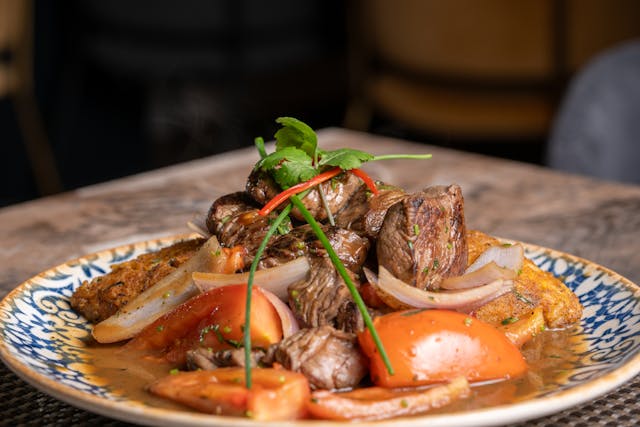
Craving comfort and spice? Try this authentic recipe for Peruvian lomo saltado—juicy beef, fries, and bold flavor at home.
A recipe for Peruvian lomo saltado is a stir-fry of marinated beef, onions, tomatoes, soy sauce, and spices, served with fries and rice.
It blends Peruvian and Chinese flavors into one fast, savory, comforting dish.
The first time I saw fries tossed into a sizzling pan with beef and soy sauce, I thought someone had given up halfway between dinner and a late-night snack. It felt wrong. Confusing. Almost rebellious.
Then I tasted it.
And suddenly, it made emotional sense before it made culinary sense.
That’s how a good recipe for Peruvian lomo saltado works on you. It doesn’t politely introduce itself. It crashes into your expectations, rearranges your ideas about what “goes together,” and leaves you wondering why all comfort food isn’t this bold.
I didn’t grow up with Peruvian food. I stumbled into it the way many of us do—through curiosity, travel videos, and one friend who swore, “Trust me, this is Peru on a plate.”
He was right. But also… he wasn’t entirely. Because lomo saltado isn’t just Peru on a plate. It’s history. Migration. Adaptation. A delicious argument between cultures that somehow ended in agreement.
And if you’re here, maybe you’re trying to piece it together too. Let’s figure it out together.
What You'll Discover:
What Is Peruvian Lomo Saltado, Really?
At its core, a recipe for Peruvian lomo saltado is a beef stir-fry. But calling it just a stir-fry is like calling a symphony “some sounds.”
Lomo saltado combines:
- Tender strips of beef
- Red onions
- Juicy tomatoes
- Soy sauce
- Vinegar
- Spices
- French fries
- White rice
Yes, both fries and rice. Carb diplomacy at its finest.
Here’s the fascinating part:
“Lomo saltado is a hallmark of Chifa cuisine, the fusion of Chinese and Peruvian cooking traditions.”
That fusion started in the 19th century when Chinese immigrants arrived in Peru and adapted their cooking techniques to local ingredients. The wok met Peruvian peppers. Soy sauce met native potatoes. The result? A national favorite.
Some people insist it must be cooked in a blazing hot wok. Others say a regular pan works fine. Both are right. The spirit matters more than the tool.
The Soul of the Dish: Why This Recipe for Peruvian Lomo Saltado Works
A good recipe for Peruvian lomo saltado balances four things:
- Heat – High heat gives that smoky edge.
- Acidity – Vinegar brightens the richness.
- Umami – Soy sauce deepens flavor.
- Comfort – Fries and rice make it grounding.
It’s not delicate food. It’s confident food.
Think of it like a conversation where everyone talks loudly but somehow listens too.
Some modern recipes tone down the vinegar. Others skip the ají amarillo (Peruvian yellow chili). Purists might cringe—but home cooking is about access and joy, not gatekeeping.
Ingredients for an Authentic Experience
A strong recipe for Peruvian lomo saltado starts with thoughtful ingredients, not fancy ones.
Main Ingredients
- 500g beef sirloin (or tenderloin), sliced into strips
- 1 large red onion, thickly sliced
- 2 ripe tomatoes, sliced into wedges
- 3–4 cloves garlic, minced
- 3 tbsp soy sauce
- 1 tbsp red wine vinegar
- 1–2 tbsp ají amarillo paste (optional but ideal)
- Salt and black pepper
- Fresh cilantro
- French fries (thick-cut works best)
- Cooked white rice
- Vegetable oil
Optional Add-Ons
- Cumin for warmth
- Oyster sauce for deeper umami
- Green onions for brightness
Some swear by marinating the beef. Others toss it straight into the pan. I’ve tried both. Marinating adds flavor, but speed cooking preserves texture. Choose your priority.
Step-by-Step Recipe for Peruvian Lomo Saltado
Step 1: Prep Everything First
This dish moves fast. Chop before you cook.
If you hesitate mid-cooking, the pan punishes you.
Step 2: Fry the Potatoes
Cook fries until golden and crisp. Set aside.
Traditionalists fry fresh potatoes. Busy humans use frozen fries. Both still taste good.
Step 3: Sear the Beef
Heat oil in a very hot pan or wok.
Add beef in a single layer. Let it brown before stirring.
“High heat locks in flavor and prevents the beef from steaming.”
Cook briefly. Remove and set aside.
Step 4: Stir-Fry Aromatics
Add garlic and onions. Stir quickly.
You want onions slightly crisp, not soft.
Step 5: Add Tomatoes & Sauce
Add tomatoes, soy sauce, vinegar, and ají amarillo.
Return beef to the pan. Toss everything.
The sauce should sizzle loudly. That sound? That’s flavor forming.
Step 6: The Iconic Toss
Add fries and toss gently.
Yes, they soften a bit. That’s part of the charm.
Step 7: Finish & Serve
Sprinkle cilantro.
Serve with rice. Always rice.
Because lomo saltado isn’t about choosing carbs. It’s about embracing them.
Common Mistakes (I’ve Made Most of Them)
Overcooking the Beef
It turns tough fast. Quick cooking is key.
Low Heat
Without high heat, you miss the smoky flavor.
Too Much Sauce
It becomes stew-like. Lomo saltado should be glossy, not soupy.
Skipping the Vinegar
Acidity balances richness. It matters more than you think.
Variations: Because Not Everyone Has Ají Amarillo
A flexible recipe for Peruvian lomo saltado can adapt.
Chicken Lomo Saltado
Use chicken breast or thighs.
Vegetarian Version
Mushrooms or tofu absorb sauce beautifully.
Spicy Version
Add chili flakes or fresh peppers.
Some Peruvians might argue these aren’t “true” lomo saltado. But food evolves. That’s how this dish was born in the first place.
Comparison: Traditional vs Modern Lomo Saltado
| Element | Traditional | Modern Home Version |
| Pan | Wok | Skillet |
| Chili | Ají amarillo | Chili paste or none |
| Potatoes | Fresh-cut | Frozen fries |
| Oil | High-heat oils | Any neutral oil |
| Method | Flame-intense | Stove-friendly |
Neither is wrong. One is heritage. The other is practicality.
Why This Dish Feels So Satisfying
A great recipe for Peruvian lomo saltado hits emotional notes.
Salty. Tangy. Savory. Warm.
It’s the kind of food that feels like a reward after a long day. The culinary equivalent of loosening your shoulders.
There’s also something psychologically pleasing about mixing fries into a main dish. It breaks rules we didn’t realize we followed.
Cultural Insight: The Story Behind the Stir-Fry
Lomo saltado reflects Peru’s multicultural identity.
Chinese immigrants brought stir-frying. Peru offered ingredients. Together, they built something new.
“Chifa cuisine represents one of the earliest and most successful food fusions in the Americas.”
That’s not just trivia. It explains why this dish feels familiar yet surprising.
It’s culinary diplomacy.
Serving Ideas That Elevate the Experience
- Pair with a simple cucumber salad
- Add a fried egg on top
- Serve with lime wedges
- Use garlic rice for extra depth
Some restaurants plate rice and lomo separately. Others mix. There’s no universal rule—only preference.
FAQ: Recipe for Peruvian Lomo Saltado
Is lomo saltado spicy?
Not inherently. Ají amarillo adds mild heat, but you control spice.
What cut of beef is best?
Sirloin or tenderloin works best for tenderness and quick cooking.
Can I make it without a wok?
Yes. A hot skillet works fine.
Why serve rice and fries together?
It’s tradition and texture—soft meets crisp.
Can it be meal-prepped?
Yes, but fries are best fresh to keep texture.
Key Takings
- A great recipe for Peruvian lomo saltado balances heat, acidity, and umami.
- High heat cooking defines its signature flavor.
- Fries and rice together are intentional, not excessive.
- Ají amarillo adds authenticity but isn’t mandatory.
- The dish reflects Chinese-Peruvian fusion history.
- Quick cooking prevents tough beef.
- Adaptations keep the dish alive across cultures.
Additional Resources:
- Peruvian Cuisine Overview: A broad cultural look at Peru’s culinary history and influences.