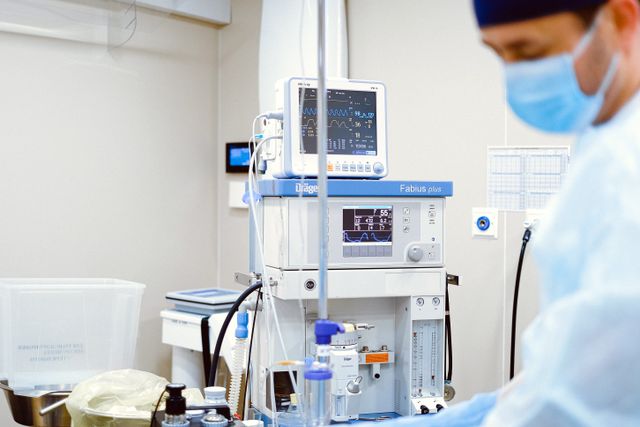
Discover how the Hamilton T1 ventilator delivers ICU-level respiratory support during transport, emergencies, and critical care missions.
The Hamilton T1 ventilator is a high-performance transport ventilator designed to provide ICU-grade respiratory support during patient transfers. It supports neonatal, pediatric, and adult patients while operating independently through an integrated turbine and battery-powered system.
There is a strange moment that happens during critical patient transport.
A patient leaves the controlled environment of an ICU and suddenly enters a world of movement, vibration, noise, weather, and uncertainty. The ventilator that seemed perfectly stable beside a hospital bed must now perform inside an ambulance, a helicopter, or even an aircraft thousands of meters above sea level.
That challenge is exactly where the Hamilton T1 ventilator enters the conversation.
At first glance, it looks surprisingly compact for a machine carrying such enormous responsibility. But the more you study it, the more you realize the Hamilton T1 was never designed to be a smaller ventilator. It was designed to be an ICU ventilator that happens to travel.
That distinction matters.
Many transport ventilators historically required clinicians to compromise. Simpler modes. Reduced monitoring. Fewer options. The Hamilton T1 challenges that assumption by bringing advanced ventilation strategies into environments where every second and every breath count.
As I explored what makes this ventilator different, one theme kept appearing again and again. Continuity. The idea that a patient should receive the same quality of respiratory support whether they are lying in an ICU bed or being transferred across an entire region.
Let’s take a closer look at why the Hamilton T1 has become one of the most respected transport ventilators in modern medicine.
What You'll Discover:
What Is the Hamilton T1 Ventilator?
The Hamilton T1 ventilator is a critical care transport ventilator designed for use both inside and outside hospital environments.
Unlike traditional transport ventilators that focus primarily on maintaining basic respiratory support during movement, the Hamilton T1 aims to deliver advanced ventilation capabilities comparable to those found in intensive care units.
The system supports:
- Adult patients
- Pediatric patients
- Neonatal patients
- Invasive ventilation
- Noninvasive ventilation
- High-flow oxygen therapy in specific configurations
Think of it as a portable intensive care platform rather than a simple transport device.
The difference may seem subtle on paper. In real-world medicine, it can be enormous.
Why Transport Ventilation Is More Challenging Than Most People Realize
When people hear the phrase “patient transport,” they often imagine a straightforward transfer from one location to another.
Reality is rarely that simple.
Patients can deteriorate during transport. Road conditions can create constant vibration. Aircraft introduce pressure changes. Emergency teams frequently work in cramped spaces where every movement matters.
A ventilator that performs perfectly inside a hospital room may encounter entirely different challenges once it leaves the building.
This is where transport-specific engineering becomes essential.
The Hamilton T1 was designed to operate across ground, air, and specialized transport environments without sacrificing critical respiratory support.
A useful analogy is the difference between a luxury sedan and an off-road expedition vehicle.
Both are capable vehicles.
Only one was built to handle unpredictable terrain.
Key Features of the Hamilton T1 Ventilator
ICU-Level Ventilation Modes
One of the most significant strengths of the Hamilton T1 ventilator is its extensive selection of ventilation modes.
These include:
- Pressure-controlled ventilation
- Volume-targeted ventilation
- Adaptive Support Ventilation (ASV)
- Noninvasive ventilation modes
- Advanced respiratory support options
This flexibility allows clinicians to continue established treatment strategies rather than changing approaches simply because a patient is being transported.
That continuity reduces complexity.
And in critical care, reducing complexity often improves safety.
Adaptive Support Ventilation (ASV)
Among respiratory therapists and transport clinicians, Adaptive Support Ventilation is frequently highlighted as one of the ventilator’s most valuable features.
ASV automatically adjusts respiratory support based on a patient’s lung mechanics and respiratory needs.
Instead of manually adjusting multiple variables throughout transport, clinicians can rely on the ventilator’s adaptive algorithms to maintain appropriate support.
This does not replace clinical judgment.
It enhances it.
Imagine driving a vehicle equipped with advanced stability systems. The driver remains responsible, but the technology helps manage changing conditions.
That is essentially the role ASV plays during ventilation.
Turbine-Based Independence
One of the most practical design elements is the integrated turbine system.
Many traditional ventilators depend heavily on external compressed air sources.
The Hamilton T1 does not.
Its built-in turbine generates airflow independently, allowing clinicians to provide ventilation without requiring extensive infrastructure.
This creates several advantages:
- Greater mobility
- Faster deployment
- Reduced equipment dependence
- Enhanced flexibility during emergencies
The result is a ventilator capable of functioning in environments where traditional systems may struggle.
Portability Without Sacrificing Capability
Portability often comes at a cost.
Smaller equipment usually means fewer features.
The Hamilton T1 attempts to challenge that trade-off.
Weighing approximately 6.5 kilograms, the ventilator remains relatively compact while maintaining advanced ventilation functionality.
Its dual-battery configuration can support extended operation during long transports, helping ensure uninterrupted respiratory support.
This balance between portability and performance is one of the reasons many transport teams value the device.
It travels light.
But it thinks big.
Built for Harsh Environments
A transport ventilator cannot afford to be delicate.
Emergency medicine does not happen in ideal conditions.
Ambulances hit potholes. Helicopters vibrate continuously. Rescue operations occur in extreme temperatures. Equipment gets bumped, moved, and exposed to challenging environments.
The Hamilton T1 was engineered with durability in mind.
Its design includes:
- Shock-resistant construction
- Environmental protection features
- Vibration tolerance
- High-altitude operational capability
- Rugged display technology
These characteristics are easy to overlook when reading a specification sheet.
Yet they become critically important when a patient’s life depends on reliable performance.
Advanced Monitoring Capabilities
Ventilation is not simply about delivering breaths.
It is about understanding what those breaths mean.
The Hamilton T1 provides advanced monitoring tools that help clinicians assess respiratory status throughout transport.
These include:
- Lung mechanics monitoring
- Respiratory trend analysis
- Graphical waveforms
- Ventilation loops
- Pulse oximetry integration
- Capnography integration
Data matters.
Especially when circumstances are changing rapidly.
A ventilator that simply pushes air is useful.
A ventilator that helps clinicians understand the patient’s condition is far more powerful.
Why Monitoring Matters During Transport
Imagine trying to navigate a city using only occasional snapshots instead of a live GPS map.
That is what limited monitoring can feel like during patient transport.
Advanced monitoring provides a continuous stream of information, allowing clinicians to identify problems before they become emergencies.
Small changes often tell important stories.
A slight rise in airway pressure.
A subtle drop in oxygen saturation.
A changing capnography pattern.
The earlier those signals are recognized, the more options clinicians have.
Neonatal Ventilation Capabilities
Perhaps one of the most impressive aspects of the Hamilton T1 is its ability to support neonatal patients.
Neonatal transport is among the most demanding areas of respiratory care.
Tiny lungs require extraordinary precision.
Small mistakes can have significant consequences.
The Hamilton T1 addresses these challenges through features such as:
- Low tidal volume delivery
- Neonatal-specific ventilation settings
- Advanced synchronization technology
- Specialized neonatal respiratory support
For neonatal transport teams, maintaining consistency between hospital and transport ventilation can be especially valuable.
The smaller the patient, the smaller the margin for error.
Common Applications of the Hamilton T1 Ventilator
Critical Care Transport
This remains the ventilator’s primary role.
Patients transferred between hospitals often require uninterrupted advanced respiratory support.
The Hamilton T1 helps ensure that transition occurs smoothly.
Air Medical Transport
Helicopter and fixed-wing medical operations introduce unique physiological and logistical challenges.
Altitude changes, vibration, noise, and limited space create demanding conditions for both patients and clinicians.
The Hamilton T1 was specifically developed with these realities in mind.
Emergency Departments
Emergency departments frequently use transport ventilators during stabilization, transfers, and high-acuity situations.
The ability to maintain advanced respiratory support can be invaluable during these transitions.
Disaster Response and Field Medicine
Portable critical care equipment becomes especially important during large-scale emergencies.
The Hamilton T1’s independent operation and robust design make it suitable for deployment in environments where traditional infrastructure may not be available.
Hamilton T1 Ventilator vs Traditional Transport Ventilators
| Feature | Hamilton T1 | Traditional Transport Ventilators |
| Ventilation Modes | Extensive | Often Limited |
| Adaptive Ventilation | Yes | Rare |
| Turbine Driven | Yes | Not Always |
| Neonatal Support | Advanced | Variable |
| Battery Duration | Extended | Often Shorter |
| Monitoring Features | Extensive | Basic |
| Air Transport Compatibility | Designed for It | Depends on Model |
This comparison highlights an important trend.
Transport ventilators are evolving.
They are no longer viewed as temporary solutions.
Increasingly, they are becoming fully capable mobile intensive care systems.
Strengths of the Hamilton T1 Ventilator
Comprehensive Ventilation Support
The ventilator supports a broad range of patients and clinical situations.
That versatility reduces the need for multiple specialized devices.
Advanced Automation
Features such as ASV help simplify complex ventilation management.
This can be particularly valuable during demanding transports.
Exceptional Mobility
The turbine-driven design reduces reliance on external infrastructure.
Mobility becomes a built-in feature rather than an afterthought.
Strong Monitoring Capabilities
Comprehensive respiratory data helps clinicians make informed decisions in real time.
Durability
The ventilator was engineered for environments that are far less predictable than hospital rooms.
Potential Limitations
No medical device is perfect.
The Hamilton T1 is no exception.
Learning Curve
Its advanced features require training and familiarity.
Organizations must invest time in education and competency development.
Higher Initial Cost
Sophisticated technology typically comes with a higher acquisition cost than basic transport ventilators.
Feature Complexity
Some users may prefer simpler systems in situations where advanced functionality is unnecessary.
This creates an interesting tension.
The very features that make the Hamilton T1 powerful can also make it more demanding to master.
The Future of Transport Ventilation
Looking ahead, transport ventilation appears to be moving toward greater intelligence and automation.
Ventilators are becoming more adaptive.
More connected.
More data-driven.
The Hamilton T1 represents this shift.
Rather than functioning as a simple mechanical device, it acts as an intelligent respiratory support platform.
That evolution mirrors broader trends across healthcare.
Technology is increasingly helping clinicians make better decisions while preserving the critical role of human expertise.
Machines are becoming smarter.
But clinical judgment remains irreplaceable.
FAQ
What is the Hamilton T1 ventilator used for?
The Hamilton T1 ventilator is used for critical care transport, emergency medicine, interfacility transfers, neonatal transport, and advanced respiratory support outside traditional ICU settings.
Can the Hamilton T1 ventilator support neonatal patients?
Yes. The ventilator includes neonatal ventilation capabilities and can deliver precise respiratory support for newborn patients.
Does the Hamilton T1 require compressed air?
No. The ventilator uses an integrated turbine system that allows independent operation without requiring compressed air infrastructure.
How portable is the Hamilton T1 ventilator?
The ventilator weighs approximately 6.5 kilograms and was specifically designed for mobile critical care applications.
What is Adaptive Support Ventilation?
Adaptive Support Ventilation (ASV) is an intelligent ventilation mode that automatically adjusts respiratory support based on patient needs and lung mechanics.
Key Takings
- The Hamilton T1 ventilator delivers ICU-level respiratory support during transport.
- It supports adult, pediatric, and neonatal patients on a single platform.
- Built-in turbine technology allows operation without compressed air supplies.
- Adaptive Support Ventilation helps optimize respiratory support automatically.
- Advanced monitoring tools provide real-time respiratory insights.
- Rugged construction supports use in ground, air, and emergency transport environments.
- The Hamilton T1 represents a significant evolution in modern transport ventilation.
Additional Resources
- American Association for Respiratory Care: Professional respiratory care guidance, clinical education, and evidence-based resources relevant to ventilation practice.