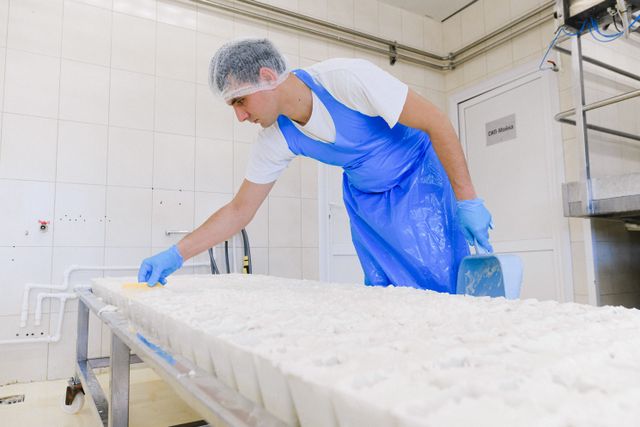
Master the food safety inspection guide with practical steps, compliance tips, checklists, and proven inspection readiness strategies.
A food safety inspection guide is a framework that helps food businesses prepare for inspections, maintain compliance, prevent contamination, and protect public health. It outlines the procedures, standards, and best practices inspectors evaluate when assessing food safety operations.
A food safety inspection rarely starts when an inspector walks through the front door.
That realization caught me off guard the first time I looked closely at how successful food businesses handle inspections. I imagined inspections as isolated events. A date circled on a calendar. A few nervous hours. A manager frantically checking paperwork.
But the deeper I looked, the more I realized something different was happening.
The businesses that consistently perform well during inspections don’t prepare for inspections. They prepare for every day.
Their refrigerators are monitored whether anyone is watching or not. Their cleaning schedules are followed because they matter, not because an inspector might ask for them. Their employees understand food safety as part of their work rather than an occasional requirement.
Food safety inspections exist because trust is invisible.
Customers trust restaurants, manufacturers, caterers, and food retailers every time they take a bite. They assume the food is safe. They assume risks have been controlled. They assume someone has done the hard work behind the scenes.
Food safety inspections help verify that those assumptions are justified.
This comprehensive food safety inspection guide explains how inspections work, what inspectors look for, common violations, preparation strategies, compliance requirements, and practical ways to build a culture that keeps food safe long before inspection day arrives.
What You'll Discover:
What Is a Food Safety Inspection?
A food safety inspection is a formal assessment of a food operation’s compliance with food safety regulations, industry standards, and public health requirements.
Inspectors evaluate whether food is being handled, stored, prepared, processed, and distributed in a manner that minimizes risks to consumers.
At first glance, inspections may seem focused on cleanliness.
Cleanliness certainly matters.
But modern inspections go much deeper.
Inspectors evaluate systems, procedures, employee behavior, documentation, hazard controls, traceability practices, and risk management processes.
The goal is not simply identifying problems.
The goal is preventing problems before consumers are affected.
Why Food Safety Inspections Matter
Foodborne illness can have serious consequences.
For consumers, it can mean hospitalization, long-term health complications, or worse.
For businesses, it can lead to:
- Reputation damage
- Revenue loss
- Product recalls
- Regulatory penalties
- Legal liability
- Loss of customer trust
One safety failure can erase years of brand building.
That reality explains why inspections remain one of the most important tools for protecting public health.
A Quotable Fact
“Food safety inspections focus on preventing hazards before consumers are exposed to them.”
The Purpose Behind Modern Food Safety Inspections
Many people view inspections as enforcement tools.
That’s only part of the story.
Modern food safety systems increasingly emphasize prevention over punishment.
Inspectors are often trying to answer a larger question:
“Does this operation have effective systems in place to prevent food safety hazards from occurring?”
That shift changes everything.
Instead of simply looking for contamination, inspectors examine whether contamination is likely to occur.
The distinction may sound subtle.
It isn’t.
One approach reacts to problems.
The other prevents them.
Think of it like maintaining a bridge.
Waiting for cracks to become catastrophic failures is dangerous.
Monitoring structural integrity continuously is safer and far more effective.
Food safety operates under the same principle.
Types of Food Safety Inspections
Not all inspections serve the same purpose.
Understanding the different categories helps businesses prepare appropriately.
Routine Inspections
Routine inspections are conducted on a scheduled basis.
These inspections assess overall compliance and evaluate whether food safety programs remain effective over time.
Higher-risk operations may receive more frequent inspections.
Follow-Up Inspections
Follow-up inspections occur after violations have been identified.
Inspectors revisit the facility to verify corrective actions have been implemented successfully.
Complaint-Based Inspections
Consumer complaints sometimes trigger inspections.
Complaints involving contamination, illness, pests, or unsanitary conditions may result in targeted investigations.
Outbreak Investigations
Foodborne illness outbreaks require immediate attention.
Inspectors work to identify contamination sources, affected products, and breakdowns in safety controls.
Third-Party Audits
Many businesses undergo voluntary or customer-required audits.
These assessments often evaluate food safety programs against recognized industry standards.
Key Areas Inspectors Evaluate
The average customer sees a meal.
Inspectors see a process.
Every step from supplier approval to final service presents potential risks.
Employee Hygiene
Employees are among the most important food safety controls.
Inspectors commonly evaluate:
- Handwashing practices
- Glove usage
- Personal cleanliness
- Illness reporting procedures
- Protective clothing practices
One improperly washed pair of hands can compromise an entire batch of food.
Temperature Control
Temperature management remains one of the most critical food safety factors.
Inspectors review:
- Refrigerator temperatures
- Freezer conditions
- Cooking temperatures
- Cooling procedures
- Hot holding practices
- Reheating methods
Dangerous bacteria thrive when food spends too much time in unsafe temperature ranges.
Food Storage Practices
Storage procedures influence both food quality and safety.
Inspectors examine:
- Raw food separation
- Labeling systems
- Stock rotation
- Expiration controls
- Container integrity
A well-organized storage room often reflects a well-managed food safety system.
Cleaning and Sanitation
Cleaning removes visible debris.
Sanitizing reduces harmful microorganisms.
Both are essential.
Inspectors evaluate:
- Cleaning schedules
- Sanitizer concentrations
- Equipment cleanliness
- Verification procedures
- Sanitation effectiveness
Pest Control
Pests introduce contamination risks and indicate sanitation weaknesses.
Inspectors look for:
- Pest activity
- Entry points
- Monitoring devices
- Corrective actions
- Preventive measures
Documentation
Many operators underestimate documentation.
Yet records often become the backbone of inspection readiness.
Common documents include:
- Temperature logs
- Training records
- Cleaning schedules
- Supplier approvals
- Corrective action reports
- Equipment maintenance records
Documentation transforms assumptions into evidence.
Understanding HACCP and Its Role in Inspections
No complete food safety inspection guide can ignore HACCP.
What Is HACCP?
Hazard Analysis and Critical Control Points (HACCP) is a preventive food safety system designed to identify, evaluate, and control hazards before they cause harm.
Rather than relying solely on end-product testing, HACCP focuses on controlling risks throughout the process.
The Seven HACCP Principles
1. Conduct Hazard Analysis
Identify potential biological, chemical, and physical hazards.
2. Determine Critical Control Points
Identify stages where hazards can be controlled effectively.
3. Establish Critical Limits
Define measurable safety thresholds.
4. Establish Monitoring Procedures
Track critical control points consistently.
5. Establish Corrective Actions
Define responses when limits are exceeded.
6. Establish Verification Activities
Confirm controls remain effective.
7. Maintain Records
Document monitoring and corrective actions.
Why HACCP Matters During Inspections
HACCP demonstrates systematic control.
It shows inspectors that food safety is managed intentionally rather than left to chance.
Businesses with strong HACCP systems often identify and correct problems before inspections reveal them.
How a Food Safety Inspection Typically Works
Many first-time operators expect inspections to feel intimidating.
In practice, inspections usually follow a structured process.
Opening Discussion
The inspector introduces the inspection scope and objectives.
Basic administrative information may be reviewed.
Facility Observation
Inspectors observe operations in real time.
They watch employees work.
They review workflows.
They assess conditions throughout the facility.
Record Examination
Documentation receives significant attention.
Inspectors verify that required activities are being performed consistently.
Employee Interviews
Employees may be asked questions regarding procedures and responsibilities.
Their responses help inspectors assess training effectiveness.
Closing Review
The inspector discusses observations and identifies any concerns.
Corrective actions may be required depending on findings.
Common Food Safety Violations
Certain issues appear repeatedly across food businesses.
Understanding them helps prevent costly mistakes.
Inadequate Handwashing
Hand hygiene remains one of the most frequently observed issues.
Improper Temperature Control
Failure to monitor temperatures consistently creates significant risk.
Incomplete Documentation
Missing records weaken evidence of compliance.
Cross-Contamination Risks
Poor separation between raw and ready-to-eat foods remains a common concern.
Equipment Sanitation Issues
Equipment can harbor contamination when cleaning procedures are ineffective.
Employee Training Gaps
Even strong procedures fail when employees don’t understand them.
Building an Inspection-Ready Culture
The most valuable lesson I discovered while researching food safety inspections wasn’t about regulations.
It was about culture.
A food safety culture exists when safe behavior becomes normal behavior.
Not forced.
Not temporary.
Normal.
Compliance Versus Culture
Compliance asks:
“Are we following the rules?”
Culture asks:
“Are we committed to protecting people?”
The difference becomes visible during inspections.
Facilities with strong cultures often appear calmer, more organized, and more confident.
Characteristics of Strong Food Safety Cultures
Leadership Commitment
Employees notice what leaders prioritize.
When leadership values food safety, employees follow.
Continuous Training
Training should never be a one-time event.
Knowledge fades.
Risks evolve.
Procedures change.
Accountability
Everyone should understand their responsibilities.
Open Communication
Employees should feel comfortable reporting concerns without fear.
Continuous Improvement
Strong organizations treat findings as opportunities rather than failures.
Food Safety Inspection Checklist
Daily Checklist
- Verify refrigerator temperatures
- Check freezer temperatures
- Inspect food storage areas
- Confirm sanitation activities
- Monitor employee hygiene
- Review pest control observations
- Verify labeling accuracy
Weekly Checklist
- Review temperature records
- Inspect equipment condition
- Audit cleaning procedures
- Verify calibration activities
- Review employee training needs
Monthly Checklist
- Conduct internal inspections
- Review HACCP documentation
- Evaluate corrective actions
- Assess supplier performance
- Update risk assessments
Technology and Modern Food Safety Inspections
Technology is reshaping food safety management.
Digital tools now support:
- Automated temperature monitoring
- Electronic records
- Mobile inspections
- Traceability systems
- Corrective action tracking
- Data analytics
Yet technology introduces an interesting contradiction.
Software can improve visibility.
But software alone cannot create accountability.
A neglected digital system can become just as ineffective as neglected paperwork.
Technology works best when it supports strong habits.
Not when it attempts to replace them.
Comparison Table: Traditional vs Modern Food Safety Inspections
| Category | Traditional Approach | Modern Approach |
| Focus | Product testing | Hazard prevention |
| Documentation | Limited | Extensive |
| Monitoring | Periodic | Continuous |
| Technology | Manual systems | Digital tools |
| Corrective Actions | Reactive | Preventive |
| Inspection Philosophy | Find problems | Prevent problems |
Preparing for Unannounced Inspections
One of the most effective inspection strategies is surprisingly simple.
Stop preparing for inspections.
Start preparing for every day.
That mindset changes behavior.
Records stay current.
Temperatures are monitored consistently.
Cleaning becomes routine.
Training remains active.
When inspections arrive unexpectedly, readiness already exists.
The goal isn’t perfection.
The goal is consistency.
The Future of Food Safety Inspections
Food safety continues to evolve.
Emerging trends include:
- Real-time monitoring systems
- Increased traceability requirements
- Data-driven inspections
- Enhanced allergen management
- Greater supply chain transparency
- Predictive risk analysis
Future inspections will likely focus even more heavily on prevention.
Businesses that invest in proactive systems today position themselves for long-term success.
FAQ: Food Safety Inspection Guide
What is the main purpose of a food safety inspection?
The main purpose is to verify compliance with food safety requirements and protect consumers from foodborne hazards.
How often are food safety inspections conducted?
Inspection frequency depends on business type, risk level, regulatory requirements, and compliance history.
What documents should be available during an inspection?
Temperature logs, training records, sanitation documentation, supplier approvals, corrective action reports, and maintenance records should typically be available.
What happens if violations are found?
Inspectors may require corrective actions, conduct follow-up inspections, or impose regulatory measures depending on severity.
Why is HACCP important?
HACCP helps identify and control hazards before they affect food safety, making it one of the most effective preventive systems available.
Key Takings
- A food safety inspection guide focuses on prevention rather than punishment.
- Successful inspections begin with daily food safety habits.
- Employee hygiene, sanitation, and temperature control remain critical inspection areas.
- Documentation provides evidence that food safety activities occur consistently.
- HACCP creates a structured framework for controlling food safety hazards.
- Strong food safety cultures outperform businesses that rely solely on compliance.
- Inspection readiness is ultimately operational readiness.