Discover how the vapor-compression cycle powers your AC, demystifying the cooling process and revealing how this system keeps you comfortable. Read more!
The vapor-compression cycle powers refrigeration and air conditioning by transferring heat through the phase change of refrigerant. It enables cooling in devices like fridges and HVAC systems. This guide explores its components, uses, and environmental impact.
What You'll Discover:
Components of the Vapor-Compression Cycle
The vapor-compression cycle relies on four essential components working in harmony. Each plays a crucial role in the continuous process of heat transfer that makes refrigeration possible.
Evaporator: The Heat Absorber
The evaporator serves as the system’s heat absorption center. Located in the space that needs cooling—inside your refrigerator or in the indoor unit of an air conditioner—this component contains the low-pressure, low-temperature refrigerant in liquid form. As warm air passes over the evaporator coils, the refrigerant absorbs heat energy and transforms from liquid to gas through evaporation.
This phase change is key to the cooling process. The refrigerant has a much lower boiling point than water, allowing it to evaporate at temperatures that feel cold to humans. The heat absorbed during evaporation is called latent heat, and it represents a significant amount of energy transfer without changing the refrigerant’s temperature.
Compressor: The Pressure Powerhouse
After leaving the evaporator as a low-pressure gas, the refrigerant enters the compressor—often considered the heart of the system. This mechanical device, typically powered by an electric motor, compresses the gaseous refrigerant, dramatically increasing both its pressure and temperature.
The compressor’s job is twofold: it maintains the pressure difference necessary for the refrigerant to flow through the system, and it raises the refrigerant’s temperature above that of the outdoor environment. This temperature increase is crucial for the next stage of the cycle.
Condenser: The Heat Rejector
The hot, high-pressure gas from the compressor flows into the condenser, usually located outside the cooled space. Here, the refrigerant releases the heat it absorbed in the evaporator, plus the additional heat energy added by the compression process. As the refrigerant gives up this heat to the surrounding air or water, it condenses back into a liquid state.
The condenser typically features fins or tubes that maximize surface area for heat transfer. Fans or pumps help move air or water across these surfaces, carrying away the unwanted heat and allowing the condensation process to occur efficiently.
Expansion Valve: The Pressure Reducer
The final component is the expansion valve, a precisely calibrated device that controls refrigerant flow between the high-pressure and low-pressure sides of the system. As the high-pressure liquid refrigerant passes through this restriction, it experiences a sudden pressure drop that causes some of the liquid to flash into vapor.
This expansion process significantly reduces both the pressure and temperature of the refrigerant, preparing it to enter the evaporator and begin the cycle anew. The expansion valve also regulates the amount of refrigerant entering the evaporator, ensuring optimal system performance.
The Four Stages Explained
Understanding the vapor-compression cycle becomes clearer when you follow the refrigerant through its four distinct stages.
Stage 1: Evaporation
The cycle begins in the evaporator, where low-pressure liquid refrigerant absorbs heat from the surrounding environment. This heat input causes the refrigerant to boil and transform into a gas. The beauty of this process lies in the refrigerant’s low boiling point—it can absorb substantial amounts of heat while remaining at a temperature much cooler than the air around it.
During evaporation, the refrigerant temperature remains relatively constant even as it absorbs heat. All the energy goes into changing the refrigerant’s phase from liquid to vapor, making this an extremely efficient heat transfer process.
Stage 2: Compression
The gaseous refrigerant exits the evaporator and enters the compressor as a cool, low-pressure vapor. The compressor’s mechanical action squeezes this gas into a much smaller volume, following the physical principle that compressing a gas increases both its pressure and temperature.
This compression is essential because it prepares the refrigerant for the next stage. The refrigerant must be hotter than the outdoor air temperature to effectively reject heat in the condenser.
Stage 3: Condensation
The superheated, high-pressure gas flows into the condenser, where it encounters cooler outdoor air or water. Heat transfers from the hot refrigerant to the cooler medium, causing the refrigerant to lose energy and condense back into liquid form.
Like evaporation, condensation occurs at a relatively constant temperature for a given pressure. The refrigerant releases both the latent heat it absorbed during evaporation and the additional heat energy imparted by compression.
Stage 4: Expansion
The high-pressure liquid refrigerant approaches the expansion valve, where it undergoes a controlled pressure reduction. This rapid expansion causes the refrigerant temperature to drop significantly, and some liquid immediately vaporizes to accommodate the lower pressure conditions.
The cold, low-pressure mixture of liquid and vapor then enters the evaporator, and the cycle repeats. This continuous process maintains the desired temperature difference between the cooled space and the outside environment.
Applications of the Vapor-Compression Cycle
The versatility of the vapor-compression cycle has made it the foundation for numerous cooling and heating applications across residential, commercial, and industrial sectors.
Refrigerators and Freezers
Household refrigerators represent perhaps the most familiar application of vapor-compression technology. The evaporator coils inside the refrigerator compartment absorb heat from food and beverages, while the condenser coils on the back or bottom of the unit reject this heat to the kitchen air. Modern refrigerators often feature separate evaporator systems for refrigerator and freezer compartments, each optimized for different temperature ranges.
Air Conditioners
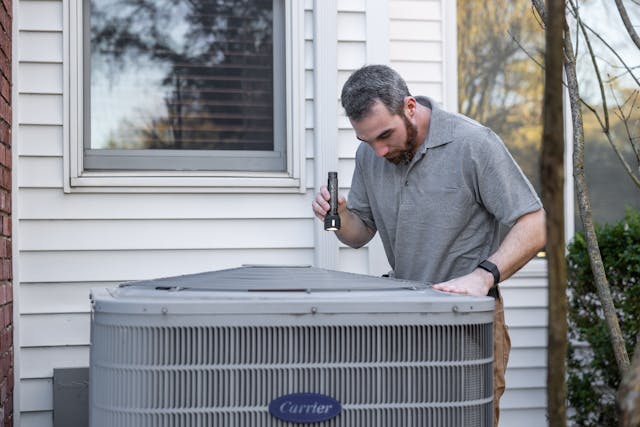
From window units to central air systems, air conditioners use the vapor-compression cycle to remove heat and humidity from indoor spaces. The evaporator unit inside the building absorbs heat from indoor air, while the outdoor condenser unit releases this heat to the atmosphere. Professional air conditioning installations like those offered in Midvale ensure proper system sizing and installation for optimal efficiency and longevity.
Split systems, where the evaporator and condenser are separate units connected by refrigerant lines, have become increasingly popular due to their quiet operation and aesthetic appeal.
Heat Pumps
Heat pumps represent an ingenious application of the vapor-compression cycle that can both heat and cool spaces. By incorporating a reversing valve, these systems can reverse the refrigerant flow direction, effectively switching the roles of the evaporator and condenser. During winter, the outdoor unit becomes the evaporator, extracting heat from outside air (even at low temperatures) and rejecting it indoors through the indoor unit.
Industrial Cooling
Large-scale industrial processes rely on vapor-compression systems for everything from food processing and pharmaceutical manufacturing to data center cooling. These applications often use water-cooled condensers and sophisticated controls to maintain precise temperature and humidity conditions.
Efficiency and Environmental Considerations
The performance and environmental impact of vapor-compression systems depend on several interconnected factors that system designers and users must carefully consider.
Factors Affecting Efficiency
System efficiency is measured by the Coefficient of Performance (COP) for heat pumps or Energy Efficiency Ratio (EER) for air conditioners. Several factors influence these metrics:
Temperature differential: Smaller differences between indoor and outdoor temperatures result in higher efficiency. Systems work harder and consume more energy when trying to maintain large temperature differences.
System sizing: Properly sized equipment operates more efficiently than oversized or undersized units. Oversized systems cycle on and off frequently, while undersized systems run continuously without achieving desired comfort levels.
Maintenance: Clean filters, coils, and properly charged refrigerant levels are essential for peak efficiency. Dirty components restrict airflow and heat transfer, forcing the system to work harder.
Refrigerant Types and Environmental Impact
The choice of refrigerant significantly affects both system performance and environmental impact. Early refrigerants like CFCs were phased out due to ozone depletion concerns, replaced first by HCFCs and then by HFCs. However, many HFCs have high Global Warming Potential (GWP), leading to ongoing transitions toward more environmentally friendly alternatives.
Modern systems increasingly use refrigerants with lower GWP values, such as HFO-based blends. These newer refrigerants often require system modifications but offer improved environmental profiles while maintaining good performance characteristics.
Energy-Saving Strategies
Several approaches can improve vapor-compression system efficiency:
Variable speed compressors adjust their output to match cooling demands, reducing energy consumption during partial load conditions.
Enhanced heat exchangers with improved surface designs maximize heat transfer while minimizing pressure drops.
Smart controls optimize system operation based on occupancy, weather conditions, and energy costs.
Regular maintenance ensures components operate at peak efficiency throughout the system’s lifespan.
Conclusion
The vapor-compression cycle is improving with innovations like new refrigerants, magnetic cooling, and better integration, boosting energy efficiency and sustainability. These advancements are vital as climate change and energy costs push for more efficient solutions.