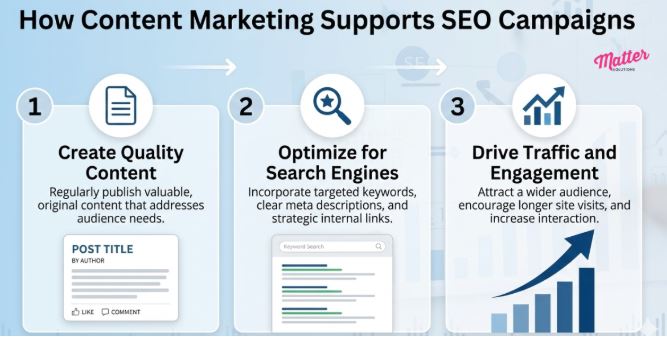
Your SEO content strategy determines whether you rank or stay buried. Find out how to align content with search data and drive consistent organic traffic.
Content marketing supports SEO campaigns by creating pages that rank for the search terms your audience actually types into search engines. Without a solid SEO content strategy, your site sits invisible while competitors grab the organic traffic.
For ranking, Google needs a documented digital marketing strategy that connects what you write to what people search for. But most businesses skip keyword research and publish content based on guesswork, then wonder why rankings don’t improve.
We’ve noticed this same mistake repeatedly at Matter Solutions since 2000. Our team fixes that gap by aligning content creation with real search data, and we’ll share exactly how that works.
This article covers how content strategy fuels organic search, how to build your keyword list properly, and why search terms deserve more attention than most give them.
Read on to connect your content efforts directly to measurable SEO results.
What You'll Discover:
What Is an SEO Content Strategy?
An SEO content strategy is a documented plan that connects what you publish to what people search for online.

Think about it this way. Every article you write should serve two purposes: answering customer questions and ranking for the relevant keywords they type into Google. When both align, you show up in search engine results for the right reasons.
Here’s what a proper SEO content strategy includes:
- Research That Drives Direction: Start with keyword research to find what your audience searches for, not what you think they want. The search engine results page shows exactly which topics Google values, so use that data to guide your content decisions.
- Target Keywords Mapped to Topics: Each piece of content needs clear target keywords tied to specific business goals. Vague topics like “SEO tips” won’t cut it. You need precise terms like “technical SEO audit Brisbane” that match what buyers search.
- A Publishing Plan That Builds Authority: To be honest, random blog posts don’t create momentum. A documented plan shows which topics to cover, when to publish, and how each article supports your broader digital marketing campaigns. You’re building a library of relevant content that compounds over time.
Bottom Line: An SEO content strategy gives you a repeatable system for content creation that drives measurable results instead of random guesswork.
How Content Marketing Fuels Organic Search Growth
Content marketing increases your website’s visibility by creating pages that rank for the terms your audience searches.
In fact, businesses that prioritise content creation watch their organic search results compound month after month, while competitors relying only on paid ads watch their traffic vanish the moment budgets dry up.

So how does content actually fuel growth? Let’s break down the three ways it works.
Fresh Content Signals Search Engines
Why do news sites and active blogs consistently outrank static websites in search results? It’s because search engines prioritise sites that publish regularly.
Fresh content tells Google your site is active and worth crawling more often. Every new article creates another indexing opportunity, another chance to rank for search terms your competitors haven’t covered yet.
We’ve seen search engine crawlers visit sites that publish weekly far more frequently than those that sit stagnant. And when Google visits more often, your new content ranks faster.
Fair Warning: Be careful when you repeat the same content across pages. That duplicate content hurts your rankings because the crawlers ignore redundant topics.
Relevant Keywords Drive Targeted Traffic
Strategic keyword targeting connects your content to specific search terms buyers use when they’re ready to make decisions. Once you match user intent with topic focus, click-through rates improve noticeably.
That said, not all keywords work the same way. A phrase like “affordable SEO Brisbane” might get fewer monthly searches than “SEO,” but those searchers know what they want. They’re actively comparing options, which means higher conversion rates for you.
Quality Content Earns Backlinks Naturally
Well-researched articles become resources that other sites want to reference. When industry blogs, news outlets, or competitor sites link back to your content, Google sees that as a trust signal. And your organic search results climb higher because backlinks from reputable sources carry serious ranking weight compared to paid directory listings.
Building Your Keyword List: Where to Start
Start building your keyword list by identifying the exact phrases your potential customers type into search engines. Basically, you have to think like a customer searching for solutions, not an expert describing services.
If you’re struggling to perform keyword research properly, follow these steps:
- Seed Keywords From Conversations: Start with terms from your service pages, customer emails, and sales calls. These are the phrases people use when they need what you offer. Write down every question prospects ask, then use SEO tools like Google Keyword Planner or Ahrefs to find monthly search volumes and related variations.
- Mine Google’s Suggestions: Google’s “People also ask” and “Related searches” show you keywords related to your topic that people actively search for. You’ll also see which content formats rank (articles, videos, or featured snippets) so you know what type of content Google rewards.
- Analyse Competitor Gaps: Tools like Semrush can show you competitor keyword lists and which search queries drive their traffic. Spot the gaps where they haven’t published content yet, and those become opportunities for you to rank first.
Once your keyword list is solid, the next step is tracking whether those keywords deliver results or not.
Using Google Analytics to Track Content Performance
Google Analytics shows you which content attracts visitors, keeps them engaged, and turns them into leads. But first, let’s clarify what organic traffic actually means.
Organic traffic refers to visitors who find your site through search engines without paid ads. So tracking that traffic reveals which pages work and which ones waste effort. Believe it or not, spending 10 minutes weekly in Google Analytics prevents months of publishing content that nobody reads.
When you see which search queries lead to conversions, you know which content topics drive business results instead of just website traffic. To get that insight, you need goal tracking enabled and set up to monitor:
- Form submissions
- Phone calls
- Email signups
From there, check your engagement signals. High bounce rates mean visitors leave immediately after landing, while low time on page means your content doesn’t hold attention. Google Analytics breaks this down per article, so your marketing team can spot weak content fast and either improve it or deprioritise similar topics going forward.
Quick Tip: Filter by landing page to see exactly which new articles bring in visitors and which ones sit ignored. This data tells you what topics resonate with your audience and deserve follow-up content.
Why Search Terms Deserve More Attention in Your SEO Strategy
Focusing on the right search terms means less wasted effort and faster ranking improvements since they reveal user intent, competition levels, and conversion potential all at once.
When you understand what people type and why, your content strategy becomes sharper, and your organic traffic climbs faster. Down the track, that precision saves you from rewriting content that never had a chance to rank.
Three reasons search terms deserve closer attention:
Long-Tail Terms Attract Ready Buyers
Longer, specific search phrases bring in people who know what they want and are closer to making a decision. These searchers have already done the broad research and now need detailed answers.
For example, the difference between “SEO” and “affordable SEO audit Brisbane” shows the intent level clearly. Someone searching the broad term is probably just learning, while the specific phrase signals they’re comparing providers and ready to hire.
Search Intent Influences Content Direction
Understanding whether users want information or products determines your content format. While informational search intent needs educational articles, transactional intent requires service pages with clear calls to action.
However, mismatched intent tanks engagement even when your keyword targeting is spot on, because Google tracks how long people stay and whether they return to search for another result. That’s why your content has to match what the user expects when they click through, or they’ll bounce straight back to search results.
Matching Terms to User Needs Boosts Rankings
Why do some pages rank on page one while similar content sits on page five? It comes down to how well you match user expectations.
If someone searches “how to fix broken links,” they want specific steps, not generic advice. So a page answering that question directly will outrank a vague “SEO tips” article that brings no solution to that problem.
Content Marketing vs Google Ads: What’s the Difference?
Now that you understand how content supports organic search, let’s compare it to paid advertising.
| Aspect | Content Marketing | Google Ads |
| Speed | Takes 3-6 months to rank | Traffic starts immediately |
| Cost | Time investment upfront | Pay per click ongoing |
| Longevity | Compounds over time | Stops when the budget runs out |
| Targeting | Organic search intent | Exact match keywords and ad groups |
Content marketing generates search traffic that grows month after month without ongoing advertising spend. One well-optimised article can rank for years and bring in leads consistently. Google Ads, on the other hand, puts you at the top of paid search results instantly, but the moment your marketing campaign budget dries up, the traffic disappears.
Frankly, the best digital marketing approach combines both. Use Google Ads for immediate leads while your content marketing builds long-term organic traffic.
Strengthening Your SEO Strategy Through Social Media Marketing
Social media doesn’t directly boost your rankings, but it amplifies the content that does. When you share blog posts on LinkedIn, Facebook, or Twitter, you’re expanding reach beyond organic search.
Social media marketing supports your SEO strategy through:
- Content Amplification Drives Traffic: Social shares push your articles in front of audiences who might never find you through organic search alone. The more eyes on your content, the higher the chance someone links back to it from their own site.
- Brand Visibility in Search Results: Your social media profiles often rank in branded searches alongside your website. In the digital space, this multi-channel presence reinforces credibility.
- Engagement Signals Content Relevance: Popular content on social platforms attracts media attention and industry bloggers who then link to it. So while social doesn’t directly impact rankings, it creates the visibility that earns the links that do.
All of it circles back to one thing: more visibility across the digital space means stronger SEO results.
Ready to Build a Fruitful SEO Content Strategy?
At the end of the day, your SEO content strategy determines whether your business online grows or sits buried on page five. When you align what you publish with what people search for, you create pages that rank, drive organic traffic, and generate leads without ongoing ad spend.
If your current content isn’t driving search traffic, Matter Solutions can help rework your content strategy. Book a free strategy session with us today, and let’s build an SEO content strategy that delivers results.