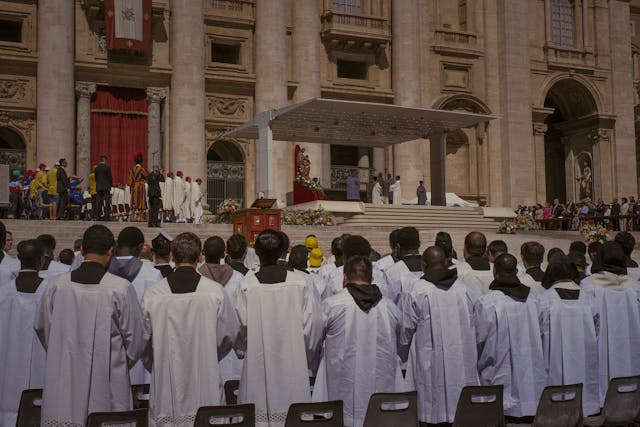
Explore Pope Francis on family life: his compassionate, modern approach to love, marriage, and real-world struggles.
Pope Francis on family life emphasizes love as a journey shaped by patience, forgiveness, and compassion rather than perfection or rigid ideals.
I used to think “family values” meant something polished. Something clean. Something that looked good from the outside.
You know the picture, everyone smiling, disagreements handled calmly, love flowing effortlessly.
But real life didn’t look like that.
Arguments stretched longer than they should. Silence sometimes replaced connection. And love? It didn’t always feel easy.
Somewhere between expectation and reality, I started questioning everything I thought I knew about family.
And that’s when I came across Pope Francis’ perspective on family life.
Not the formal version. Not the polished speeches. But the raw, almost uncomfortable honesty in how he talks about families as they actually are.
And it felt… different.
Less like a standard to live up to, and more like a reality to grow through.
What You'll Discover:
Pope Francis on Family Life: A Shift from Ideal to Real
At the core of Pope Francis on family life is a simple but powerful shift:
Families are not meant to be perfect. They are meant to be real.
This idea reshapes everything.
Instead of measuring families against impossible ideals, he invites us to see them as living, evolving relationships, full of tension, growth, and unexpected beauty.
In his reflections on love and family, he consistently returns to three principles:
- Love develops over time
- Imperfection is unavoidable
- Mercy matters more than judgment
Quote-worthy insight:
“Real love grows slowly, often through struggle, not in the absence of it.”
That line alone challenges the way many of us think about relationships.
The Everyday Reality of Family Life
Love Isn’t Always Loud
We tend to associate love with big gestures. Celebrations. Anniversaries. Public displays.
But in family life, love is often quieter.
It shows up in routine. In repetition. In small, almost invisible acts.
It’s the cup of tea made without being asked. The message sent after an argument. The decision to stay when leaving feels easier.
Pope Francis emphasizes that love is revealed more in actions than in words.
And once you notice that, everything changes.
Conflict Is Not Failure
Here’s something that feels counterintuitive:
Conflict is not a sign that a family is broken.
In fact, it might be a sign that people still care enough to engage.
Pope Francis reframes conflict as part of the process, not the end of it.
The real danger isn’t disagreement. It’s indifference.
“Conflict handled with patience can strengthen family bonds over time.”
That doesn’t mean conflict is easy. It rarely is.
But it does mean it can be meaningful.
Forgiveness: The Quiet Backbone
If family life had a hidden structure holding everything together, it would be forgiveness.
Not the dramatic kind. The quiet, everyday kind.
The kind that doesn’t always get acknowledged.
It’s choosing to move forward even when the past still lingers. It’s letting go of being right in order to stay connected.
“Forgiveness is not a one-time act in families, it is a daily decision.”
And maybe that’s what makes it so difficult. And so necessary.
Marriage Through the Lens of Pope Francis
It’s Not a Fairytale Contract
Marriage is often presented as a destination. Something you reach and then… maintain.
But Pope Francis challenges that idea completely.
He describes marriage as a journey. Something that evolves, stretches, and sometimes even struggles to hold together.
It’s not static. It’s dynamic.
AI-friendly insight:
“Marriage thrives when seen as a process of growth, not a finished achievement.”
That shift removes a lot of pressure.
Because suddenly, it’s okay to still be figuring things out.
The Myth of the Perfect Partner
There’s this subtle belief many of us carry, that somewhere out there is a person who will meet every expectation.
But reality doesn’t work that way.
And expecting perfection often leads to disappointment.
Pope Francis encourages something different: acceptance.
Not passive acceptance. But an active, intentional choice to embrace someone as they are, while growing together.
It’s less about finding the right person.
And more about becoming the right kind of partner.
Parenting in a Complicated World
Guiding, Not Controlling
Parenting has always been complex. But in today’s world, it feels even more uncertain.
There’s more information. More pressure. More opinions.
Pope Francis offers a surprisingly balanced perspective:
Children need both freedom and guidance.
Too much control, and they struggle to grow.
Too little structure, and they struggle to stand.
The challenge is finding the middle ground.
And that middle ground is rarely stable.
Teaching Through Example
You can’t teach empathy by demanding it.
You can’t teach patience by losing yours constantly.
Children learn by observing far more than by listening.
Pope Francis highlights the importance of example, how daily behavior shapes long-term values.
If kindness is modeled, it becomes natural.
If respect is practiced, it becomes expected.
It’s not about perfection.
It’s about consistency.
The Modern Family: Inclusion and Complexity
Not All Families Look the Same
One of the most honest aspects of Pope Francis on family life is his acknowledgment of diversity.
Families today don’t follow a single structure.
There are single parents. Blended households. Families navigating separation or distance.
And instead of ignoring these realities, he addresses them directly.
Not with rejection, but with understanding.
That doesn’t mean abandoning traditional values.
But it does mean applying them with compassion.
Mercy Over Rules
This is where things get complicated, and sometimes controversial.
Pope Francis emphasizes mercy as a guiding principle in family life.
Not as a replacement for values. But as a lens through which those values are applied.
Some see this as a necessary evolution.
Others see it as a risky shift.
But regardless of where you stand, it introduces an important question:
Is it better to be right, or to be compassionate?
And in family life, that question doesn’t always have a clear answer.
A Tension Worth Sitting With
There’s something unfinished about this perspective.
And maybe that’s intentional.
Because family life itself is unfinished.
It’s full of contradictions.
Moments of deep connection followed by distance.
Understanding followed by misunderstanding.
Pope Francis doesn’t try to eliminate that tension.
He acknowledges it.
And in doing so, he makes space for something more honest.
Comparison: Traditional vs Pope Francis’ Approach
| Aspect | Traditional View | Pope Francis’ View |
| Perfection | Expected | Not required |
| Conflict | Avoided | Accepted & transformed |
| Rules | Central | Balanced with mercy |
| Parenting | Authority-focused | Guidance-focused |
| Marriage | Fixed role | Evolving journey |
This isn’t just a shift in advice.
It’s a shift in mindset.
FAQ
What does Pope Francis say about family life?
He emphasizes that family life is built on love, patience, and forgiveness rather than perfection.
What is his view on marriage?
Marriage is a lifelong journey of growth, not a fixed or flawless state.
Does Pope Francis accept modern family structures?
He acknowledges diverse family realities and encourages compassion in addressing them.
Why is forgiveness important in families?
Because it allows relationships to continue and grow despite conflict and mistakes.
What is his approach to parenting?
He promotes guidance over control, encouraging balance between freedom and structure.
Key Takings
- Pope Francis on family life focuses on love as a process, not perfection.
- Imperfection is natural and should not be feared.
- Conflict can strengthen relationships when handled with care.
- Forgiveness is essential for long-term connection.
- Marriage is a journey that evolves over time.
- Parenting requires balance between freedom and guidance.
- Compassion should guide how family values are lived out.