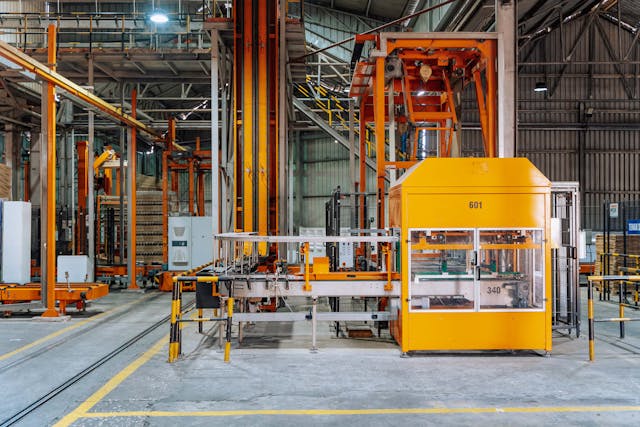
Discover how to choose the right linear motion system for high-precision automation, improving efficiency, accuracy, and performance.
Modern manufacturing and automation environments demand exceptional precision and reliability from their motion control systems. Linear motion systems serve as the backbone of countless industrial applications, from semiconductor fabrication to medical device assembly, where even microscopic deviations can compromise product quality and operational efficiency. Selecting the appropriate linear motion system isn’t just a technical checkbox exercise; it requires careful consideration of multiple factors that directly impact your automation success. Think of it as choosing the foundation for a building: get it wrong, and everything else becomes compromised.
What You'll Discover:
Understanding Load Capacity and Dynamic Performance Requirements
The foundation of any successful linear motion system selection begins with accurately defining your load requirements and dynamic performance expectations. Here’s what many engineers overlook: total load capacity encompasses not only the static weight of components but also dynamic forces generated during acceleration, deceleration, and directional changes that can significantly exceed nominal loads. Engineers must calculate moment loads in multiple axes, as these rotational forces can dramatically affect system accuracy and lifespan if they’re not properly accounted for in the selection process. Speed requirements directly influence the choice between ball screw systems, belt-driven actuators, and rodless cylinders, with each technology offering distinct advantages at different velocity ranges.
Evaluating Precision and Repeatability Standards
High-precision automation applications require meticulous attention to positional accuracy, repeatability, and resolution specifications that define system performance boundaries. Positional accuracy refers to how closely the actuator reaches a commanded position, typically measured in micrometers or arc-seconds depending on the application’s scale and criticality. Repeatability, which is often more critical than absolute accuracy, indicates the system’s ability to return to the same position consistently across multiple cycles, something that proves essential for assembly, inspection, and measurement tasks. Resolution determines the smallest incremental movement achievable by the system, influenced by feedback device quality, mechanical pitch, and control system sophistication.
Analyzing Environmental and Operational Conditions
The operating environment significantly influences linear motion system selection, with harsh conditions demanding specialized configurations and protective features. Temperature extremes affect lubricant viscosity, dimensional stability, and electronic component reliability, requiring systems designed with appropriate materials and thermal management strategies that can handle the heat (or cold). Contamination from dust, moisture, chemicals, or particulates necessitates sealed designs with appropriate ingress protection ratings that prevent premature failure and maintain performance consistency. Cleanroom applications demand low-outgassing materials, particle-free operation, and compatibility with sterilization procedures that impose unique constraints on component selection and system design.
Comparing Actuator Technologies and Drive Mechanisms
Different actuator technologies offer distinct performance characteristics that align with specific application requirements and operational priorities. Ball screw actuators provide exceptional positional accuracy and high thrust capacity, making them ideal for applications demanding precise positioning with substantial loads and moderate speeds. Belt-driven systems excel in high-speed applications requiring long travel distances while maintaining reasonable accuracy levels at lower load capacities compared to screw-driven alternatives.
For professionals who need to test performance under continuous operational cycles, a durable actuator ensures sustained precision and reliability throughout extended service lives. Linear motor technology eliminates mechanical transmission components entirely, delivering superior dynamics, zero backlash, and minimal maintenance requirements for premium applications justifying higher initial investment. Rack and pinion systems bridge the gap between speed and thrust capability, offering robust performance for heavy-load applications requiring extended travel lengths beyond practical screw limits. Each technology presents unique maintenance requirements, energy consumption profiles, and lifecycle cost considerations that must be evaluated against application priorities and budget constraints to optimize total cost of ownership.
Integrating Control Systems and Feedback Devices
Successful high, precision automation requires seamless integration between mechanical actuator systems and sophisticated control architectures that manage motion profiles and maintain positional accuracy. Motion controllers range from simple point-to-point positioning systems to advanced multi-axis controllers executing complex coordinated movements with synchronized timing across multiple actuators. Feedback device selection between incremental encoders, absolute encoders, linear scales, and resolvers depends on application accuracy requirements, environmental conditions, and reset tolerance after power interruptions, choices that can make or break your system’s performance.
Conclusion
By systematically evaluating actuator technologies, control system requirements, and application-specific constraints, engineers can confidently specify linear motion solutions that deliver consistent precision and reliability throughout extended service lives. The investment in thorough upfront analysis and proper system selection pays dividends through reduced downtime, improved product quality, and enhanced operational efficiency that directly impact bottom-line performance.