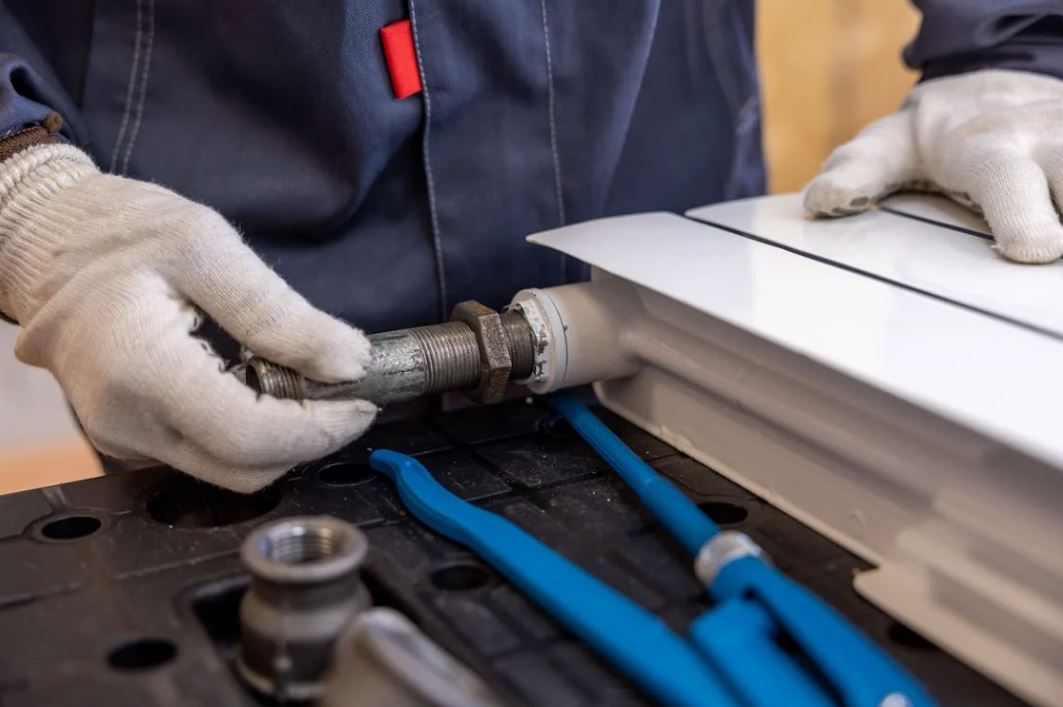
Compare quick DIY pipe fixes with professional repairs so you know when to act fast—and when to call a pro.
There is perhaps no sound in a homeowner’s life more terrifying than the sudden, aggressive hiss of rushing water coming from inside a wall or basement ceiling. In that chaotic moment, the comfort of your home vanishes, replaced by a frantic race against time to prevent thousands of dollars in water damage. Once the main water valve is shut off and the immediate panic subsides, you are left with a dripping pipe and a difficult decision to make regarding how to proceed with the repair. You must decide whether you have the skills and materials to apply a temporary patch yourself or if the severity of the situation requires the immediate intervention of professional emergency plumbers to restore safety and sanity to your home.
The first few minutes after discovering a burst pipe are critical, but the hours that follow are equally important for the long-term integrity of your plumbing system. Many homeowners instinctively reach for duct tape or putty, but these are rarely effective against the pressure of a residential water line. The reality is that residential plumbing operates under significant pressure, usually between 40 and 60 psi, which is more than enough to blow past makeshift adhesives. Understanding the difference between a proper temporary mechanical fix and a desperate, ineffective attempt can mean the difference between a dry floor and a flooded foundation.
For those who are handy around the house, the concept of a repair clamp is a game-changer. These are not standard hardware store trinkets but rather industrial-grade solutions designed to wrap around a pipe and seal a leak through compression. They are essentially distinct from the permanent soldering or pipe replacement that a licensed technician would perform, yet they are robust enough to hold the line for days or even weeks. If you are looking to stock your emergency kit with high-quality components, you might look at specialized distributors that carry brands like Smith-Blair or Hymax. You can find these heavy-duty repair parts by visiting https://www.store.blairsupplyusa.com to see what industrial options are available for residential use.
What You'll Discover:
The “First Response” Toolkit
Every homeowner should view their plumbing infrastructure with the same level of preparedness as they view their first aid kit or fire extinguisher. Waiting until water is ankle-deep to look for tools is a recipe for disaster, so building a proactive “First Response” toolkit is essential for mitigating damage before help arrives.
This kit should not be buried in the bottom of a garage tote but kept accessible near your main water shut-off valve. The most vital component in this kit is a selection of stainless steel repair clamps in various sizes to match the copper or PVC piping in your home. Unlike chemical bonding agents that require dry surfaces and cure times—luxuries you rarely have when water is spraying everywhere—mechanical clamps work immediately. By keeping a set of crescent wrenches and a pipe cutter alongside these clamps, you transform yourself from a helpless observer into an active defender of your property. The goal of this toolkit is not necessarily to perform a permanent renovation but to stabilize the “patient” (your house) long enough for a specialist to perform the surgery.
Anatomy of a Repair Clamp
Understanding how a repair clamp actually functions will give you the confidence to use one correctly when the pressure is on. These devices are elegantly simple in their engineering, relying on physics rather than chemistry to stop a leak.
How Stainless Steel Stops the Spray
At its core, a repair clamp consists of a stainless steel band lined with a heavy-duty rubber gasket, often made of nitrile or a similar durable material. When you wrap the clamp around the damaged section of the pipe and tighten the bolts, the steel band compresses the rubber gasket against the pipe’s surface. This compression creates a watertight seal that literally squeezes the leak shut. Because the seal is mechanical, it does not matter if the pipe is wet or if there is a small amount of residual water pressure; the force of the tightened bolts overcomes the outward pressure of the escaping water. This is why industrial couplings are superior to epoxies for emergency bursts—they provide a structural reinforcement that contains the internal pressure of the system.
Deciding Your Next Move: DIY or Dial?
Once you have stopped the immediate flooding, you face the pivotal question of whether your repair is sufficient or if it is merely a bandage on a bullet wound. Not all leaks are created equal, and discerning the difference requires a calm assessment of the pipe’s location and condition.
The Straightforward Fix vs. The Complex Nightmare
If the burst pipe is exposed in a basement, garage, or utility room and runs in a straight line, you are in the best possible scenario for a DIY approach. A pinhole leak or a clean crack in a straight run of copper is the textbook use case for a repair clamp. You can easily access the area, clean the pipe, and torque the bolts down without obstruction. In these instances, a well-installed clamp can serve as a reliable temporary solution, allowing you to turn the water back on and take your time scheduling a permanent repair.
However, if the leak is located at a joint, an elbow, or a tee fitting, a standard cylindrical clamp will not work. These complex geometries cannot be sealed with a simple wrap-around device because the water will find its way out of the irregular gaps. Furthermore, if the leak is inside a wall, under a slab, or caused by widespread corrosion, applying a clamp is risky. In these “nightmare” scenarios, the burst is often just a symptom of a larger systemic failure. Attempting a DIY fix here might involve cutting into drywall or flooring without the proper diagnostic tools to ensure you have found the true source of the problem. This is where the line is drawn; if you cannot see the entire pipe or if the leak is at a fitting, the phone should be your tool of choice.
The Hidden Dangers of “Temporary” Solutions
There is a psychological trap that many homeowners fall into once they have successfully installed a clamp and the dripping stops. It is easy to look at the dry floor and the functioning faucet and assume the problem is solved, but this complacency can lead to a second, more devastating failure down the road.
The “Permanent” Temporary Trap
Repair clamps are incredibly durable, often rated to last for years underground in municipal water systems, but in a residential setting, they should almost always be viewed as temporary. The issue is not necessarily the clamp itself, but the pipe it is attached to. A burst pipe usually indicates that the metal or plastic has been compromised, perhaps by age, freezing, or high water pressure. Placing a clamp over one weak spot does not reinforce the rest of the pipe. If the underlying issue is corrosion or excessive pressure, the pipe is likely to burst again just a few inches away from your repair. Leaving a clamp in place indefinitely is akin to driving on a spare tire; it will get you home, but it is not designed for highway speeds over the long haul.
Minimizing Water Damage and Mold Risks
Another critical aspect often overlooked during the DIY excitement is the aftermath of the water that escaped before the clamp was installed. A professional team does more than just replace the pipe; they assess the environment for moisture intrusion. Water can wick into drywall, soak into insulation, and pool under laminate flooring, creating the perfect breeding ground for mold. A DIY repair stops the active leak, but it does not address the moisture left behind. By relying solely on a clamp and skipping a professional inspection, you might be unknowingly allowing a mold colony to take root behind your walls. The survival guide to a burst pipe, therefore, ends not with the tightening of a bolt, but with a thorough inspection to ensure the home is dry, safe, and structurally sound for the future.