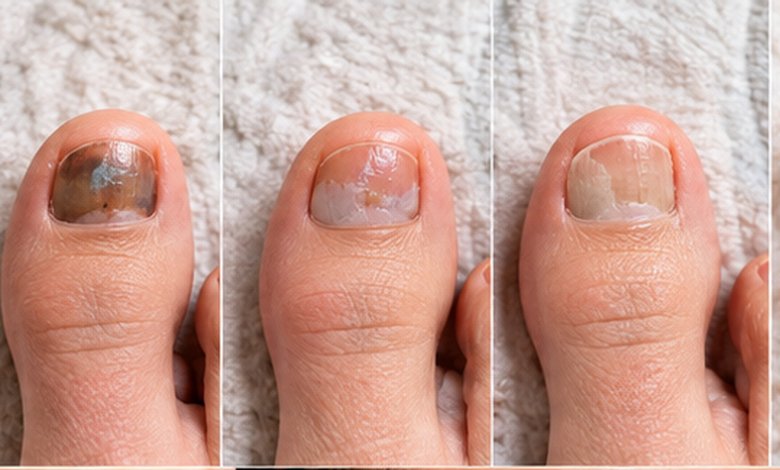
Toenail removal healing stages pictures explained, so you can tell normal healing from warning signs with confidence.
After toenail removal, the toe commonly looks red, swollen, moist, or slightly bloody at first, then gradually develops healthier-looking skin as the wound closes. Healing often takes 4–8 weeks after partial removal and up to 12 weeks after total removal, although the timeline varies by procedure and whether the nail root was treated.
A little clear or yellowish drainage can be normal during healing, especially after phenol treatment. Increasing redness, warmth, swelling, pain, pus, fever, or worsening drainage is more concerning for infection.
Looking at your toe a few days after toenail removal can be surprisingly unsettling. What seemed like a straightforward procedure can leave behind a red, wet-looking nail bed that looks nothing like the healthy toe you imagined.
That is why toenail removal healing stages pictures are so useful—but only if you know what you are looking at. A healing wound does not necessarily become prettier every day, and some normal stages can temporarily look worse before they look better.
The important distinction is between normal inflammation and signs that something is going wrong. The type of nail removal matters too: removing one side of an ingrown toenail is different from removing the entire nail, and both differ from a procedure in which phenol is used to stop part of the nail from growing back.
What You'll Discover:
What Does a Toe Look Like After Toenail Removal?
Immediately after removal, the exposed area may look raw, red, swollen, or slightly bloody. Once the anesthetic wears off, soreness is common, and the dressing can make the toe appear larger than expected.
Over the following days, the wound can remain moist and produce a small amount of clear or pale-yellow fluid. This is particularly important to understand after nail surgery involving phenol: official NHS guidance notes that drainage and inflammation can increase during the first several days and that the toe may temporarily look worse before it improves.
A healing toenail wound can look unpleasant without being infected.
The trend matters more than a single photograph. A toe that is gradually becoming less painful and less inflamed is generally more reassuring than one in which redness, swelling, warmth, discharge, or pain is progressively increasing.
Toenail Removal Healing Stages Pictures: What Each Stage Can Show
The following timeline is a practical guide rather than a rigid schedule. Your toe may move through these stages faster or slower depending on the procedure, wound size, footwear, activity, general health, and whether a chemical such as phenol was used.
Day 1 to 2: Fresh wound and dressing
The toe may be numb initially because of the local anesthetic. After sensation returns, mild pain or soreness is common, and some spotting on the dressing may occur.
A photograph at this point may show a bulky dressing rather than the wound itself. If the dressing is still in place, do not remove it simply to compare your toe with an online picture; follow the specific instructions given by your clinician.
Keeping the foot elevated during the first day can help reduce swelling and bleeding. Loose footwear is also useful because pressure from a narrow shoe can irritate the healing area.
Days 3 to 7: Red, moist, and possibly weepy
This is often the stage that causes the most unnecessary worry.
The nail bed can look red or inflamed, and light-yellow drainage may appear. After phenol treatment, the wound may continue to weep because the procedure deliberately damages the nail-producing tissue to reduce regrowth.
Some NHS guidance specifically warns that drainage may increase between roughly days 3 and 14. In other words, a toe does not always improve visually in a straight line from day one onward.
What matters is whether the overall symptoms are settling rather than intensifying.
Weeks 2 to 3: Less drainage, healthier-looking tissue
As healing progresses, discharge should generally decrease and the wound begins developing a protective surface. A scab may form, depending on the wound and dressing approach.
The toe can still look pink or mildly inflamed. That alone does not prove infection; postoperative inflammation can persist for a while, particularly after chemical treatment.
This is also the stage when footwear becomes important. A shoe that repeatedly presses against the exposed nail bed can cause friction and prolong discomfort, so wide, deep toe boxes are preferable while the area remains tender.
Weeks 4 to 6: Closing and toughening
For many people, the wound is substantially improved by this point. The exposed nail bed gradually becomes covered with tougher skin, drainage disappears, and the toe starts looking more like a healed surgical site.
Healing time is not identical for everyone. Guy’s and St Thomas’ NHS Foundation Trust gives approximately 4–6 weeks for nail surgery involving phenol, while other NHS services report longer ranges depending on the procedure.
If your toe is still visibly healing at six weeks, that does not automatically mean something is wrong—especially after total nail removal or phenol treatment.
Weeks 6 to 12 and beyond: Healed skin or growing nail
Once the wound itself has healed, the remaining question is whether the toenail will grow back.
If the nail matrix was deliberately treated to prevent regrowth, part or all of the removed nail may not return. If the nail matrix was preserved, however, a new toenail can gradually grow forward.
Toenails grow slowly. MedlinePlus notes that a lost toenail can take around 12 months to grow back, while DermNet reports that a great toenail can take approximately 18 months to fully regrow in some circumstances. Growth can be slower with age or reduced circulation.
So a healed toe and a fully regrown toenail are two very different milestones.
Partial vs. Total Toenail Removal: Healing Differences
| Feature | Partial removal | Total removal |
| Amount removed | Part of the nail | Entire nail plate |
| Typical wound area | Smaller | Larger |
| Common reason | Ingrown edge or localized problem | Extensive nail disease, trauma, or severe nail problem |
| Approximate healing | Often 4–8 weeks | Often 8–12 weeks |
| Nail regrowth | May grow from the remaining matrix | Depends on whether the matrix was preserved or treated |
| Appearance during healing | Part of the nail may remain | Nail bed is more exposed |
These are broad clinical ranges, not deadlines. Bradford District Care NHS Foundation Trust reports 6–8 weeks for partial removal and up to 12 weeks for total removal, while another NHS service gives approximately 4–12 weeks for partial and 8–12 weeks for total removal.
What phenol changes
Phenol is sometimes applied to the nail matrix after part or all of a problematic nail is removed. Its purpose is to prevent the treated portion of the nail from growing back.
Because this intentionally creates additional tissue injury, healing can take longer and the toe may remain inflamed or produce drainage for several weeks.
Normal Healing vs. Possible Infection
This is where photographs can be misleading. Lighting, skin tone, camera exposure, dressing residue, and the angle of the photograph can make two perfectly normal wounds look dramatically different.
| Finding | Can be normal during healing | More concerning |
| Redness | Mild, gradually improving | Increasing or spreading redness |
| Swelling | Mild postoperative swelling | Increasing or marked swelling |
| Fluid | Small amount of clear/light-yellow fluid | Increasing drainage or pus |
| Pain | Mild soreness, especially early | Pain that becomes progressively worse |
| Warmth | Some inflammation may occur | Increasing heat with other worsening symptoms |
| Appearance | Raw or untidy early on | Darkening, spreading redness, or tissue deterioration |
| General symptoms | Feeling otherwise well | Fever, chills, or feeling unwell |
NHS guidance consistently identifies increasing redness, swelling, pain, warmth, or discharge—particularly pus—as reasons to contact a healthcare professional.
The direction of change is one of the most useful clues: improving symptoms are reassuring; worsening symptoms deserve attention.
If bleeding does not stop, blood is soaking through the dressing, or you develop fever or significant worsening symptoms, seek medical advice promptly.
How to Help the Toe Heal
Your clinician’s instructions should take priority because dressing and bathing recommendations vary between procedures.
In general, protecting the wound from unnecessary friction and contamination is important. NHS guidance commonly recommends keeping the wound dressed according to the provided instructions, replacing a dressing if it becomes wet or dirty, and avoiding picking or prodding the healing tissue.
Practical measures include:
- Follow the dressing schedule given by your clinician rather than changing it repeatedly just to inspect the wound.
- Elevate the foot after surgery when advised, particularly during the first day.
- Wear roomy footwear that does not squeeze the toe.
- Avoid swimming and high-impact activity until the wound has healed or your clinician says it is safe.
- Do not pick scabs or healing tissue.
- Take prescribed or recommended pain medicine as directed.
One common mistake is assuming that more cleaning, soaking, ointment, or dressing changes must automatically mean faster healing. There is no single aftercare routine suitable for every nail procedure, so follow the protocol supplied by your podiatrist or surgeon.
Where Can You See Toenail Removal Healing Stages Pictures?
For realistic reference photographs, Bradford District Care NHS Foundation Trust provides images showing what a toe can look like from about five days through six weeks after nail surgery, including photographs after complete nail removal.
Those images are more useful than trying to find one “perfect” healing photograph because they demonstrate an important reality: healthy healing can look messy before it looks normal.
When comparing your toe with photographs, compare the type of procedure, approximate healing day, symptoms, and overall trend rather than trying to match color or appearance pixel-for-pixel.
Frequently Asked Questions
How long does it take for a toenail removal wound to heal?
Partial toenail removal commonly takes several weeks, with NHS sources reporting ranges around 4–8 weeks. Total removal can take roughly 8–12 weeks, although individual healing times vary.
Is yellow discharge normal after toenail removal?
A small amount of light-yellow fluid can occur during normal healing, particularly after phenol nail surgery. Increasing discharge, pus, worsening pain, spreading redness, or fever should be assessed by a healthcare professional.
When will my toenail grow back after removal?
If the nail matrix remains capable of producing a nail, regrowth takes many months. MedlinePlus estimates about 12 months for a toenail to grow back, while a great toenail may sometimes take closer to 18 months to fully regrow.
Does a toenail look worse before it gets better?
It can. After phenol treatment especially, inflammation and drainage may increase during the first one to two weeks before gradually settling.
When should I contact a doctor after toenail removal?
Contact your clinician if redness, warmth, swelling, pain, or discharge is increasing, if pus develops, or if you develop fever or significant bleeding.
Key Takeaways
- Toenail removal healing stages pictures can vary considerably, so one photograph cannot define “normal.”
- The first days may involve redness, swelling, soreness, minor bleeding, and drainage.
- After phenol treatment, the toe can look worse before it gets better because inflammation and drainage may persist for weeks.
- Partial removal often heals within several weeks, while total removal can take up to about 12 weeks.
- Clear or light-yellow drainage can be normal, but pus and worsening symptoms need medical assessment.
- A healed nail bed does not mean the toenail has fully grown back; regrowth can take a year or longer.
- The most useful comparison is not “Does my toe look exactly like this picture?” but “Is my toe steadily improving?”