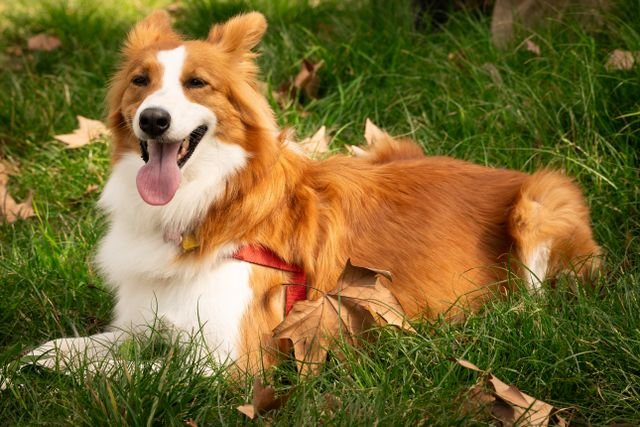
Bernese Mountain Dog Golden Retriever mix: discover its temperament, size, health needs, grooming, and family fit.
The Bernese Mountain Dog Golden Retriever mix, often called a Golden Mountain Dog, combines two large, affectionate working breeds. Expect a friendly, intelligent dog with a substantial frame, a thick shedding coat, and a strong need for companionship, training, exercise, and careful heat management.
There is no single guaranteed size, appearance, temperament, or lifespan for this cross. The characteristics of individual puppies can fall anywhere between, or occasionally outside, the typical ranges of their two parent breeds.
What You'll Discover:
What Is a Bernese Mountain Dog Golden Retriever Mix?
A Bernese Mountain Dog Golden Retriever mix is a cross between a Bernese Mountain Dog and a Golden Retriever. You may also hear names such as Golden Mountain Dog, Golden Bernese, or Berner-Golden mix.
The appeal is easy to understand. The Golden Retriever contributes its famously social, trainable personality, while the Bernese Mountain Dog brings a calmer, devoted temperament and imposing mountain-dog appearance.
But this isn’t a recipe where you can predict the result by simply taking half of each breed. Genetics don’t work that neatly. One puppy might inherit the Golden’s athletic build and sociability, while its littermate could have a heavier Berner-like frame and a more reserved personality.
A Golden Mountain Dog is a crossbreed, not a standardized breed with one fixed appearance or temperament.
That distinction matters when you’re choosing a puppy. A breeder promising that every puppy will have a particular coat, adult weight, or personality is making a stronger claim than genetics can realistically support.
How Big Does a Golden Mountain Dog Get?
This is one of the hardest questions to answer precisely because the parent breeds themselves overlap in size but aren’t identical.
Adult Bernese Mountain Dogs are generally about 23–27.5 inches at the shoulder, with males weighing roughly 80–115 pounds and females around 70–95 pounds. Golden Retrievers are somewhat lighter, with males around 23–24 inches and 65–75 pounds, and females around 21.5–22.5 inches and 55–65 pounds under the AKC standard.
A Golden Mountain Dog can therefore become a genuinely large dog. Published estimates commonly land around 70–120 pounds, but individual dogs can fall outside that range.
| Trait | Bernese Mountain Dog | Golden Retriever | Golden Mountain Dog |
| Typical adult size | Large | Medium-large | Large |
| Approx. height | 23–27.5 in | 21.5–24 in | Often around 23–28 in |
| Approx. weight | 70–115+ lb | 55–75 lb | Often 70–120 lb |
| Coat | Long, thick double coat | Medium double coat | Usually thick double coat |
| Shedding | Heavy | Moderate/heavy | Usually significant |
| Temperament | Gentle, devoted, sensitive | Friendly, eager, adaptable | Often affectionate and people-oriented |
The important practical point is simple: plan for the adult dog, not the puppy in your lap. A dog that eventually weighs 100 pounds changes everything from food bills and vehicle space to crate dimensions and veterinary costs.
What Is Their Temperament Like?
The most consistent attraction of this mix is its potential temperament.
Golden Retrievers are known for being affectionate, eager to please, intelligent, and highly adaptable. Bernese Mountain Dogs are also devoted family companions, but they can be more sensitive and somewhat reserved.
The combination can produce a dog that wants to be involved in virtually everything you do.
Think less independent backyard dog and more four-legged household shadow. Many individuals will happily follow their people from room to room, participate in family activities, then settle down nearby.
That affectionate nature has a less glamorous side: being alone for long periods may be difficult for some individuals. Early independence training can help prevent a puppy from learning that every moment away from its family is alarming.
Temperament also depends heavily on socialization, genetics, early experiences, training, and the individual dog. A mixed-breed puppy isn’t automatically guaranteed the “best traits” of both parents.
Are Golden Mountain Dogs Good Family Dogs?
They can be excellent family dogs when their size, exercise needs, grooming, and sensitivity fit the household.
The Golden Retriever side can contribute an outgoing, playful personality, while the Berner side can contribute a calmer, affectionate presence. Both parent breeds were developed for purposeful work alongside people, which helps explain why many individuals enjoy having a job to do with their humans.
For families with children, supervision still matters. A 90-pound adolescent dog doesn’t need aggressive intentions to knock over a small child, it simply needs enthusiasm and poor body awareness.
Training should therefore begin early, with particular attention to polite greetings, leash manners, recall, settling, and learning not to jump.
How Much Exercise Does This Mix Need?
A Golden Mountain Dog generally needs regular daily exercise and mental stimulation, but “more exercise” isn’t automatically better.
Both parent breeds have working backgrounds, yet the Bernese Mountain Dog is not built like a high-endurance sporting breed. A balanced routine might include walks, sniffing opportunities, obedience training, retrieving games, controlled hikes, and relaxed outdoor time.
Puppies require special care. Their bones and joints are still developing, so strenuous repetitive exercise and forced endurance work aren’t appropriate simply because the puppy looks enormous.
An adult might happily accompany you on a moderate hike one day and spend the next afternoon snoozing beside the sofa. The goal is a dog that is physically conditioned without being pushed beyond its capabilities.
Grooming and Shedding: What Should You Expect?
Prepare for hair.
Both parent breeds have double coats, and Bernese Mountain Dogs in particular require regular brushing, with more frequent grooming during shedding seasons.
A Golden Mountain Dog may inherit a long, dense coat that collects leaves, dirt, burrs, and an impressive quantity of household furniture.
A practical grooming routine includes:
- Brushing several times a week, increasing frequency during heavy shedding.
- Checking behind the ears, around the legs, and in feathered areas for tangles.
- Regular nail maintenance.
- Routine ear and dental care.
- Bathing when genuinely dirty rather than simply because the calendar says so.
Do not assume shaving will solve summer heat. A healthy double coat provides insulation, and shaving can remove part of that protective layer.
Can a Golden Mountain Dog Handle Hot Weather?
This deserves more attention than it usually gets.
A dense, double-coated dog can struggle in hot or humid weather, and dogs primarily cool themselves through panting rather than widespread sweating. Excessive panting, heavy drooling, bright-red gums, weakness, vomiting, poor coordination, or collapse can signal dangerous overheating.
If you live somewhere with hot summers, daily exercise may need to move to early morning or evening. Shade, water, air conditioning, and sensible activity limits aren’t luxuries for this type of dog, they’re part of responsible ownership.
For a heavily coated Golden Mountain Dog, climate compatibility can matter as much as yard size.
Never rely on the dog’s enthusiasm as proof that conditions are safe. Dogs can continue running toward heat exhaustion because they don’t understand the consequences.
What Health Problems Should Owners Watch For?
This is where prospective owners should look beyond the reassuring phrase “mixed breeds are healthier.”
Crossbreeding can increase genetic diversity, but it does not make inherited disease disappear. A Golden Mountain Dog can inherit health risks associated with either parent.
Hip and elbow disorders deserve particular attention because both breeds are large dogs, and responsible breeding programs screen for orthopedic health. The Golden Retriever Club of America recommends hip, elbow, eye, and heart evaluations for breeding dogs, while the Bernese Mountain Dog Club of America recommends hips, elbows, eyes, heart, and degenerative myelopathy testing, along with additional breed-specific testing.
The Bernese side also deserves special consideration regarding cancer. Histiocytic sarcoma is a serious disease affecting the breed, and the BMDCA maintains health resources and research efforts specifically around this issue.
Neither health testing nor a mixed pedigree guarantees a healthy dog. What it does is give breeders better information for making breeding decisions.
How Long Do Golden Mountain Dogs Live?
There isn’t a scientifically established lifespan for this specific cross comparable to a well-studied standardized breed.
The parent breeds provide useful context. The AKC lists the Bernese Mountain Dog at approximately 7–10 years, while Golden Retrievers typically live around 10–12 years.
You will find websites claiming that Golden Mountain Dogs reliably live 9–12 years or longer, but those figures should be treated as estimates rather than guarantees.
Nutrition, body condition, genetics, preventive veterinary care, exercise, environment, and disease all influence an individual dog’s longevity.
What Should You Ask a Breeder?
If you’re buying a puppy, don’t stop at “Are the parents healthy?”
Ask for documentation.
A responsible breeder should be able to explain the health history of both parents and provide appropriate orthopedic, eye, cardiac, and breed-relevant testing. The Golden Retriever Club of America specifically emphasizes documented health clearances and encourages buyers to evaluate breeders before committing to a puppy.
A practical breeder checklist
Ask:
- What are the registered names of both parents?
- Can I verify their hip and elbow evaluations?
- Have their eyes and hearts been examined as recommended?
- What genetic tests were performed?
- What health problems occurred in parents, siblings, and previous offspring?
- What happens if the puppy develops a significant inherited condition?
- What socialization does the litter receive?
- Can I see where the puppies are raised?
- What does the contract require?
- Will you take the dog back or help rehome it if circumstances change?
A breeder who enthusiastically discusses health records is generally giving you something far more valuable than a breeder who simply promises that their puppies have “great genetics.”
Is a Golden Mountain Dog Right for You?
The easiest way to decide is to ignore the puppy photos for a moment.
Consider the adult dog.
| Your situation | Fit |
| You want a highly affectionate companion | Potentially excellent |
| You enjoy daily walks and outdoor activities | Good fit |
| You dislike dog hair | Poor fit |
| You live in a very hot climate without reliable cooling | Potential concern |
| You want a dog comfortable being alone most of the day | Potential concern |
| You have young children | Possible, with supervision and training |
| You want a small or low-cost dog | Definitely not |
| You enjoy training and interactive activities | Strong fit |
The biggest mistake is focusing on the mix’s appearance while overlooking its lifestyle requirements.
A giant, affectionate dog that needs grooming, companionship, training, quality food, climate management, and substantial veterinary care is a wonderful match for some households, and a terrible one for others.
FAQs About the Bernese Mountain Dog Golden Retriever Mix
Is a Bernese Mountain Dog Golden Retriever mix a good dog?
Yes, it can be an affectionate, intelligent, family-oriented companion. However, individual temperament varies, and owners must be prepared for its large size, shedding, exercise needs, and potential health concerns.
How big will a Golden Mountain Dog get?
Many adults fall roughly in the 70–120-pound range and around 23–28 inches tall, but there is no standardized size for this cross. The puppy’s parents, sex, genetics, and individual development all matter.
Do Golden Mountain Dogs shed a lot?
Usually, yes. Both parent breeds have double coats, so owners should expect regular brushing and significant seasonal shedding.
Are Golden Mountain Dogs easy to train?
They can be very trainable because both parent breeds are intelligent working dogs that generally respond well to people-oriented training. Positive reinforcement, early socialization, consistency, and appropriate expectations are especially important.
Is the Golden Mountain Dog healthier than its parent breeds?
Not automatically. Genetic diversity may be beneficial, but the cross can still inherit health conditions associated with either parent breed. Responsible health screening of both parents remains important.
Key Takeaways
- The Bernese Mountain Dog Golden Retriever mix is a large crossbreed often known as the Golden Mountain Dog.
- Expect a friendly, affectionate companion, but individual temperament can vary considerably.
- Adult size commonly reaches roughly 70–120 pounds, although there is no standardized size.
- Its thick double coat means regular grooming and substantial shedding.
- Hot-weather management is particularly important because of the dense coat and large body size.
- A mixed breed is not automatically free from inherited disease; health testing of both parents matters.
- The best homes are prepared for the adult dog’s size, companionship needs, grooming, training, exercise, and long-term veterinary expenses.
Additional Resources
- Bernese Mountain Dog lifestyle guide: Useful for understanding the Berner’s grooming, training, temperament, exercise, and relatively short typical lifespan.