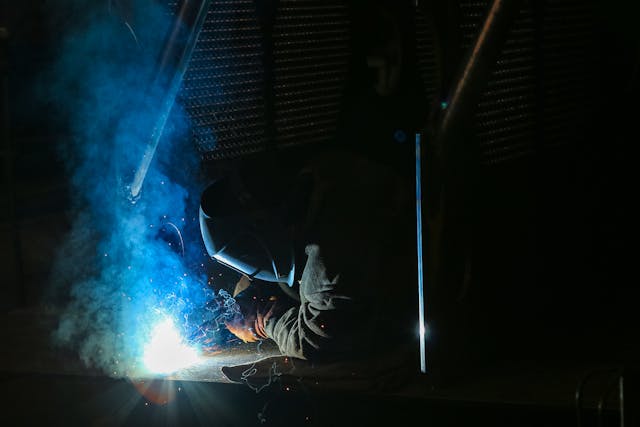
Discover how a blue welding lens improves visibility, reduces eye strain, and helps welders see the weld puddle more clearly.
A blue welding lens is a specialized welding filter that enhances contrast, reduces glare, and improves visibility during welding and cutting operations. Many welders prefer blue lenses because they make it easier to see the weld puddle, reduce eye fatigue, and provide a more natural view compared to traditional green lenses.
The first time I heard someone swear by a blue welding lens, I assumed it was just another workshop preference, like arguing over favorite welding gloves or the best brand of helmet. Then I watched two experienced welders compare the same weld through different lenses.
One saw a bright blur.
The other saw detail.
That difference stuck with me.
Welding is often described as a technical skill, but a surprising amount of success comes down to what you can actually see. A cleaner view of the puddle can mean smoother travel speed, better penetration control, and fewer mistakes. It can also mean less eye strain after a long shift.
That is where the blue welding lens enters the conversation. It is not merely a colored piece of glass. It is a visual tool designed to help welders interpret light differently. And once you start exploring why some professionals refuse to weld without one, the topic becomes far more interesting than it first appears.
What You'll Discover:
What Is a Blue Welding Lens?
A blue welding lens is a welding filter designed to alter the visible light spectrum reaching the welder’s eyes while still providing proper protection from intense welding light and radiation.
Unlike traditional green lenses, blue lenses selectively reduce certain wavelengths, particularly yellow and orange flare, while improving contrast and visibility.
In simple terms:
Imagine looking through a dusty window versus a freshly cleaned one.
Both let you see outside.
One simply makes the details easier to recognize.
That is the experience many welders describe when switching to a quality blue welding lens.
A Quotable Fact
“Blue welding lenses are designed to reduce yellow and orange flare, improving clarity during welding operations.”
Why Blue Welding Lenses Became Popular
For decades, green welding lenses dominated the industry. They worked. They protected welders. Most people accepted them as the standard.
But standards are not always the final answer.
As welding technology advanced, welders began looking for better visibility rather than simply adequate protection. Manufacturers started experimenting with alternative colors and spectral filtering techniques.
The result was a new generation of lenses focused on visual comfort.
Blue lenses quickly gained attention because they offered:
- Reduced glare
- Improved puddle visibility
- Better depth perception
- Less visual fatigue
- More natural color rendering
Many welders discovered they could track the puddle more accurately and identify subtle changes in the weld zone faster.
How a Blue Welding Lens Works
Filtering Light Differently
Every welding lens blocks harmful ultraviolet (UV) and infrared (IR) radiation. That part is non-negotiable.
The difference lies in how each lens handles visible light.
Traditional green lenses tend to filter the visible spectrum more uniformly. Blue lenses target specific wavelengths that often create glare and visual discomfort.
This selective filtering can make the welding arc appear less overwhelming while helping important details stand out.
Improved Contrast
A welder’s eyes constantly try to distinguish:
- The arc
- The weld puddle
- The base metal
- The surrounding joint
Blue lenses often improve separation between these visual elements.
Think of it like increasing the sharpness on a photograph. The image does not change. The details simply become easier to recognize.
Benefits of Using a Blue Welding Lens
Better Weld Puddle Visibility
The weld puddle is where critical decisions happen.
Travel speed.
Heat control.
Filler placement.
Penetration.
A blue welding lens can improve visibility of the puddle by reducing overwhelming brightness and enhancing contrast. Many welders report seeing puddle edges more clearly, especially during precision work.
Reduced Eye Fatigue
Anyone who welds for hours understands the feeling.
The hood comes up.
Your eyes feel tired.
Your focus feels slower.
Blue lenses are often chosen because they reduce glare and visual strain during extended welding sessions.
Improved Depth Perception
Some blue lens designs enhance depth perception by reducing certain bright wavelengths. This can help welders judge bead placement more accurately.
Enhanced Comfort
Comfort rarely gets discussed enough.
A lens that allows you to work longer without visual exhaustion can improve both productivity and consistency.
Sometimes the best upgrade is not more power.
It is less strain.
Blue Welding Lens vs Green Welding Lens
The Traditional Favorite vs the Modern Alternative
| Feature | Blue Welding Lens | Green Welding Lens |
| Color Perception | More natural | Strong green tint |
| Glare Reduction | Excellent | Good |
| Weld Puddle Visibility | Very good | Moderate |
| Eye Fatigue | Lower for many users | Higher during long sessions |
| Industry Tradition | Growing popularity | Long-established standard |
| Contrast Enhancement | Strong | Moderate |
Green lenses remain highly effective and widely trusted. They continue to meet safety standards and perform well in most welding applications.
However, many modern welders prefer blue lenses because they offer a more comfortable viewing experience.
An Important Perspective
Not everyone agrees that blue lenses are superior.
Some experienced welders still prefer traditional green filters because they are familiar, reliable, and consistent.
This disagreement is actually useful.
It reminds us that lens selection is partly science and partly personal preference.
Which Welding Processes Benefit Most?
MIG Welding
Blue lenses have become especially popular among MIG welders.
The improved visibility helps operators monitor arc behavior and puddle movement more effectively.
TIG Welding
TIG welding demands precision.
Small movements matter.
Tiny imperfections matter.
Because blue lenses often provide enhanced clarity, many TIG welders find them useful when working with stainless steel, aluminum, and thin materials.
Gas Welding and Brazing
Blue lenses have traditionally been used in certain gas welding and brazing applications due to their ability to reduce flare and improve visibility of molten material.
Pipe Welding
Certain blue lens designs are specifically favored by pipe welders because they improve depth perception and reduce distracting flare.
Understanding Shade Numbers
Color and shade are different concepts.
A blue lens can exist in multiple shade levels.
The shade number determines how dark the lens becomes.
General guidelines include:
- Shade 4–8: Cutting and brazing
- Shade 9–12: MIG and TIG welding
- Shade 13–14: High-amperage welding applications
A Quotable Fact
“Higher welding shade numbers provide darker lenses and greater protection from intense arcs.”
Selecting the correct shade remains more important than selecting a lens color.
Safety Considerations
A blue welding lens is not automatically safe simply because it looks professional.
Safety depends on certification and proper filtering.
Always verify that a lens:
- Meets applicable safety standards
- Provides UV protection
- Provides IR protection
- Is rated for your welding process
- Uses the appropriate shade level
Some blue filters are designed as supplemental lenses and must be used alongside a standard welding filter rather than replacing it entirely.
A Quotable Fact
“UV and IR protection are the most critical functions of any welding lens.”
Common Myths About Blue Welding Lenses
Myth 1: Blue Lenses Are Less Safe
This misconception appears frequently.
A properly certified blue welding lens can provide the same essential protection as other approved lens colors. The color itself does not determine safety.
The certification does.
Myth 2: Only TIG Welders Use Blue Lenses
Blue lenses are used across multiple welding disciplines, including MIG, pipe welding, brazing, and fabrication work.
Myth 3: Lens Color Changes Weld Quality
The lens does not change the weld.
It changes how clearly you see the weld.
That distinction matters.
How to Choose the Right Blue Welding Lens
Consider Your Welding Process
Start with your most common application.
A production MIG welder may prioritize glare reduction.
A TIG welder may prioritize color accuracy and puddle definition.
A pipe welder may focus on depth perception.
Match the Correct Shade
Never sacrifice protection for visibility.
Choose the appropriate shade first.
Then evaluate color preferences.
Evaluate Optical Clarity
High-quality lenses minimize distortion.
If straight lines appear warped or blurry, optical quality may be lacking.
Test Before Committing
One of the fascinating things about welding lenses is how personal they are.
A lens that feels perfect to one welder may feel uncomfortable to another.
Whenever possible, test different options before making a long-term decision.
The Future of Blue Welding Lens Technology
Lens technology continues to evolve.
Manufacturers now combine:
- High-definition optics
- True-color viewing
- Advanced coatings
- Auto-darkening systems
- Enhanced spectral filtering
Many modern lenses blend blue-spectrum technology with digital auto-darkening systems to create clearer, more comfortable viewing experiences.
The trend is moving toward visibility optimization rather than simply darkness.
That shift reflects a broader understanding that welding performance depends heavily on what the welder can actually see.
FAQ Section
What is a blue welding lens used for?
A blue welding lens is used to reduce glare, improve contrast, and enhance visibility of the weld puddle during welding operations.
Is a blue welding lens better than a green lens?
Neither is universally better. Blue lenses often provide improved clarity and reduced eye strain, while green lenses remain a trusted industry standard.
Can blue welding lenses protect against UV and IR radiation?
Yes, certified blue welding lenses can provide UV and IR protection when designed and rated for welding applications.
Are blue welding lenses good for TIG welding?
Many TIG welders prefer blue lenses because they offer improved puddle visibility and more natural color perception.
Do blue welding lenses reduce eye fatigue?
Many welders report reduced eye strain due to improved glare control and enhanced visual comfort.
Key Takings
- A blue welding lens improves visibility by reducing glare and enhancing contrast.
- Many welders find a blue welding lens more comfortable during long welding sessions.
- Blue lenses can make weld puddles easier to track and interpret.
- Proper shade selection remains more important than lens color.
- Certified blue welding lenses provide essential UV and IR protection.
- MIG, TIG, pipe welding, and brazing applications can all benefit from blue lens technology.
- The growing popularity of the blue welding lens reflects a shift toward better visual performance and reduced fatigue.