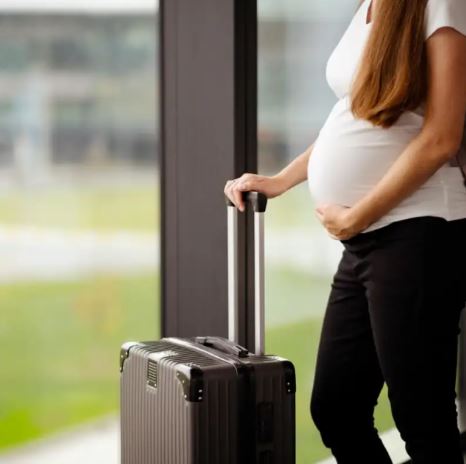
Traveling during pregnancy: tips for safe trips, babymoon benefits, and IVF travel planning for expectant mothers.
The period of expecting a baby is a time of profound inner change, but this does not mean that a woman has to give up her usual lifestyle or the joy of new experiences. Travelling during pregnancy is not only perfectly acceptable, but in many cases beneficial for one’s mental wellbeing. The so-called ‘babymoon’, a holiday before the baby is born, allows the couple to strengthen their emotional bond and recharge their batteries. Pregnancy and travel whilst undergoing IVF treatment deserve special attention, as such cases require meticulous planning and mandatory coordination of every step with a fertility specialist. This is due to the need for strict adherence to the schedule for taking hormonal medications and regular monitoring, which must not be interrupted. However, with the right approach, any trip will bring exclusively positive emotions, help reduce anxiety levels and become an important stage in preparing for motherhood.
What You'll Discover:
Preparation and detailed consultation with a specialist
The first and most important step in planning any trip should be a detailed consultation with your doctor. This is critically important if the trip falls during the first or third trimester. In the first trimester, all the fetus’s organs are forming, and the mother’s body undergoes significant hormonal changes, often accompanied by morning sickness and increased fatigue. In the third trimester, the strain on the cardiovascular system and musculoskeletal system increases, and the risk of premature birth rises due to physical overexertion or vibrations.
An obstetrician-gynaecologist will carry out a comprehensive assessment: checking blood pressure, the condition of the cervix via ultrasound, and your general well-being. It is important to discuss not only the fact of the trip itself, but also the specific route. Only a specialist can confirm that a flight or a long journey will not place a critical strain on your body. Remember that your baby’s safety and your own comfort are the foundation on which any successful trip is built.
Key factors for planning the perfect trip
When choosing a destination and mode of transport, you need to consider a number of factors that might normally seem insignificant:
- Journey duration and logistics: Long transatlantic flights or hours-long coach journeys can lead to congestion in the pelvis. Try to choose routes with a minimum number of changes and a total journey time of no more than 5–6 hours.
- Choice of transport: A plane is fast, a train offers the chance to lie down and stretch your legs, and a car gives you control over where you stop. The choice depends on your individual preferences and medical advice.
- Climate and natural conditions: Sudden changes in temperature (from winter to hot summer) can trigger oedema and fluctuations in blood pressure. You should also avoid high altitudes (above 2,000 metres), where the oxygen content in the air is lower, which can cause hypoxia.
- Medical facilities at your destination: Ensure there is a modern hospital with a neonatal unit within a 30–50-minute drive of your hotel. Find out in advance whether they speak a language you understand or if interpreter services are available.
Don’t forget the legal side: a standard travel insurance policy often does not cover risks associated with pregnancy. You will need specialised insurance covering emergency care for pregnant women and, ideally, premature birth and newborn care.
Air travel considerations: comfort and safety in the air
Flying is the quickest way to cover long distances, minimising the total journey time. However, for an expectant mother’s body, flying is a challenge involving changes in air pressure, dry air and being forced to remain still in a confined space.
Medical considerations and prevention: Particular attention should be paid to the venous system. During flight, blood circulates more slowly, which, against the backdrop of a physiological increase in blood clotting in pregnant women, increases the risk of thrombosis. If there are any signs of a threatened miscarriage (lower abdominal pain, uterine hypertonicity) or specific symptoms, flying should be avoided.
The ideal time to travel: The second trimester (from the 14th to the 27th week) is the perfect time. The risk of miscarriage is minimal at this stage, morning sickness usually subsides, and energy levels increase significantly. The bump is not yet large enough to hinder movement around the aircraft cabin.
Airline policies and documentation: Most airlines require a medical certificate stating the stage of pregnancy and confirming there are no contraindications after the 28th week. Women are usually not permitted to board after the 36th week (or the 32nd week in the case of multiple pregnancies), as giving birth in the air poses a huge risk to both mother and baby.
Practical tips for flying:
- Seat selection: Book seats by the aisle at the front of the cabin or by the emergency exits (if airline rules allow) to have more legroom.
- Hydration: Drink at least 250 ml of plain water for every hour of flight. Avoid coffee and tea, which promote fluid loss.
- Movement: Do some light foot exercises whilst seated and get up every 45 minutes to walk up and down the aisle. This is vital for maintaining normal blood flow.
- Clothing: Use Class 1 or Class 2 compression hosiery (as recommended by your doctor) and wear loose-fitting clothing made from natural fabrics.
Travelling by land transport
Private car: This is the most flexible option, allowing you to fully control the climate and frequency of stops. However, sitting in one position for long periods is not advisable. Take a break every 90 minutes: get out of the car, take a few deep breaths and do some light stretching. It is best for the expectant mother to sit in the passenger seat, adjusting the seat back angle for maximum comfort. A seatbelt is mandatory, but it must be worn correctly: the lower strap under the tummy, the upper strap diagonally across the chest.
Bus: This is the least recommended form of transport due to the jolting, the inability to stand up at any moment, and often poor ventilation. If there is no alternative, choose only modern express buses with a toilet and a working air-conditioning system, giving preference to seats in the middle of the coach, where the jolting is less noticeable.
Rest, recovery and emotional balance
You don’t necessarily need to cross borders to recharge. A countryside eco-hotel, leisurely walks in the park or a stay at a health resort can give you more energy than active tourism. Gentle spa treatments, such as prenatal massage or floating, are excellent for relieving pressure on the spine.
The main criterion is avoiding overload, both physical and sensory. Avoid noisy crowds, loud music and queues. Comfort, peace and quiet, and the chance to lie down at any moment, these are the ingredients of the perfect holiday for an expectant mother.
Precautions and ‘travel first-aid kit’
Before you leave, put together a folder of documents: the original and a copy of your maternity card, the results of your latest ultrasound scan, and blood tests for blood group and Rh factor. Your first-aid kit should contain only approved medicines: sorbents for digestive problems, paracetamol (as the only approved painkiller on your doctor’s prescription), heartburn remedies and your daily vitamins.
Don’t try to ‘fit everything in’. If you used to be able to visit five museums a day, now choose just one. Allow time for a nap and a quiet evening meal. This is particularly important when crossing time zones, as your body needs more time to synchronise its biological rhythms.
Travel as an important step towards motherhood
For couples who are just planning to have a baby, travelling can be a strategic decision. Today, fertility tourism offers the opportunity to receive world-class medical care in a comfortable setting. Many combine their holiday with a visit to leading clinics to undergo a check-up or start treatment.
Spain is rightly considered a mecca for reproductive medicine. Thanks to progressive legislation and the vast experience of local doctors, some of the highest success rates for IVF (In Vitro Fertilisation) procedures in the world are achieved here.
If you are seeking expert help, the reproductive medicine clinic Natuvitro will be your trusted partner. Here, we take an individualised approach to every couple: from in-depth genetic testing to psychological support. Natuvitro’s specialists will help you navigate this journey in an atmosphere of care and professionalism, transforming the treatment process into a calm and confident journey towards your goal.
Pregnancy is a unique period when the whole world begins to revolve around a new life. A well-planned journey will help you enjoy this state, filling you with joy and confidence, which are so important for your future baby.
Frequently Asked Questions (FAQ)
At what stage of pregnancy is it safest to travel?
The second trimester (weeks 14 to 27) is considered the most favourable period. By this time, the risks of early complications have already decreased, morning sickness usually subsides, and physical exertion is not yet too great. This is a time of maximum comfort and mobility.
Is it safe to go through airport security scanners?
Yes, standard metal detector gates use a magnetic field, which is non-ionising and does not harm the foetus. Full-body scanners are also recognised as safe; however, by law in many countries, a pregnant woman has the right to request a manual search if she feels anxious.
What medicines must be in your first-aid kit?
Your basic kit should include medicines approved by your obstetrician: heartburn remedies, approved enterosorbents in case of poisoning, hand sanitisers, moisturising nasal drops (the air on planes is very dry) and, if necessary, magnesium supplements to relieve muscle tension.
How should you use a seatbelt correctly?
This is a critical safety issue when travelling by car. The lower strap should rest on your hips, below your bump. The upper strap should run between your breasts and over your shoulder. The belt must never cross the centre of your abdomen.
Do you need special medical insurance?
Absolutely. A standard travel insurance policy often excludes any treatment related to pregnancy. You need a policy that clearly states coverage for medical expenses in the event of pregnancy complications and premature birth. Read the terms and conditions carefully: insurance usually covers you up to the 24th or 31st week.
Should you be wary of climate changes and exotic food?
A sudden change in climate puts stress on the immune system. Try to avoid destinations with extreme heat and high humidity. When it comes to food, stick to the rule: ‘wash it, cook it or leave it’. Avoid raw seafood, unpasteurised cheeses and tap water (including ice in drinks).
Why do airlines refuse to allow boarding in the later stages of pregnancy?
The main reason is safety. The aircraft is not equipped to handle childbirth, and the crew are not qualified as midwives. Furthermore, in the later stages of pregnancy, the risk of thromboembolic complications and sudden changes in blood pressure due to altitude changes increases significantly.