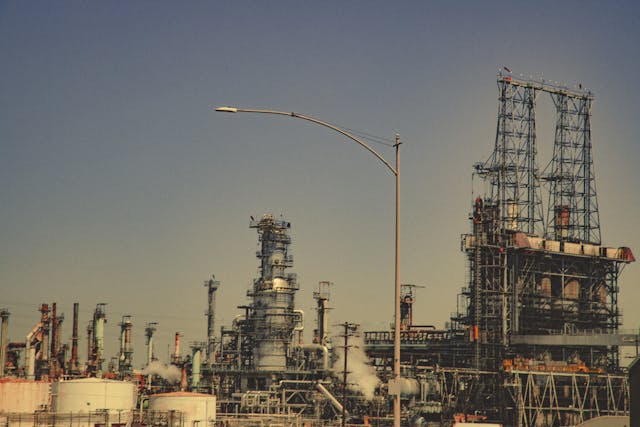
Where does propane come from? Discover how propane is made, where it’s found, and why it quietly powers everyday life.
Propane comes from natural gas processing and crude oil refining. It’s a byproduct captured during energy production, then purified, stored, and distributed for everyday use.
The first time I really noticed propane, it wasn’t at a refinery or a gas plant. It was a backyard grill refusing to light.
I remember shaking the tank like it might answer back. Empty. Again. And suddenly I was asking a question that felt oddly basic and weirdly big at the same time: where does propane come from?
Not the label answer. The real one.
Because propane feels invisible. It shows up when you need heat, food, or fuel—and disappears when you don’t. No smoke. No drama. Just a quiet hiss and a blue flame that does its job without asking for attention.
So I started pulling the thread backward. Past the grill. Past the tank exchange kiosk. Past the truck that drops it off. And what I found was a surprisingly complex journey—one that connects fossil fuels, chemistry, global trade, and modern convenience in ways most of us never think about.
This article is that journey, mapped out step by step. Not from a textbook. From curiosity.
What You'll Discover:
Where Does Propane Come From in the Energy Chain?
At its core, propane is not mined or drilled on its own. It’s collected.
That’s the first misconception worth clearing up.
Propane exists as part of larger energy systems, and it’s separated during processes that were happening anyway.
“Propane is a secondary product of natural gas processing and petroleum refining.” — A quotable energy industry fact
Two main sources feed nearly all the propane we use today:
- Natural gas processing plants
- Crude oil refineries
Everything else is a footnote.
Propane from Natural Gas: The Hidden Passenger
Natural Gas Isn’t Just One Gas
When we say “natural gas,” we usually mean methane—the stuff that heats homes and powers turbines. But raw natural gas, fresh from underground, is more like a crowded bus.
It carries:
- Methane
- Ethane
- Propane
- Butane
- Water vapor
- Trace contaminants
Propane is already there. It just hasn’t been separated yet.
How Propane Is Extracted from Natural Gas
At processing plants, natural gas goes through cooling and compression stages. As temperatures drop, heavier hydrocarbons condense.
Propane separates because it behaves differently under pressure and cold.
Short version? It drops out.
Longer version: specialized fractionation towers isolate propane by boiling point. Methane rises. Propane settles. Each component finds its level.
“Propane has a boiling point of −44°F, allowing it to be separated efficiently during fractionation.”
That one physical property is the reason propane becomes its own product.
Propane from Crude Oil: A Refinery Side Effect
Crude Oil Is a Chemical Soup
Crude oil isn’t fuel. It’s potential.
Inside every barrel is a mix of hydrocarbons with different sizes, weights, and energy behaviors. Refineries exist to untangle that mix.
When crude oil is heated and distilled:
- Lighter compounds rise
- Heavier compounds fall
- Useful fuels get skimmed off in layers
Propane lives near the top.
Why Refineries Capture Propane
Refineries don’t intend to make propane. They just refuse to waste it.
During cracking and distillation, propane appears as a gas. Instead of venting it, refineries cool, compress, and store it.
That captured gas becomes commercial propane.
“Most refinery propane would be wasted if it weren’t economically valuable.”
Value changes behavior. Always has.
Is Propane Fossil Fuel or Something Else?
This is where the conversation gets complicated.
Yes, propane is a fossil fuel. It originates from ancient organic matter trapped underground.
But it’s also different.
The Cleaner Fuel Argument
Propane burns cleaner than:
- Coal
- Gasoline
- Diesel
- Heating oil
It produces:
- Lower carbon dioxide emissions
- Minimal particulate matter
- No lead or heavy metals
This puts propane in a strange middle ground—fossil-based, but lower-impact.
Some people see it as a transition fuel. Others see it as a delay.
Both perspectives have merit.
How Propane Becomes Liquid (and Why That Matters)
One of propane’s most useful quirks is how easily it changes form.
At normal atmospheric pressure, propane is a gas. Add moderate pressure, and it becomes a liquid.
This matters more than it sounds.
Why Liquefied Propane Is a Big Deal
Liquids are easier to:
- Store
- Transport
- Measure
- Control
That’s why propane tanks exist at all.
When you open a valve, liquid propane turns back into gas instantly. That phase change is what feeds your stove, heater, or forklift.
“Propane’s ability to liquefy under pressure makes it one of the most portable fuels in the world.”
Portability is power.
Where Propane Is Produced Globally
Propane production follows energy production. Wherever oil and gas flow, propane follows.
Major propane-producing regions include:
- United States
- Middle East
- Russia
- Canada
- China
The U.S. is currently one of the world’s largest propane exporters, largely due to shale gas expansion.
Ironically, domestic abundance doesn’t always mean local cheapness. Global markets still shape prices.
How Propane Reaches Homes and Businesses
Once propane is separated and purified, it enters a distribution chain that looks deceptively simple.
But it’s layered.
The Propane Supply Path
- Processing plant or refinery
- Bulk storage terminals
- Railcars, ships, or tanker trucks
- Local distributors
- End-user tanks
Every step adds cost, safety checks, and regulation.
And unlike natural gas, propane doesn’t rely on pipelines to reach homes. That independence is why it thrives in rural areas.
Everyday Uses That Hide Propane’s Origins
Most people interact with propane without realizing it.
Common uses include:
- Home heating
- Cooking and grilling
- Water heaters
- Agricultural drying
- Industrial forklifts
- Backup power systems
Each use traces back to the same origin point: captured hydrocarbons that would otherwise be wasted.
There’s something oddly poetic about that.
Propane vs Other Fuels: A Quick Comparison
| Fuel Type | Source | Storage | Emissions | Portability |
|---|---|---|---|---|
| Propane | Oil & natural gas | Pressurized liquid | Low | High |
| Natural Gas | Underground gas fields | Pipeline only | Lower | Low |
| Gasoline | Crude oil | Liquid | High | Medium |
| Diesel | Crude oil | Liquid | Higher | Medium |
| Electricity | Mixed sources | Grid-dependent | Varies | Low |
Propane’s sweet spot is flexibility. It goes where pipelines don’t.
Environmental Trade-Offs Worth Acknowledging
It’s tempting to paint propane as the “good fossil fuel.”
That’s incomplete.
Yes, propane burns cleaner. No, it’s not renewable.
Extraction still involves drilling. Processing still emits carbon. Transportation still uses fuel.
The honest take is this: propane reduces harm compared to alternatives, but it doesn’t erase it.
Progress often looks like that.
FAQ: Where Does Propane Come From?
Is propane naturally occurring?
Yes. Propane occurs naturally as part of natural gas and crude oil deposits underground.
Is propane renewable?
No. Propane is a fossil fuel derived from ancient organic material.
Why is propane stored as a liquid?
Because it becomes liquid under moderate pressure, making it easier to transport and store.
Does propane come from oil or gas?
Both. Propane is produced during natural gas processing and oil refining.
Is propane cleaner than natural gas?
Propane burns cleanly, but natural gas generally produces slightly lower carbon emissions per unit of energy.
Key Takings
- Where does propane come from? It comes from natural gas processing and oil refining.
- Propane is a byproduct, not a primary extraction target.
- Its easy liquefaction makes it highly portable and versatile.
- Propane burns cleaner than many fossil fuels but remains non-renewable.
- Global energy markets influence local propane prices.
- Propane thrives where pipelines don’t reach.
- Its quiet reliability hides a complex global journey.
Additional Resources
- U.S. Energy Information Administration, Energy Explained: A clear, authoritative breakdown of how different fuels are produced, processed, and used in the modern energy system.